10 Bathroom Accent Wall Ideas That Show How Focal Walls Work

A bathroom accent wall can completely shift where your eye lands in the room. One wall in green herringbone tile can bring color to an otherwise white bathroom, while graphic wallpaper can turn a small powder room into one of the most memorable spaces in the house. And if bold color isn’t your thing, texture, tile layout, and subtle tonal changes can do the job too.

The best part is seeing how these ideas actually look once they’re built. If you’re considering your own accent wall in a bathroom, the following projects offer plenty of ideas to help you decide how much contrast, color, pattern, or texture feels right.

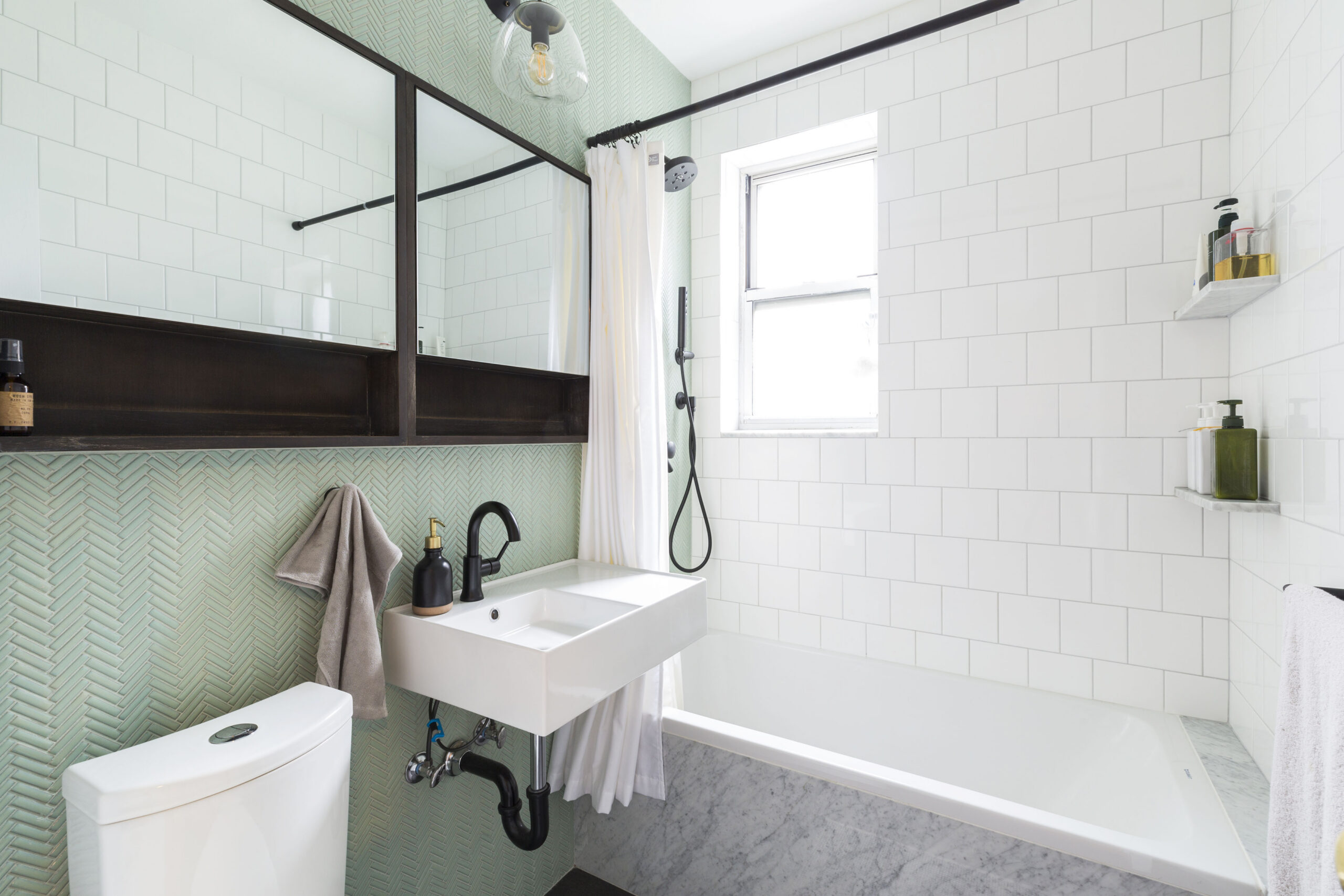
Ditmas Park bathroom accent wall with green herringbone tile, white subway tile, wall-mounted sink, black fixtures, and marble tub surround.
(Above) This Brooklyn renovator used a green herringbone bathroom accent wall to give their small bath a clear focal point against bright white finishes.

Key takeaways

  • A bathroom accent wall stands out most clearly when its color, pattern, material, or texture contrasts with the surrounding walls.
  • Tile and wallpaper can both create strong focal points, while subtler changes in pattern, scale, and tone offer a quieter approach.
  • Keeping the surrounding finishes simpler can give a statement wall more room to command attention without making the bathroom feel visually crowded.
  • An experienced general contractor can help turn the design into a practical plan while coordinating tile layouts, wall preparation, fixtures, and other installation details.

1. Make the shower wall pop with graphic tile

In Jessica’s Clinton Hill co-op renovation, the bathroom carries over the home’s taste for geometric details with graphic tile on the shower wall. The bold black-and-white pattern is paired with simpler porcelain tile, along with brass fixtures and a wood vanity that keeps the patterned wall from having to compete with another strong surface.

It’s a useful approach when you love a statement tile but don’t necessarily want it wrapping the entire bathroom. Limiting the graphic pattern to one shower wall makes that surface the visual destination, while the quieter surrounding tile gives the eye somewhere to rest. For bathrooms with accent walls, that balance can be every bit as important as choosing the standout tile itself.

Planning to renovate? Get free cost estimates from our partner GCs!

Get matched with our vetted general contractors and receive at least 3 quotations for free! You can also find endless home renovation inspiration, detailed guides, and practical cost breakdowns from our blogs.

2. Let green herringbone do the talking

Gus took a different route in this Ditmas Park bathroom renovation. A green herringbone ceramic tile covers the statement wall, while classic white ceramic tile finishes the remaining walls, and dark porcelain grounds the floor. The difference is immediate: one wall delivers both color and pattern against a much quieter backdrop.

Herringbone already brings movement because your eye follows the angled pattern, so introducing it in green gives the wall even more presence. The white tile around it also shows why a bathroom wall accent doesn’t need several competing details to feel interesting. One distinctive material choice can carry the idea.

3. Go bold with floral wallpaper

Allison wanted to bring more color and interest into a windowless bathroom, and the Kips Bay bathroom remodel does it with a vivid floral wallpaper accent wall. The surrounding subway tile stays neutral, allowing the large-scale botanical pattern to provide much of the room’s personality.

This example is a good reminder that bathroom accent wall ideas don’t have to start and end with tile. Wallpaper can introduce colors and patterns that would be difficult to recreate with hard surfaces, particularly around a vanity or another wall outside the shower. The contrast works especially well here because the rest of the palette doesn’t try to match the wallpaper’s visual intensity.

4. Warm up the shower with wood-look tile

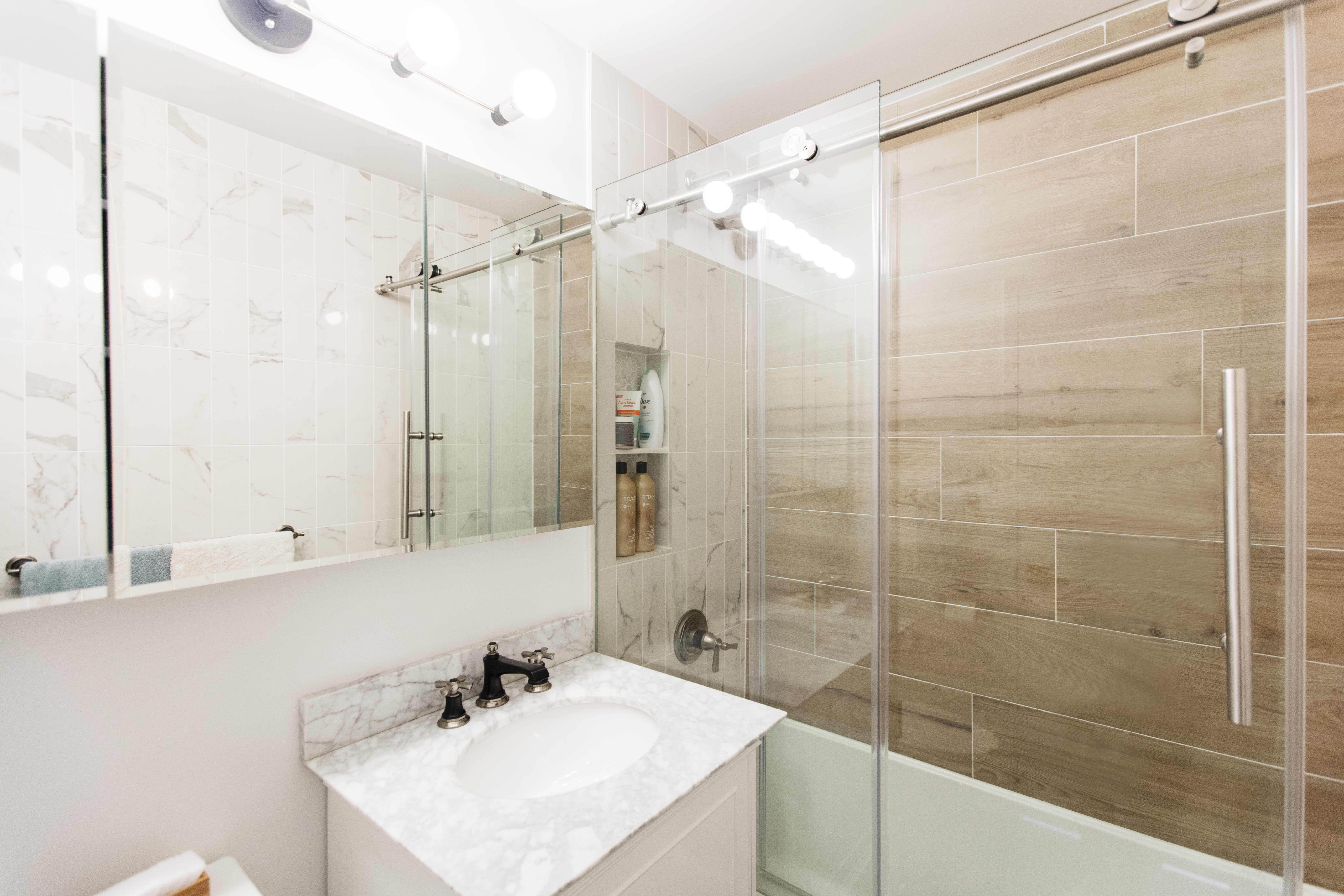
In Maggie’s Manhattan home renovation, horizontal wood-look ceramic tile runs across the back wall of the shower. Marble-style ceramic tile covers the surrounding walls, so the warmer wood appearance clearly separates the back wall from the lighter surfaces around it.

It’s an interesting alternative to relying on bright color or a graphic pattern. Here, the contrast comes from the look of the material itself, with the horizontal installation adding another layer of distinction. If you’re planning something similar, an experienced contractor can also help map out where one tile should stop, and the adjoining material should begin, so those transitions feel deliberate.

Renovate expertly with Sweeten

Sweeten brings homeowners an exceptional renovation experience by personally matching trusted general contractors to your project, while offering expert guidance and support—at no cost to you.

Start your renovation

5. Let marble herringbone become the focal point

Cecilia wanted a bright, polished bathroom in her home renovation featuring a marble herringbone accent wall. Large-format white porcelain covers the surrounding walls, while two-inch Carrara marble subway tile is laid in a herringbone pattern on the accent wall, adding texture and a more custom feel.

This is one of the quieter ideas in the roundup, and that’s exactly why it’s useful. The wall doesn’t rely on a dramatic color change to stand apart. Instead, smaller tile, natural marble variation, and the angled herringbone layout distinguish it from the larger white tile nearby. It’s a strong option for someone who wants an accent wall while keeping the overall bathroom light and restrained.

6. Use color to set one bathroom wall apart

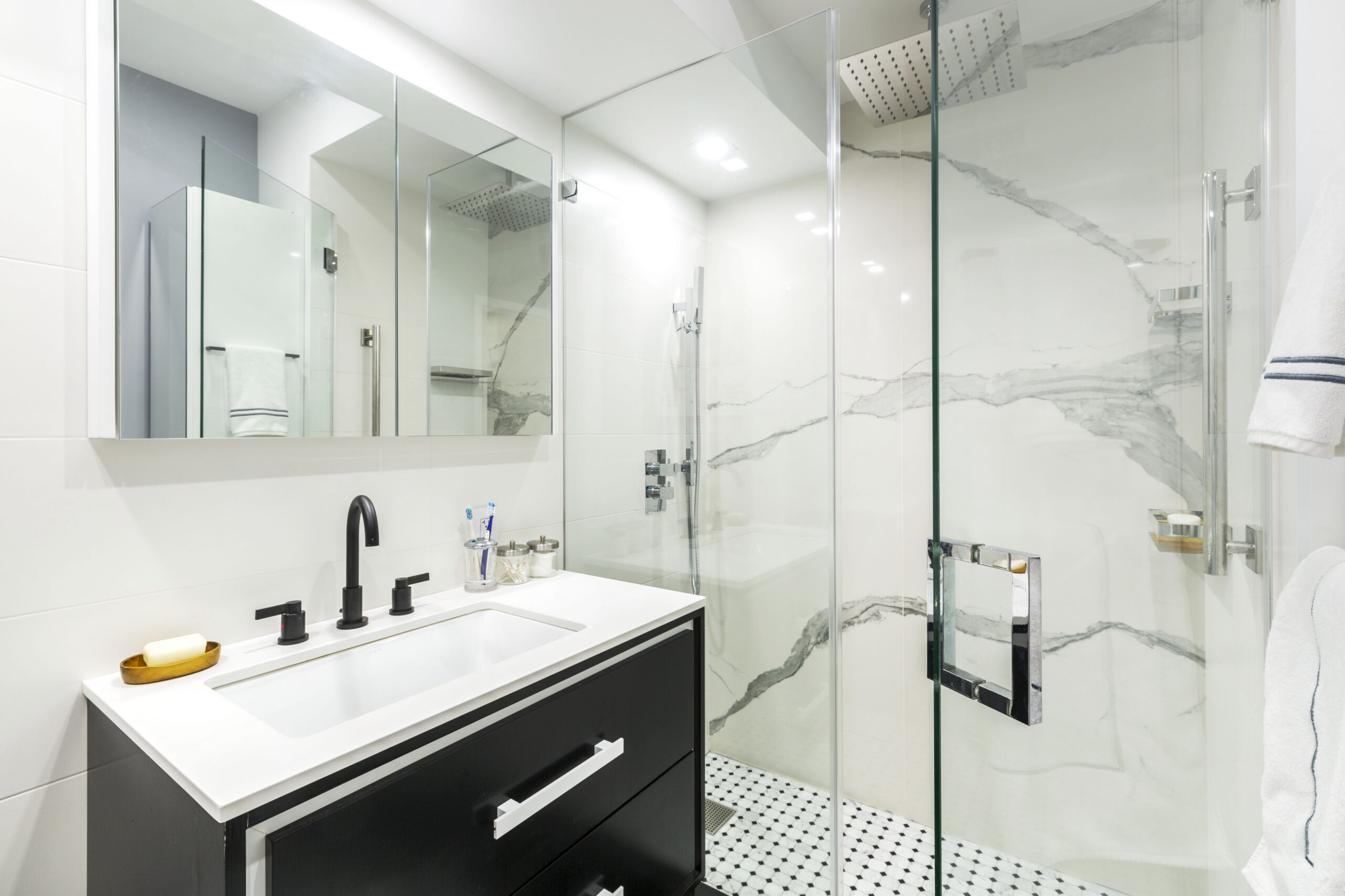
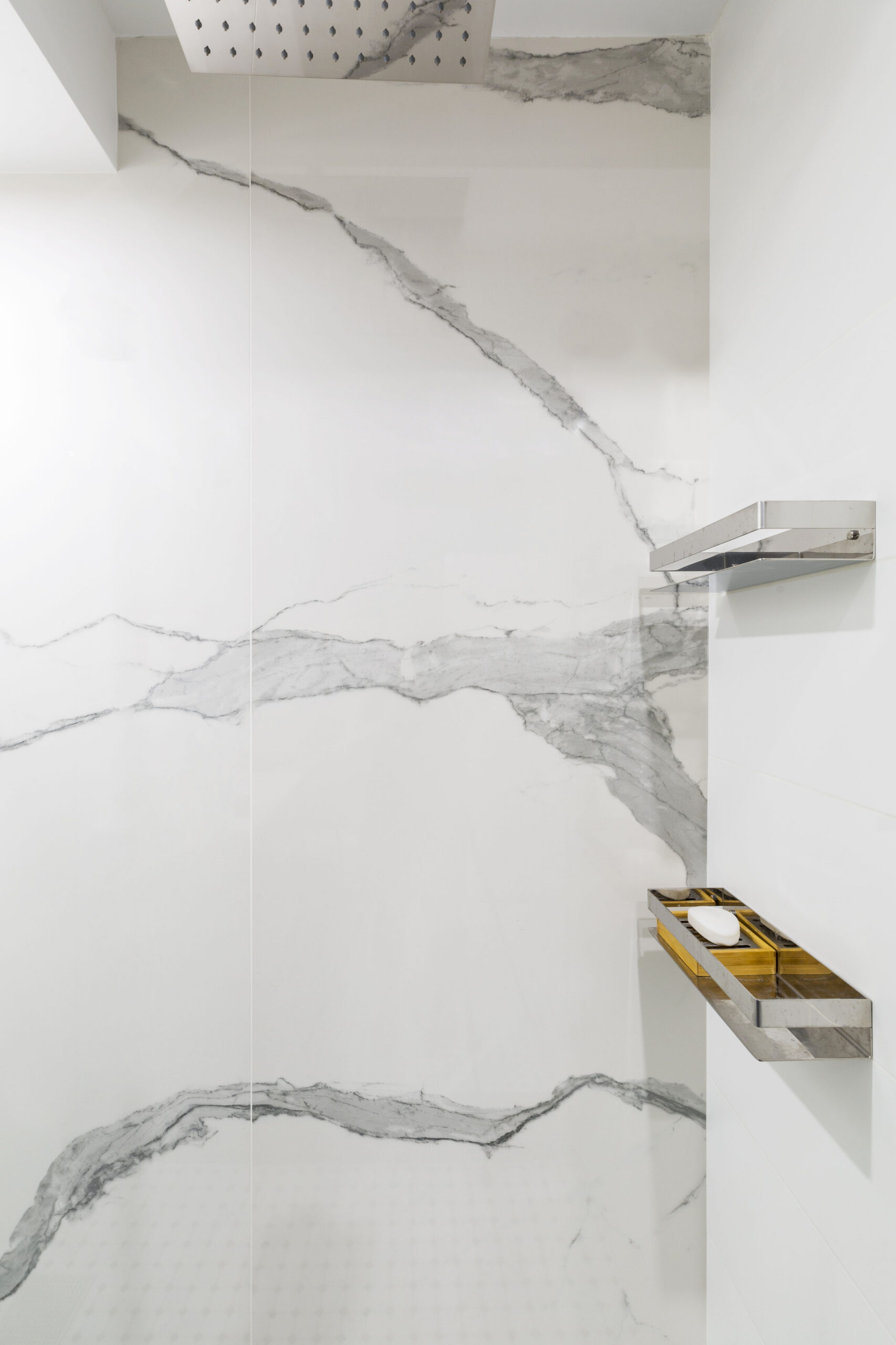
This Chelsea guest bathroom renovation centers on a crisp black-and-white palette, with Calacatta-look porcelain in the shower, a black vanity, dotted marble flooring, and clean white finishes. Against those surfaces, a gray accent wall adds another tonal layer without becoming the loudest element in the room.

That’s a helpful lesson if the more dramatic examples above feel like too much. An accent wall can still be successful when the contrast is relatively restrained. The gray surface is different enough from the surrounding white to define the wall, but close enough to the broader neutral palette that the bathroom still feels cohesive.

7. Take an accent wall in a more playful direction

Erica’s Windsor Terrace bathroom renovation takes a less conventional approach. Oversized taupe hexagon tile begins on the shower wall and carries into a cascading backsplash behind the vanity, where the irregular edge becomes part of the design instead of finishing in a straight line.

This isn’t the most literal single-wall accent in the roundup, but that’s what makes it worth including. Rather than treating the feature as a neat rectangle confined to one surface, the hexagons visually spill into the neighboring area. A layout like this needs careful planning before installation, since the tile placement and stopping points are central to the finished effect.

8. Add movement with rippled tile

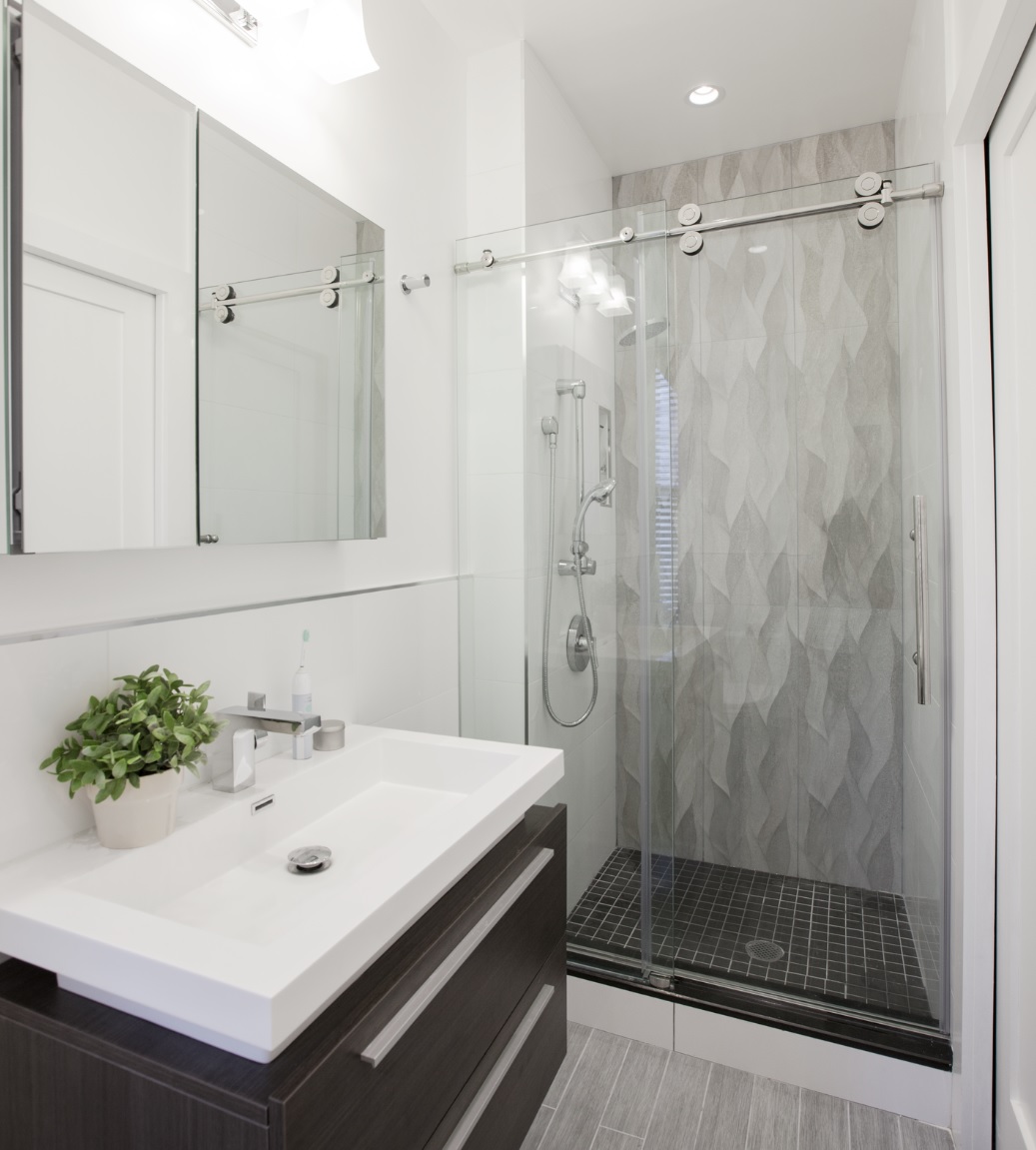
Henry used texture to create the focal wall in his East Village condo renovation. The bathroom includes a rippled gray tile accent wall designed to suggest flowing water, alongside smoother shower surfaces and Italian ceramic floor tile with a light wood-grain appearance.

The result shows how texture can distinguish one wall even when the color itself is fairly subdued. Light catches a dimensional surface differently throughout the day, so the wall can have movement without relying on a busy motif. It’s a useful direction for anyone drawn to neutral bathrooms but still wanting one surface to feel noticeably different.

9. Create depth with a dark back wall

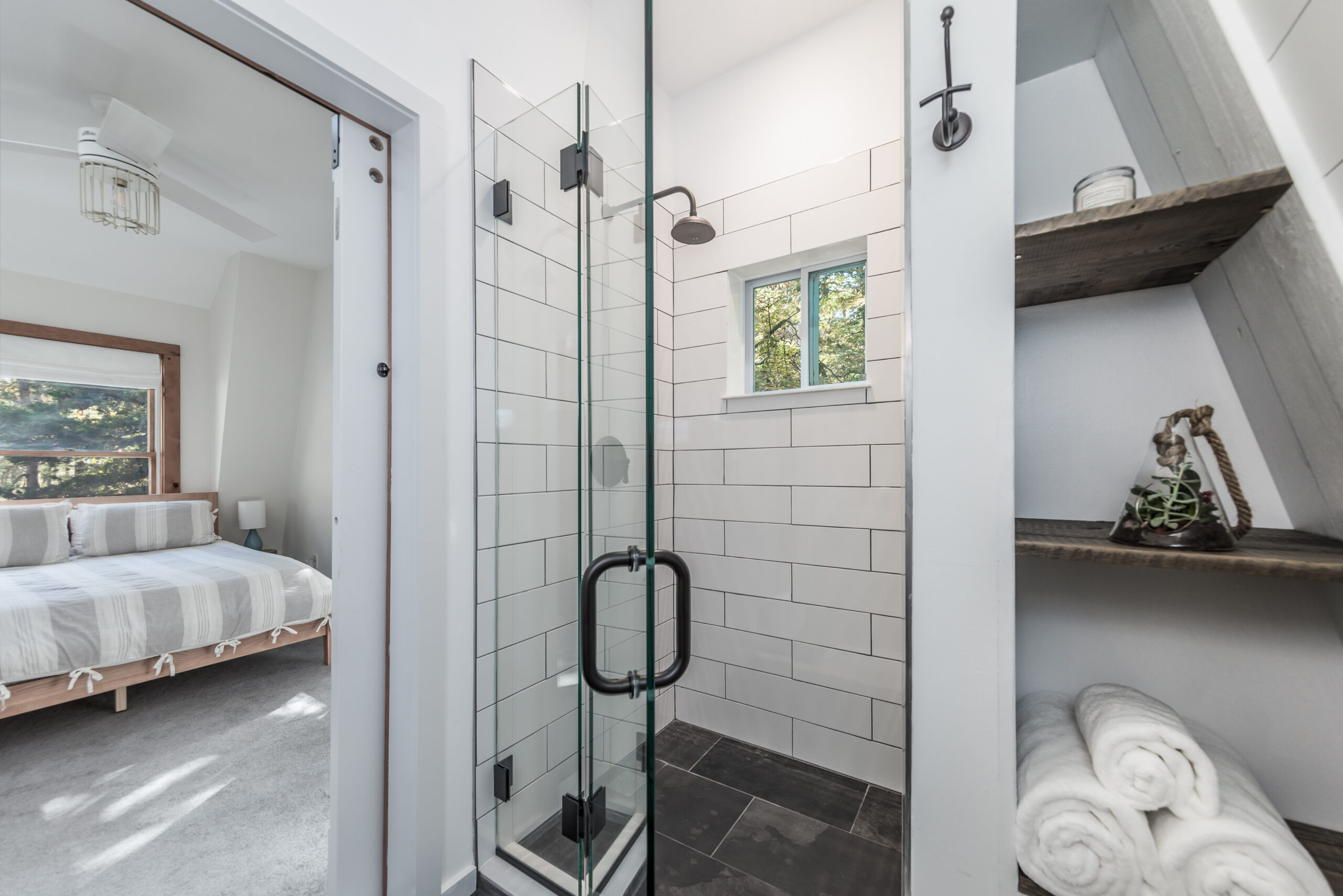
In Sonya’s Crown Heights bathroom renovation, the tile palette was planned around the compact room’s proportions. Light tile runs along one wall, while dark gray tile covers the back wall to create a greater sense of depth.

It’s probably the simplest idea in this collection, but simple can be useful. Instead of relying on a decorative pattern, the wall stands out through a clear light-to-dark contrast. If you already have several finishes planned for the vanity, floor, or fixtures, using a darker version of the surrounding palette can create an accent without introducing yet another pattern.

10. Use an all-over pattern beside simple tile

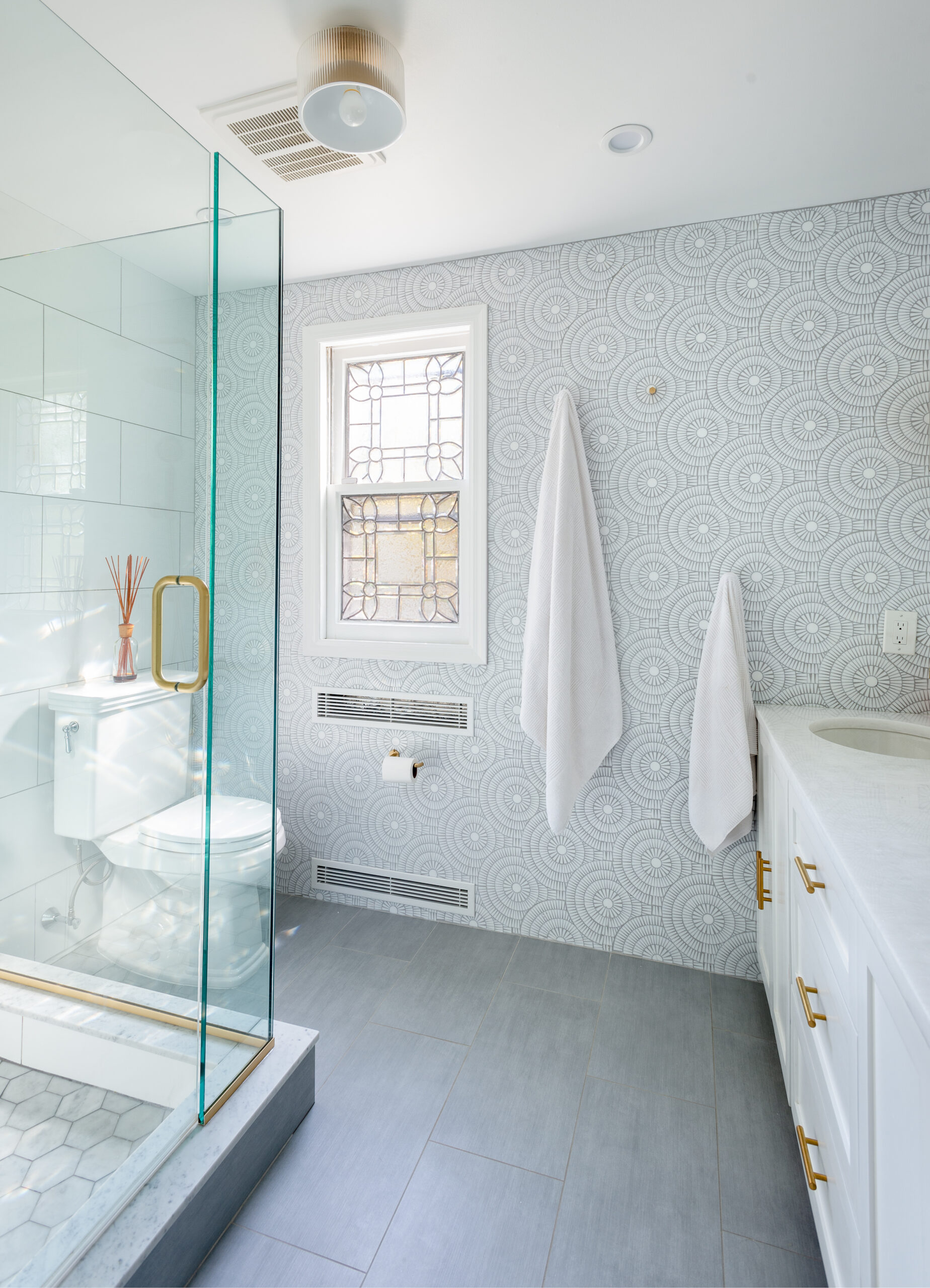
In this Westchester bathroom renovation, one wall gets a dense circular pattern that surrounds an original stained-glass window and continues behind the vanity. The neighboring shower takes the opposite approach with large, simple white tile, making the patterned surface stand out immediately.

This bathroom accent wall shows how repetition can create impact even with a restrained color palette. The closely spaced motif gives the wall plenty of visual detail, while the quieter shower tile keeps the room from becoming pattern-heavy. It’s a useful approach if you want one wall to draw attention without introducing a dramatically different color.

Planning your own bathroom accent wall

As these renovations show, a bathroom accent wall can be loud, subtle, textured, colorful, patterned, or somewhere in between. What matters is that the wall feels intentional in relation to the surfaces around it, rather than looking like an isolated material choice.

When you’re ready to turn one of these ideas into a renovation plan, Sweeten is a free service that connects homeowners with a network of vetted general contractors. An experienced contractor can help you work through material transitions, tile layouts, wall preparation, fixtures, and the other details that determine how that standout wall actually comes together.

Ready to renovate your bathroom?

Post your project on Sweeten today and get matched with our vetted general contractors for free! Find endless home renovation inspiration, detailed guides, and practical cost breakdowns from our blogs.

Frequently asked questions

A bathroom accent wall is a single wall that uses a different color, pattern, material, or texture from the surrounding walls. It creates a clear focal point and can stand out through bold tile, wallpaper, texture, or even a subtle shift in tone.

The best accent wall is usually one that naturally draws attention, such as the wall behind the vanity, tub, or at the back of a shower. Choosing a wall with a strong sightline helps the design feel intentional instead of making the room look visually scattered.

Many renovators choose green, gray, black, or other deeper neutral tones because they create contrast without overwhelming the rest of the bathroom. These colors can work especially well against white tile or lighter finishes, while patterned wallpaper can add more color if you want a bolder focal point.

You may also like

Renovate with Sweeten!

sweeten-magic

We’ll match you with vetted general contractors and offer support until your project is done — at no cost to you!

Start your renovation

Customer review 5.0

sweeten-thumbsup

“I liked using Sweeten! It gave me a great place to start, since I had no idea how to begin my renovation projects. I will be using them again.”

— Mary C. from Philadelphia, PA

Read more reviews —>
Start your renovation
no-cost-blue

Subscribe to our
renovation newsletter