How 6 Homeowners Used Herringbone Floors in Different Ways

Is herringbone wood flooring worth the extra planning and cost? For many homeowners, the answer depends less on the pattern itself and more on how it fits the renovation budget, the rooms being updated, and the flooring that is already there.

A few smart choices can make a big difference. These Sweeten projects show how homeowners approached herringbone in their own renovations.

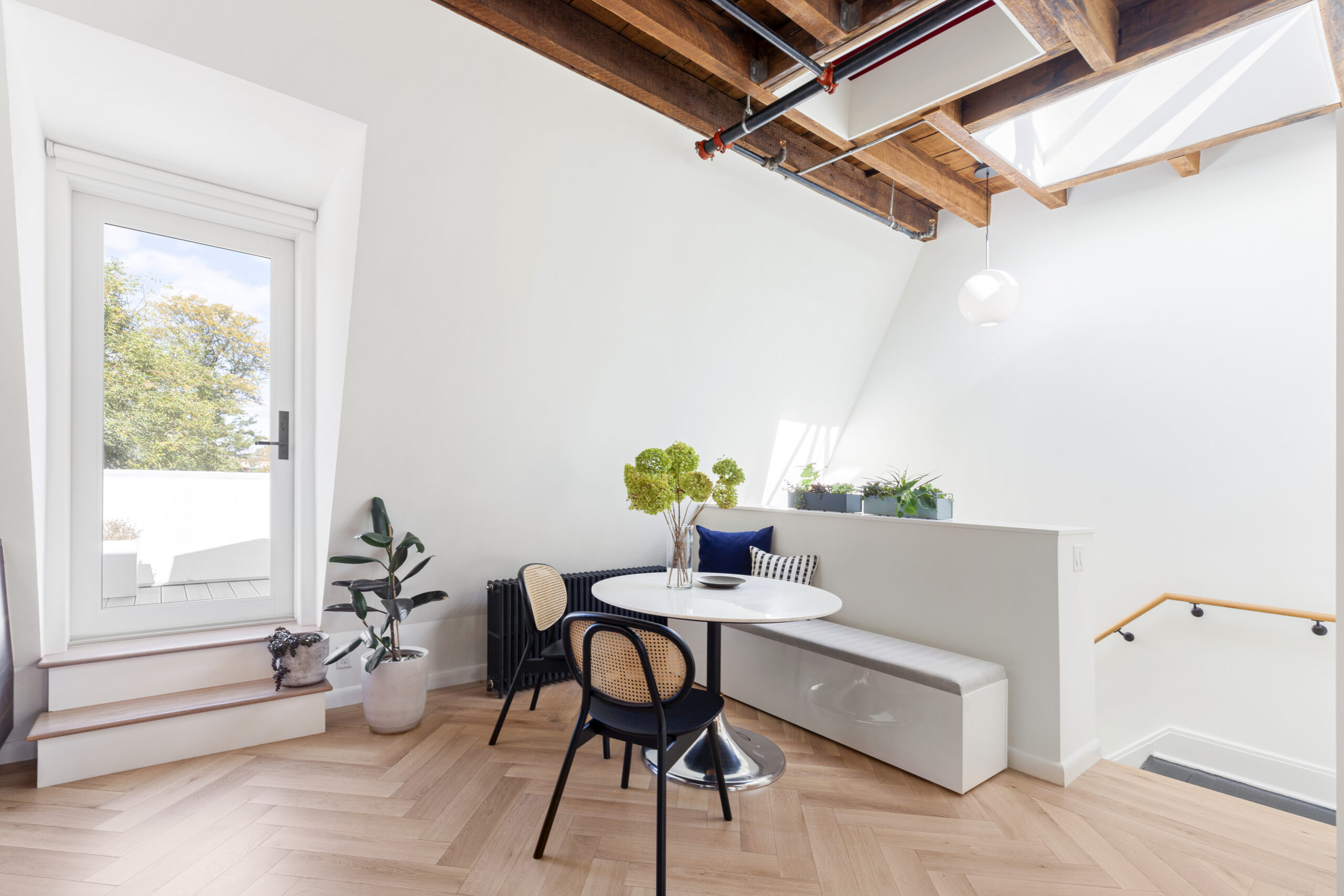
White oak herringbone wood floor, dark cabinetry, soapstone counters, exposed ceiling beams, and dining nook in a renovated Crown Heights apartment.
(Above) Janet's finished apartment feels brighter and more open, with the herringbone floor helping connect the kitchen and dining area beneath the exposed wood beams.

Key takeaways

  • Precut herringbone flooring may offer another option when custom-cut material is expensive or takes longer to source.
  • Using herringbone in selected rooms can limit how much specialty flooring is needed.
  • Wood species and stain can change the look of the same pattern considerably.
  • Original herringbone floors may be worth assessing before replacement is considered.
  • Flooring changes made after construction begins can affect both the renovation budget and schedule.

1. Cut costs with precut white oak

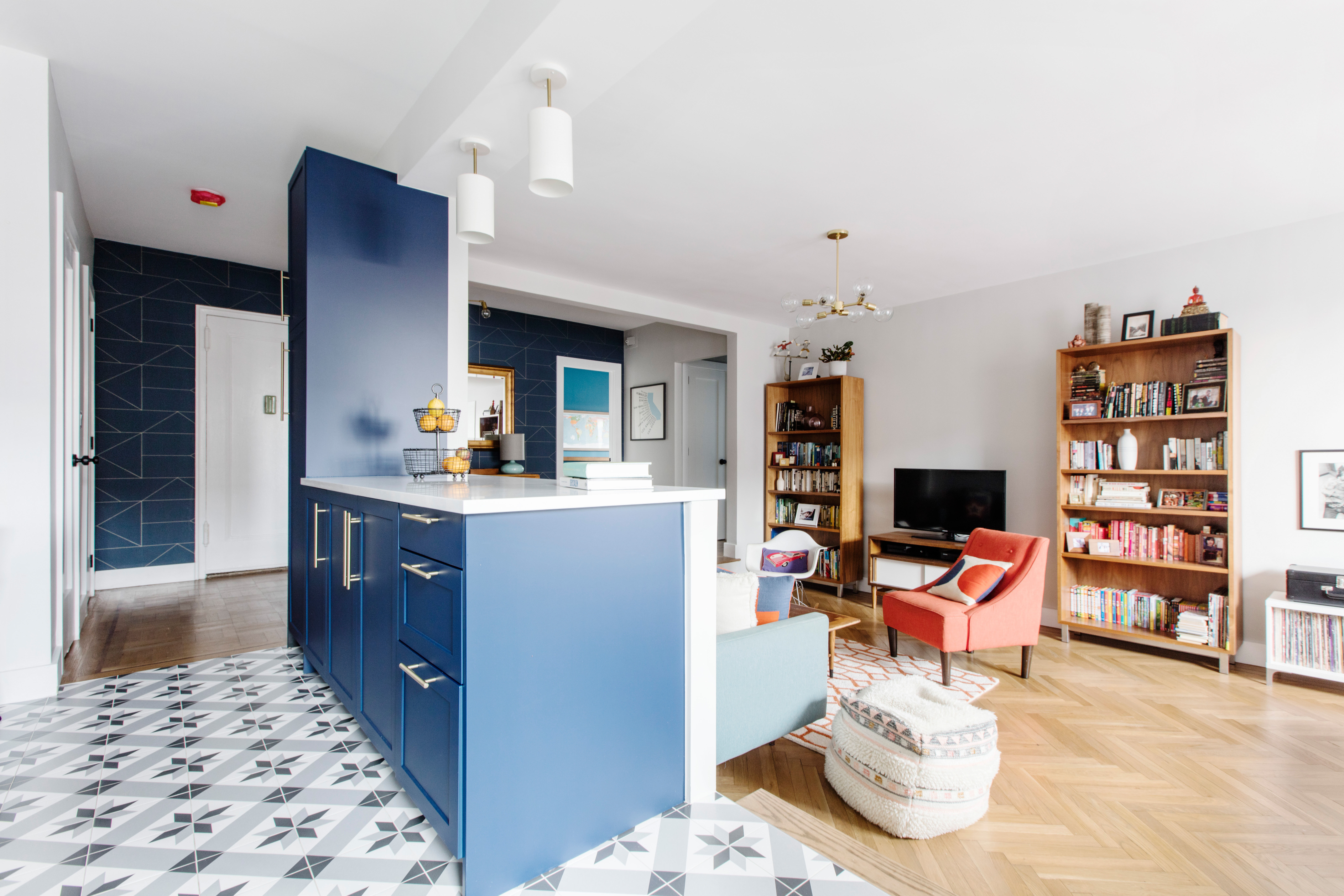
When Janet renovated a compact Brooklyn pied-à-terre, the existing floors were covered with vinyl and old carpeting. She wanted natural wood instead and chose white oak in a herringbone pattern.

Her first plan called for custom-cut flooring, but the material came with a high price and a lead time of nearly two months. Rather than giving up on the pattern, Janet found precut herringbone flooring for roughly half the price.

That change allowed her to keep the flooring she wanted without paying for custom fabrication. You can see how the finished floor fits with the exposed beams, dark cabinetry, and other materials in Janet‘s home renovation.

This is also the type of sourcing decision that can benefit from early conversations with a general contractor. An experienced contractor can help homeowners compare available flooring options, understand lead times, and see where material choices may affect the construction schedule.

Planning to renovate? Get free cost estimates from our partner GCs!

Get matched with our vetted general contractors and receive at least 3 quotations for free! You can also find endless home renovation inspiration, detailed guides, and practical cost breakdowns from our blogs.

2. Save walnut for the main living spaces

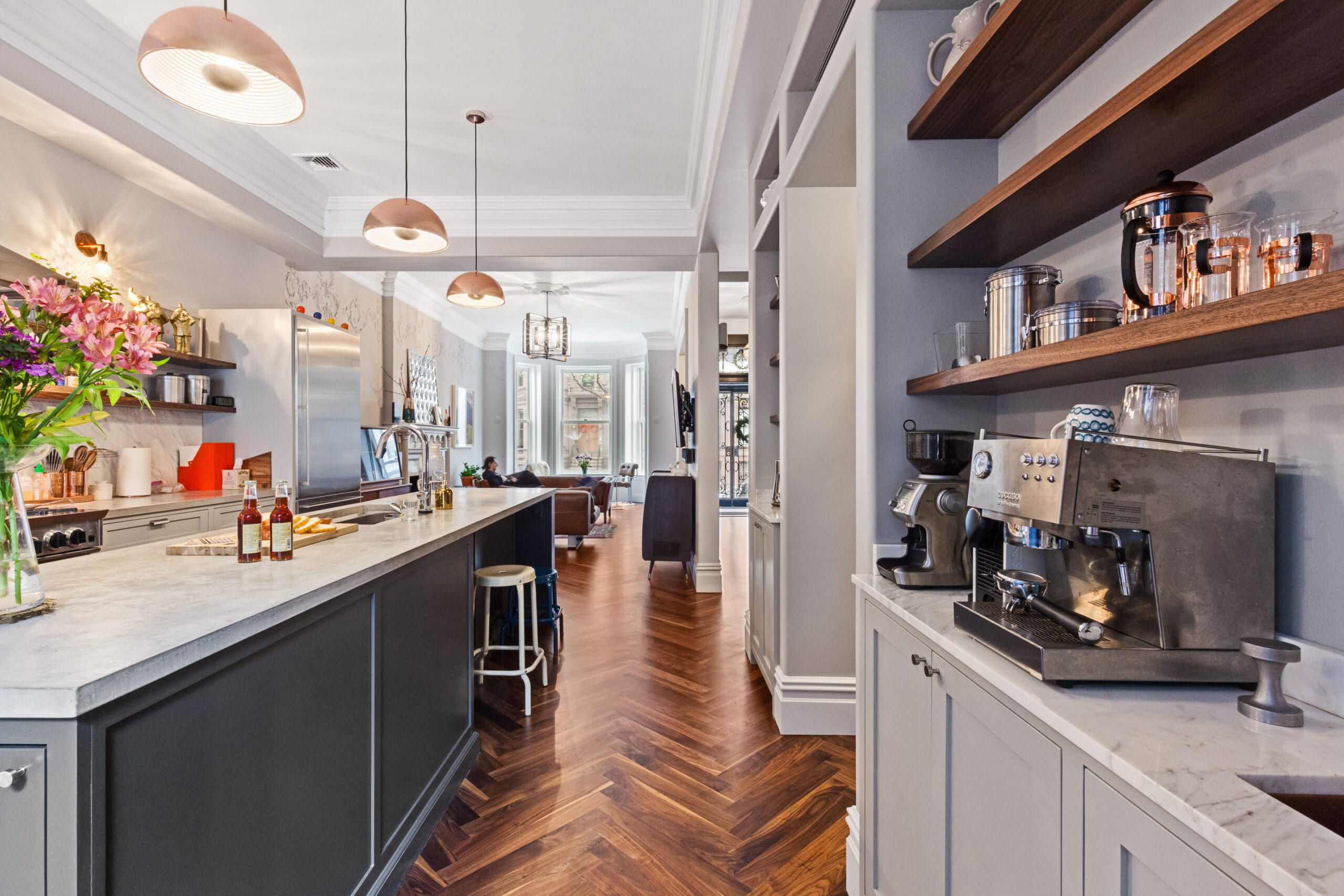
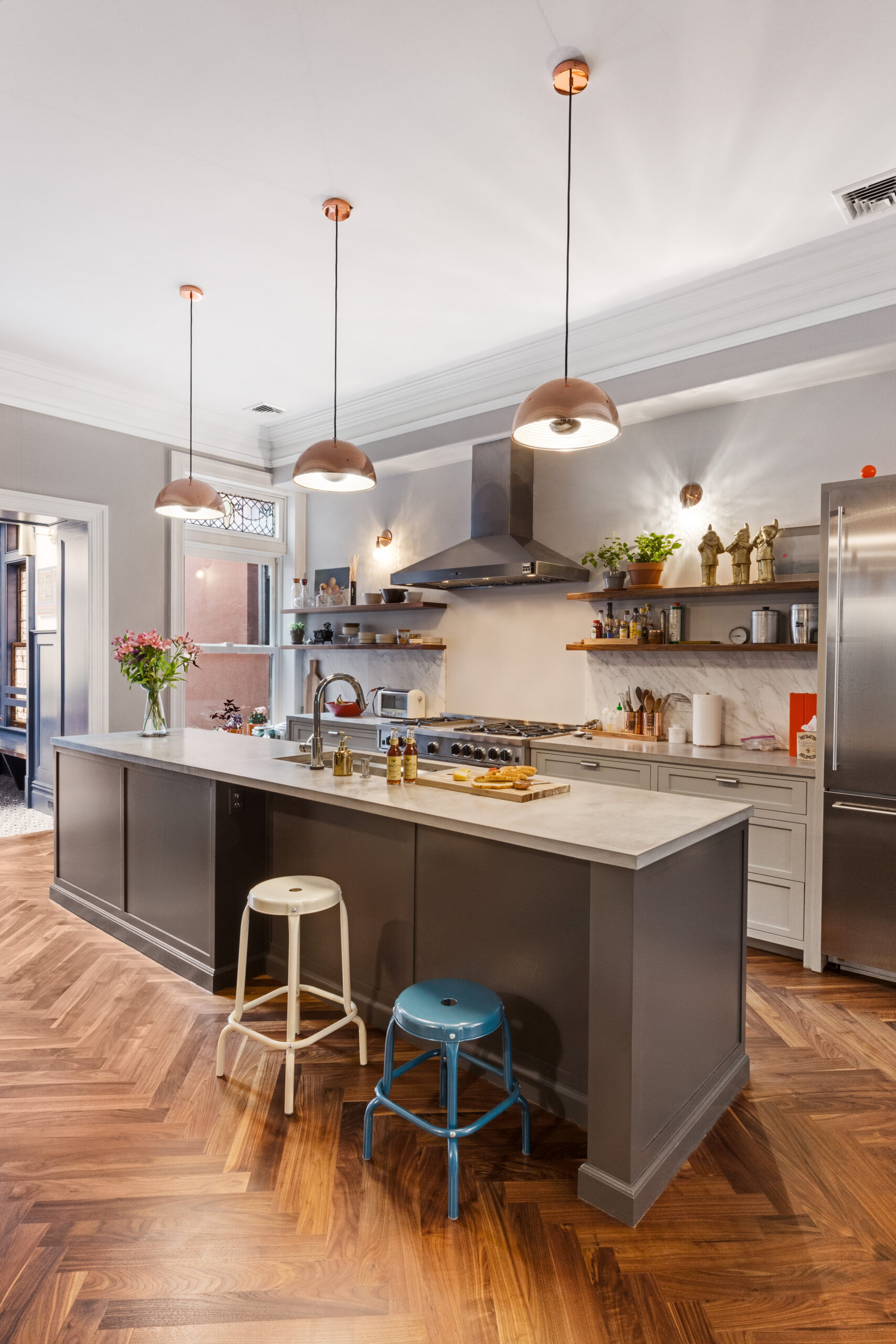
In a Brooklyn brownstone, Nazli chose walnut herringbone for the main parlor floor, including the kitchen and adjoining living spaces.

The walnut was a splurge, so she didn‘t continue it throughout the house. Less expensive white oak was used upstairs instead. Nazli had also considered tile for the kitchen before deciding to carry the walnut flooring across the entire parlor level.

Using the more expensive wood selectively allowed her to put it in the part of the home where she wanted it most without repeating the same material upstairs.

The floors are one part of Nazli‘s Brooklyn brownstone renovation, which shows how flooring choices can change from one level of a home to another while still feeling considered as part of the same project.

3. Make room in the budget for a flooring change

Flooring wasn‘t originally one of the biggest expenses in Jeremy‘s Hudson Yards renovation. The existing maple floors were expected to remain, while most of the initial budget focused on the kitchen.

Once work began, the flooring decision became less straightforward. Adding new hardwood in the kitchen meant either trying to match the maple that Jeremy didn‘t particularly like or reconsidering more of the existing floor.

About a month into construction, after demolition had already started, he expanded the project to include an espresso-stained white oak herringbone wood floor. The change added cost and delayed the renovation by about a month, but the flooring ended up becoming one of his favorite parts of the finished apartment.

Changes like this can be easier to evaluate with a contractor who understands how one decision affects the rest of the job. Flooring can touch demolition, material orders, transitions between rooms, and scheduling, so knowing those effects before approving a change can help homeowners make a more informed choice.

Sweeten‘s network gives homeowners a way to connect with experienced general contractors for renovations where decisions may continue to develop as work gets underway.

Renovate expertly with Sweeten

Sweeten brings homeowners an exceptional renovation experience by personally matching trusted general contractors to your project, while offering expert guidance and support—at no cost to you.

Start your renovation

4. Use the pattern in shared living areas

A herringbone pattern doesn‘t have to continue into every room.

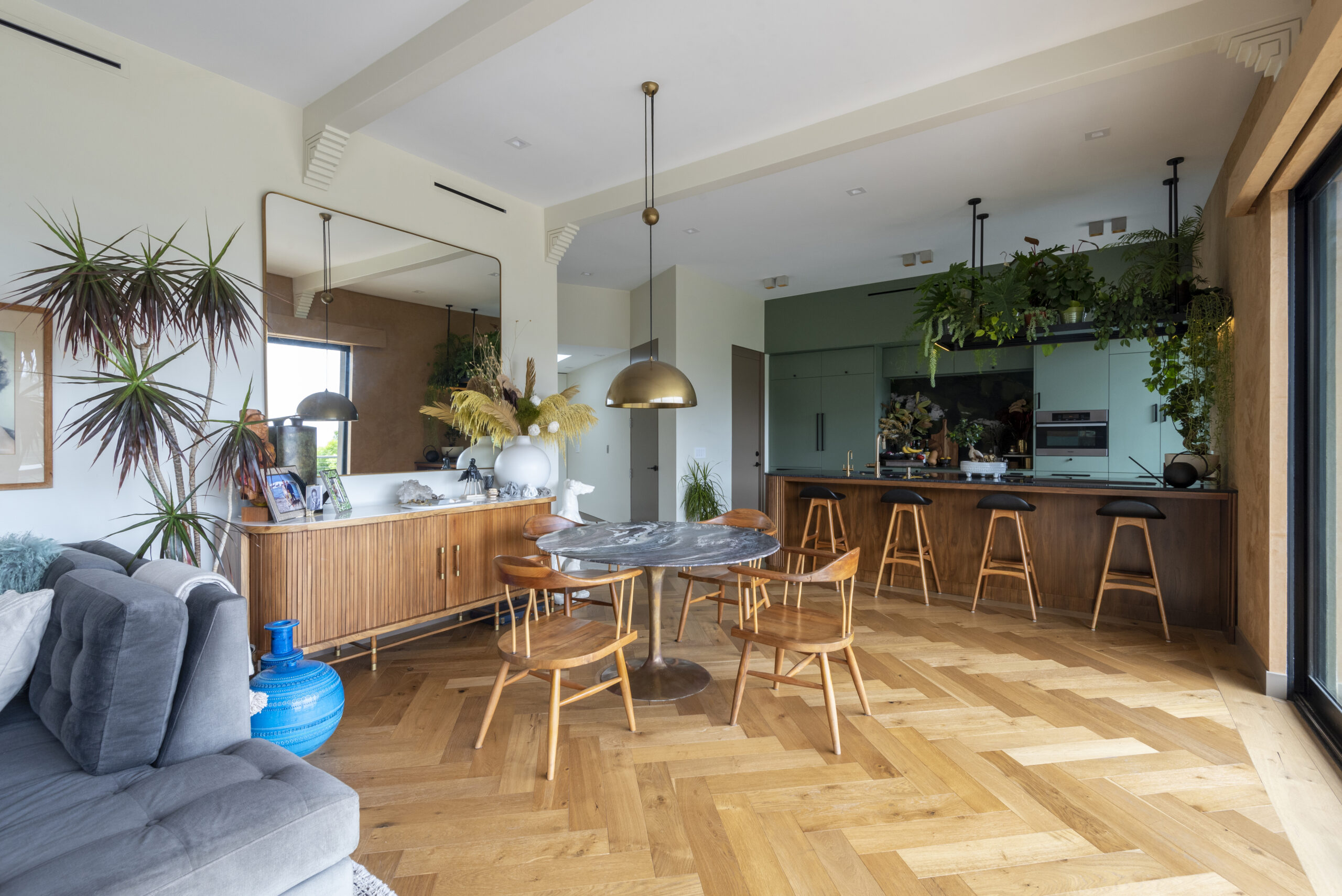
In this Laurel Canyon home renovation, herringbone was used through the open living and dining rooms as part of the home‘s Old Hollywood-inspired design.

Matching plank flooring continued into the hallway and bedrooms. The wood remains visually connected throughout the home, while the change in pattern gives the main shared spaces a distinct look.

This can be one way to use herringbone wood flooring without carrying the pattern across every part of a house. It also gives homeowners more flexibility when deciding where a specialty flooring pattern makes the most sense for the design and budget.

5. Bring original oak herringbone floors back

Not every herringbone floor needs to be newly installed.

Kasey was specifically looking for a prewar Manhattan apartment with original oak herringbone flooring. The apartment he considered was carpeted, but he had seen other units in the building where the original patterned floors were still present.

During the final inspection, Kasey lifted a corner of the carpeting and found the oak herringbone underneath. The floors were in good enough condition to become part of the renovation rather than being covered or removed.

His project included exposing, sanding, and refinishing them. Once restored, the original flooring again became a visible part of the apartment‘s prewar character.

Kasey‘s Park Avenue apartment renovation is a good example of why existing flooring should be assessed before replacement plans are finalized.

A general contractor can help coordinate that assessment with the rest of the renovation, especially when old flooring is hidden beneath carpeting or later finishes. If the floor can be preserved, that decision may also affect demolition, refinishing, room transitions, and other work nearby. 

Sweeten connects homeowners with general contractors who can look at those conditions as part of the overall project rather than as a separate flooring decision.

6. Change existing herringbone with a new stain

Barbra took a different approach to existing flooring in her Kensington, Brooklyn co-op. Instead of introducing a new pattern, the floors were refinished, so their original herringbone layout became more noticeable again.

A weathered oak stain was used throughout the apartment. The new finish changed the appearance of the wood while keeping the pattern already in place.

Barbra was surprised by how much of a difference the refinishing made. The updated floors also suited the broader renovation, which brought in brighter finishes and updated several areas of the apartment.

For homeowners who already have herringbone floors, refinishing may be worth discussing before replacement. Sanding and changing the stain can noticeably change the look of the wood while leaving the original pattern intact, as long as the condition of the flooring allows for it.

Herringbone wood flooring considerations

Choosing the pattern is only one part of the flooring decision. The type of wood, how it is sourced, where it will be installed, and the condition of any existing flooring can all affect the project.

Before finalizing the plan, consider discussing these points with your general contractor:

  • Check the existing flooring first. In an older home or apartment, find out what is already beneath carpet or later flooring before assuming everything needs to be replaced.
  • Compare wood species. White oak and walnut create noticeably different results, and their prices can vary.
  • Ask about precut and custom flooring. Janet‘s project shows how a precut product gave her another option when custom-cut flooring was more expensive and slower to source.
  • Think about where the pattern should go. Herringbone can cover a connected living area or be limited to selected rooms, while matching plank flooring continues elsewhere.
  • Look at stain choices alongside the wood. Stain can substantially change the appearance of an existing or newly installed floor.
  • Plan flooring early when possible. Jeremy‘s project shows how a flooring decision made after demolition can add both time and cost to a renovation.

Flooring decisions rarely happen entirely on their own. They can affect cabinetry, transitions between rooms, demolition, trim, scheduling, and other finish choices. An experienced general contractor can help homeowners understand those connections before materials are ordered or work moves too far ahead.

We can help plan your renovation

Find endless home renovation inspiration, detailed guides, and practical cost breakdowns from our blogs. You can also post your project on Sweeten today and get matched with our vetted general contractors and get estimates for free!

Frequently asked questions

Many homeowners use white oak and walnut for their herringbone flooring. The wood species affects the grain and natural color of the finished floor, while the stain can change its appearance further.

Yes, if the condition of the flooring allows it. Kasey‘s original oak floors were uncovered, sanded, and refinished, while Barbra‘s existing flooring was refinished with a Weathered Oak stain.

Yes, but later changes may affect the budget and schedule. Jeremy added herringbone flooring after demolition had started, which expanded the project scope and delayed the renovation by about a month.

You may also like

Renovate with Sweeten!

sweeten-magic

We’ll match you with vetted general contractors and offer support until your project is done — at no cost to you!

Start your renovation

Customer review 5.0

sweeten-thumbsup

“I really liked how Sweeten made the process of vetting licensed contractors easy for me. I felt confident knowing that I wasn't hiring a GC with forged credentials or wasnt qualified.”

— Jennifer M. from Jersey City, NJ

Read more reviews —>
Start your renovation
no-cost-blue

Subscribe to our
renovation newsletter