Top 6 Bathroom Vanity Designs That Will Trend in 2026

A bathroom vanity is where mornings start and nights end, so it has to earn its footprint with smart storage and a layout that feels effortless. Strong materials, well-placed lighting, and the right proportions keep the room looking sharp through daily use. In this Sweeten post, we’ve curated six bathroom vanity designs poised to shape 2026 remodels and spark ideas for your own.

1. Floating vanities maximize floor space

(Above) An NYC couple’s remodeled bath with a floating bathroom vanity, terracotta counter, vessel sink, and open shelf storage.

Floating vanities mount to the wall instead of sitting on the floor, which leaves a clean sightline under the cabinet. That open band of flooring makes the room read larger, and it lets the bathroom tilework feel continuous instead of chopped up by a bulky base. Many designs pair the look with slab fronts or shallow drawer stacks for a crisp, modern profile.

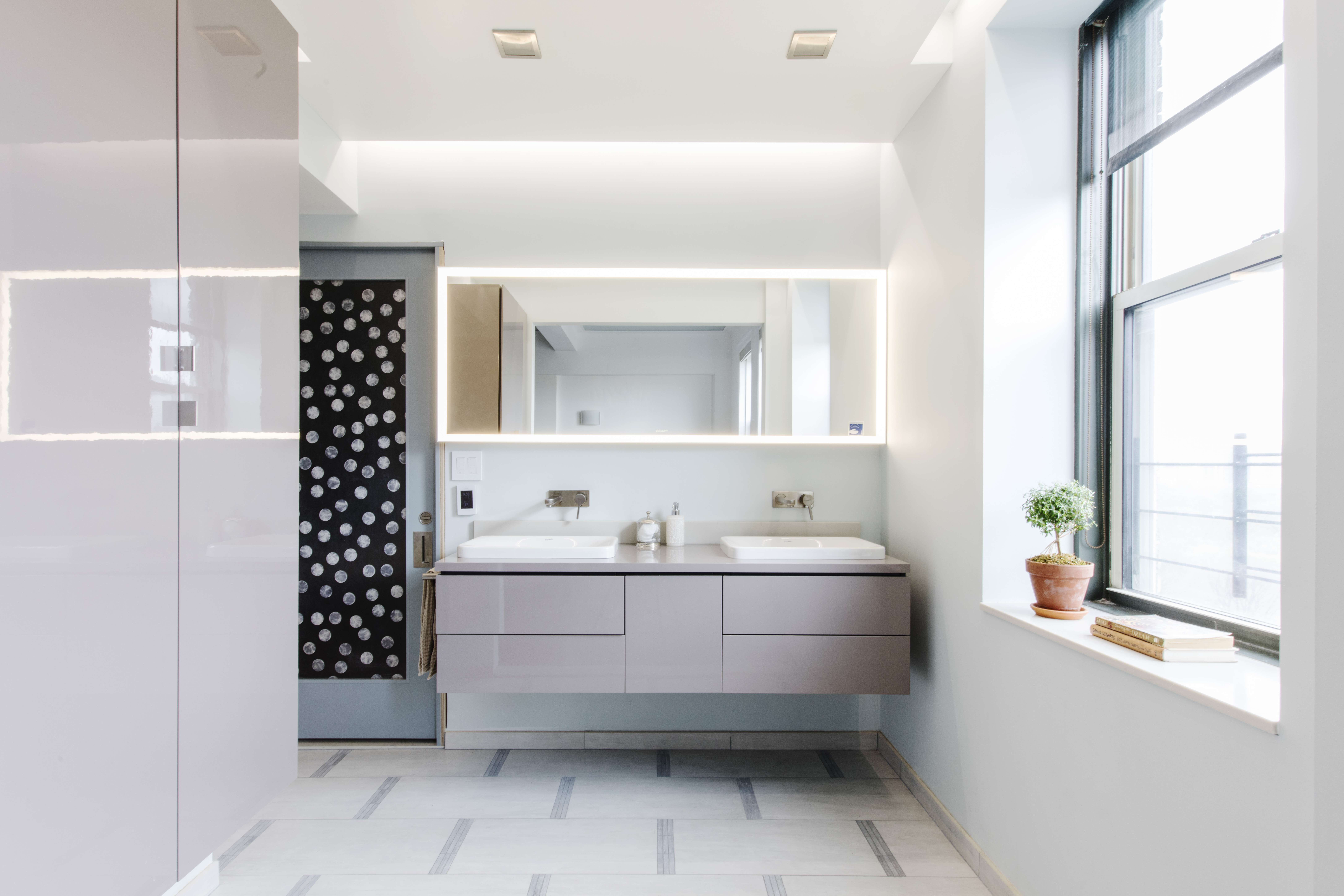
(Above) Leslie’s renovated bath features a glossy floating bathroom vanity, double sinks, wall faucets, and a backlit mirror.

This style shines in tight bathrooms where every inch counts, and it works especially well in apartments that need a lighter visual footprint. Homeowners who want an easier cleaning routine tend to love it since you can sweep and mop straight through without navigating toe kicks. A floating vanity can still deliver serious storage when the drawer layout is planned around plumbing and daily essentials.

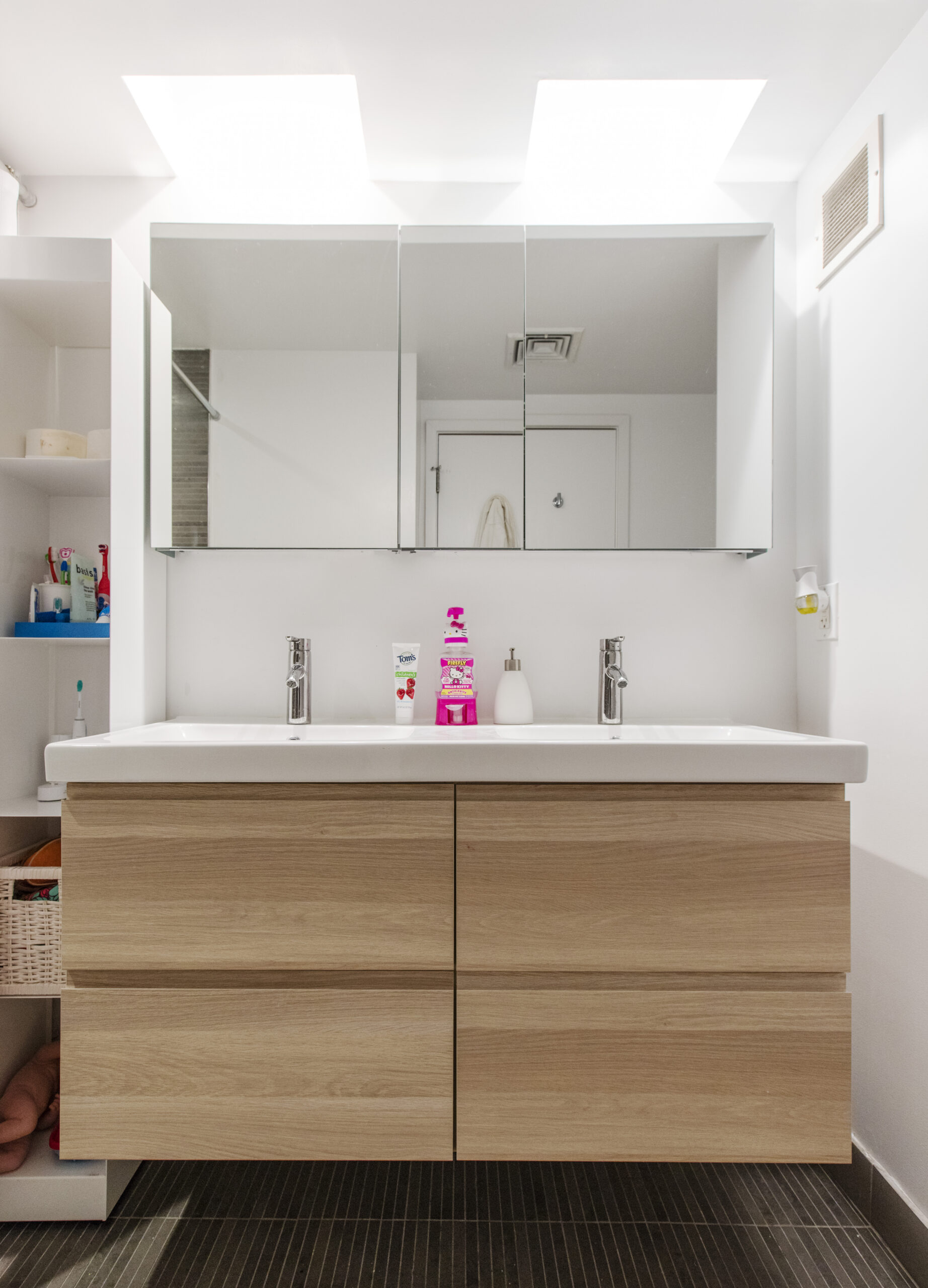
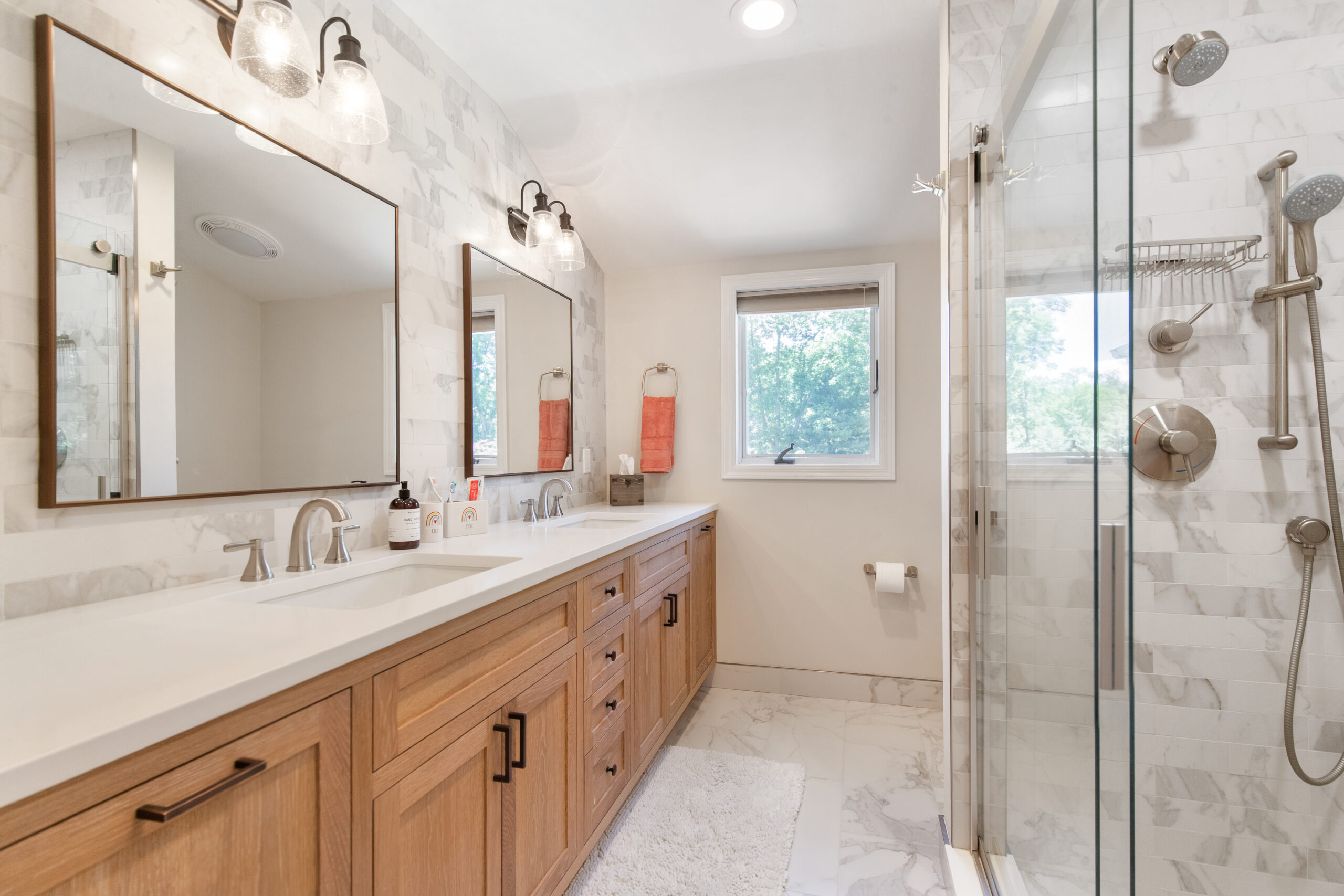
(Above) Ana’s refreshed bath with a light oak bathroom vanity, wide integrated sink, twin faucets, and mirrored medicine cabinets.

These pairings help a floating vanity feel intentional:

  • Large-format bathroom floor tile to emphasize an uninterrupted plane
  • Wall-mounted faucets to keep the countertop clean and spare
  • Under-cabinet lighting for a soft night glow and added depth
  • Drawer-forward storage to replace the cabinet space you lose below

2. Warm earth tones replace cool grays

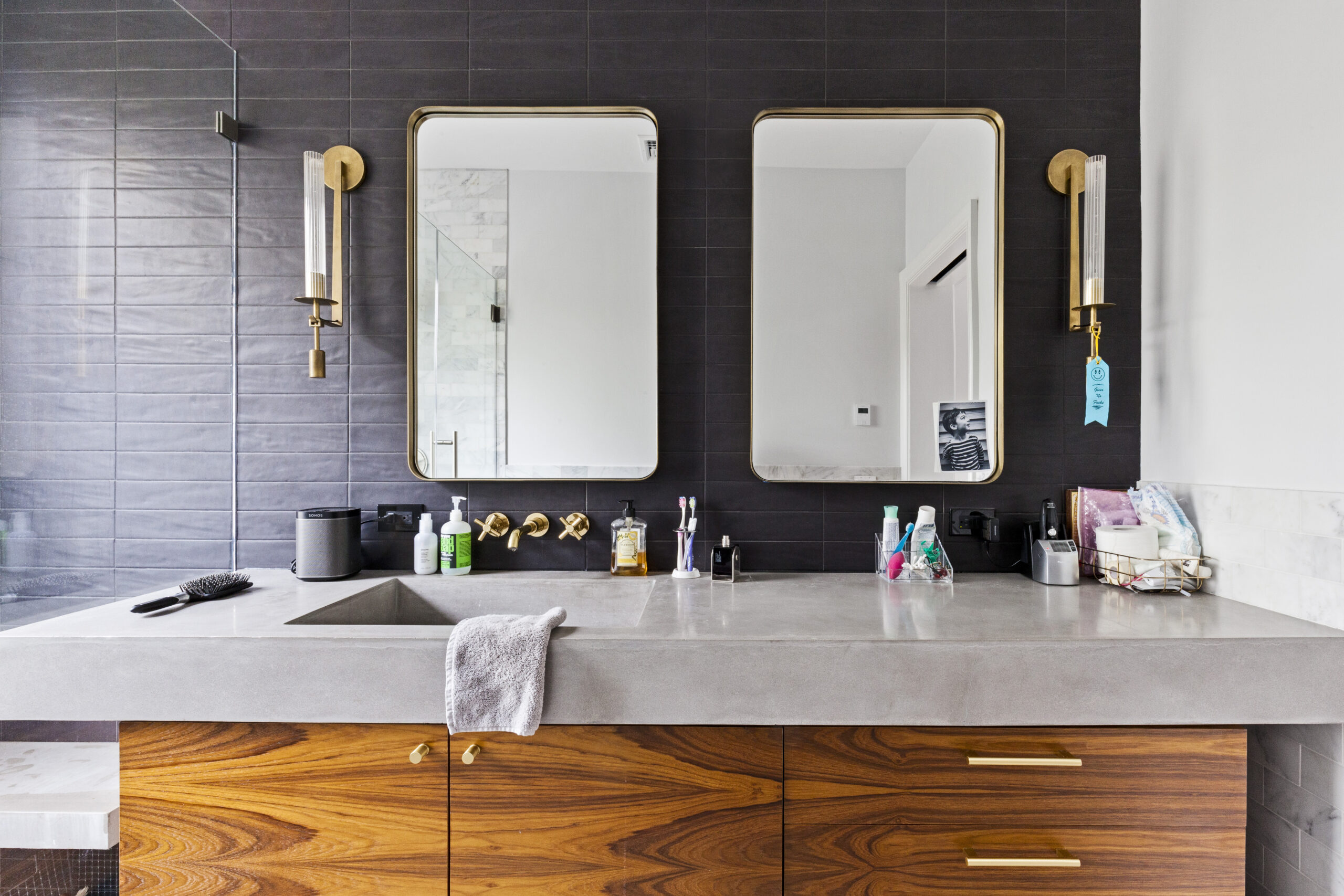
(Above) Nazli and Larry’s updated bath showcasing a walnut bathroom vanity, concrete counter, brass pulls, and twin mirrors on charcoal tile.


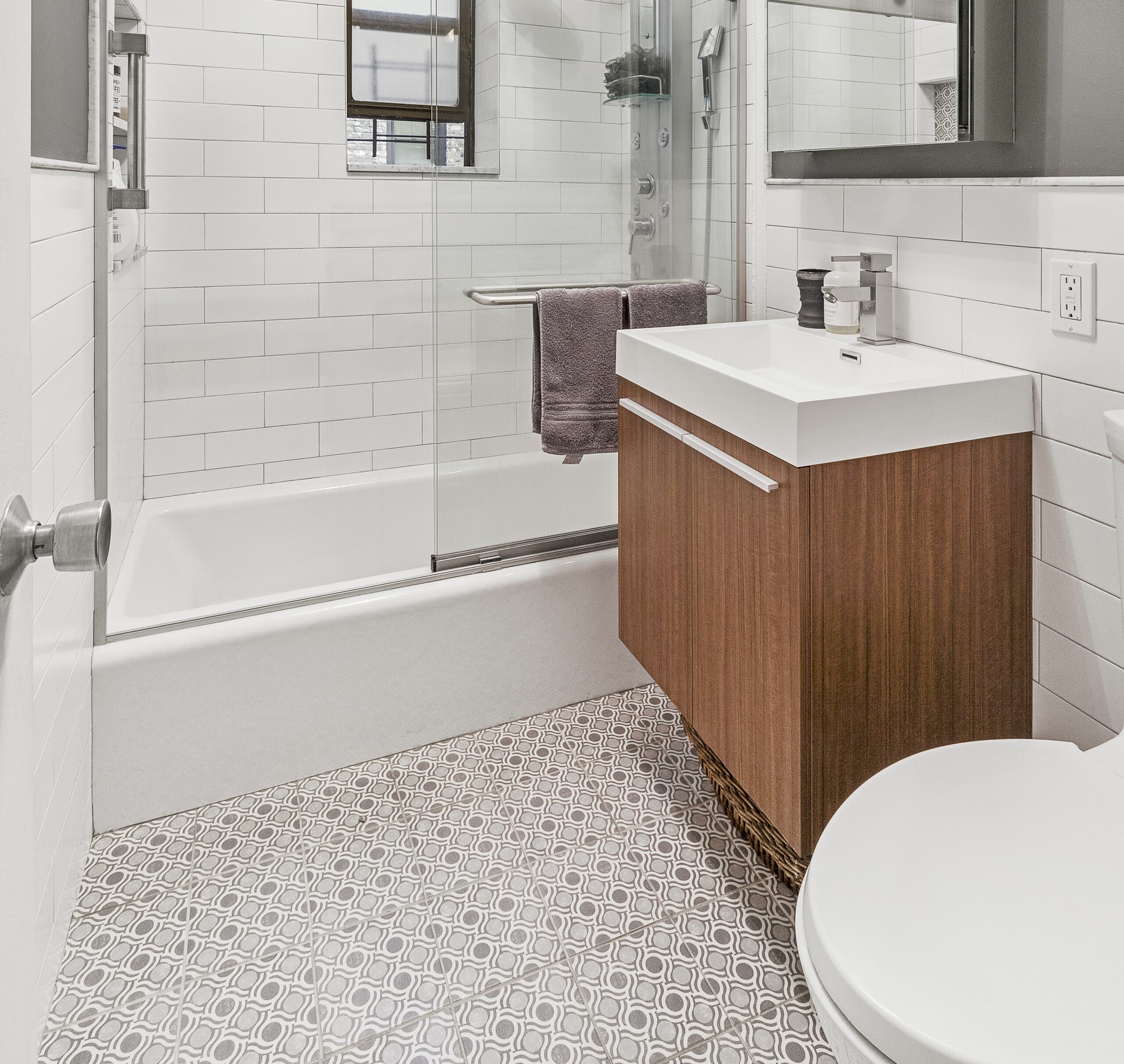
Warm earth-tone bathroom vanities shift the palette from icy gray to clay, sand, mushroom, and nutty brown wood stains that read softer and more lived-in. Instead of a sharp contrast against white tile, these tones sit closer to natural stone and warm metals, which makes the vanity feel like part of the room rather than a standalone box. The look can be modern or traditional, based on the door style, from flat fronts to framed panels.

(Above) Fabio and Melina’s redesigned bath with a compact bathroom vanity, crisp white sink, brass faucet, and hex tile wainscoting.

This direction works well for bathrooms that get limited daylight or feel stark with cooler finishes. Homeowners who want a calmer, less “showroom” look often gravitate to earth tones since they hide smudges and wear better than pale grays. A warm vanity can anchor a bright space, too, especially when the rest of the finishes stay simple and tonal.

(Above) Lori’s reworked bath featuring a teak bathroom vanity, white basin, chrome faucet, and patterned floor tile by the tub.

To make an earth-tone vanity feel cohesive, build a warm stack around it:

  • Creamy white wall tile instead of bright, blue-white finishes
  • Countertops with warm veining, like beige-toned quartz or travertine
  • Brass, bronze, or champagne hardware to keep the metal story warm
  • Linen, oak, and woven textures to soften the hard surfaces

3. Furniture-style vanities with vintage charm

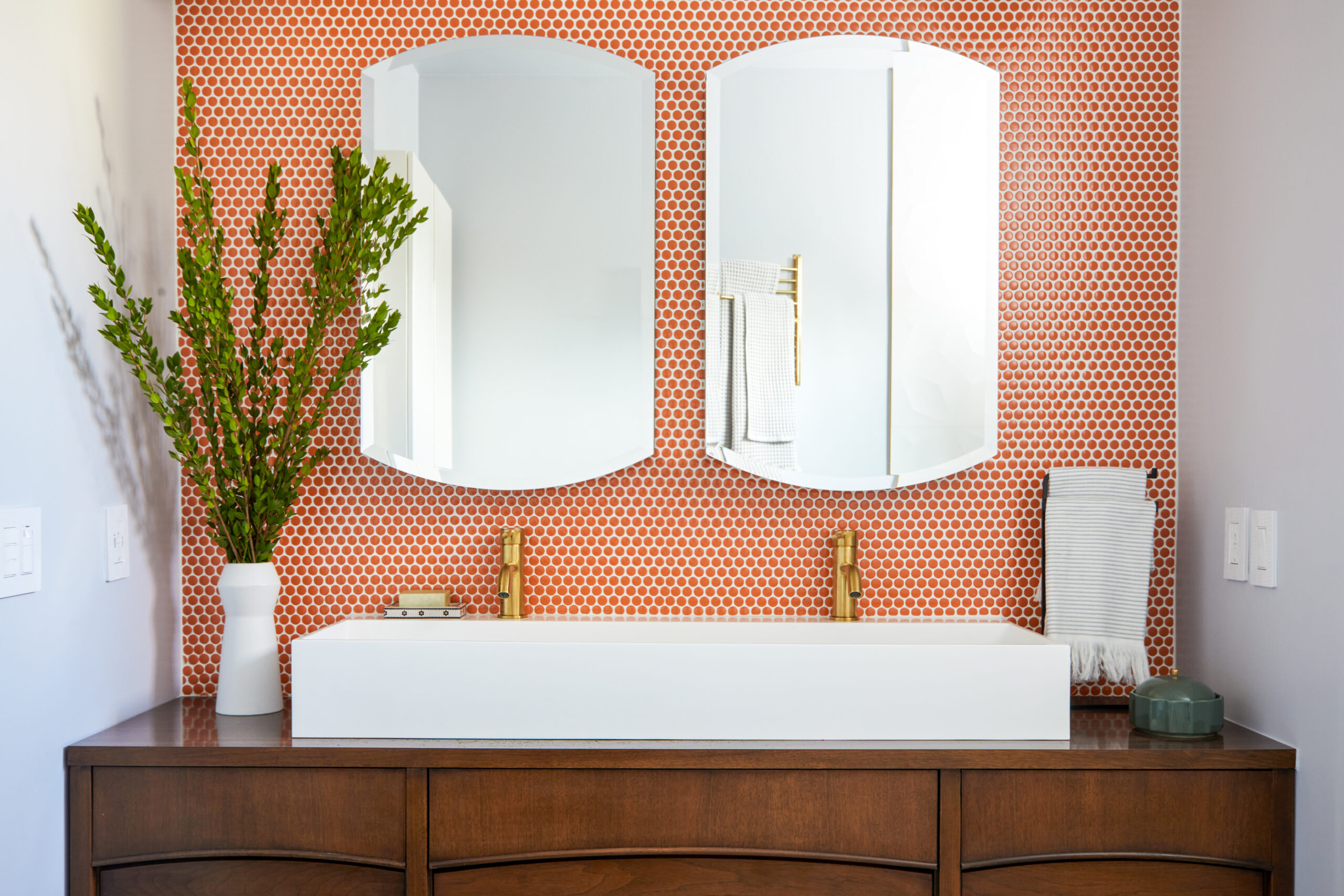
(Above) Liz and Kevin’s reimagined bath with a dresser-style bathroom vanity, trough sink, brass faucets, and orange penny-tile wall.

Furniture-style vanities borrow cues from dressers and washstands, with legs, inset panels, and details that look collected rather than built-in. Some designs use a true antique piece retrofitted for plumbing, while others mimic the feel with turned feet, reeded fronts, or traditional hardware. The result reads layered and personal, not like a standard cabinet dropped into place.

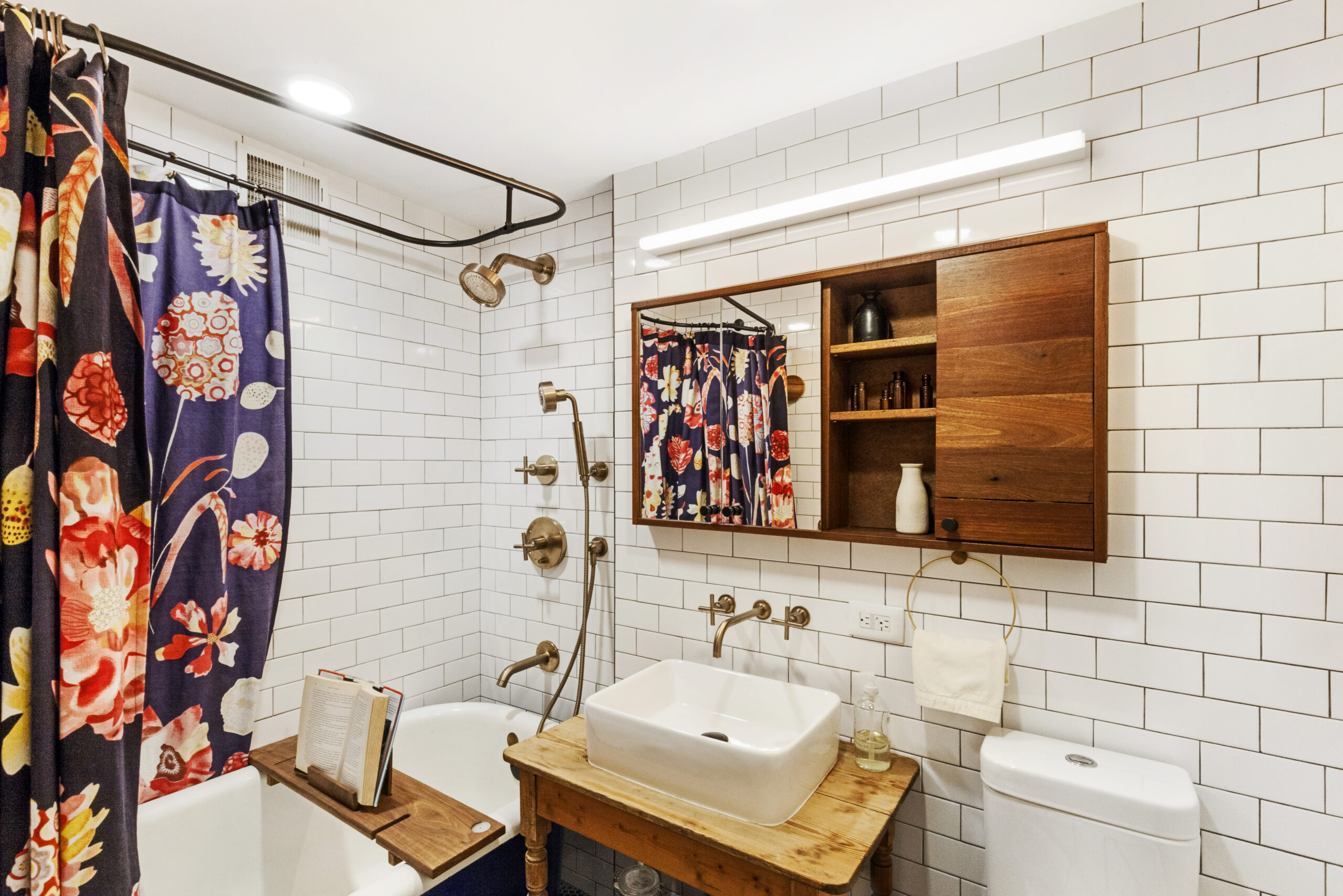
(Above) Brian’s newly renovated bath featuring a table-style bathroom vanity, vessel sink, wall spout, and white subway tile.

This approach fits homeowners who want character in a newer home, or anyone renovating a prewar apartment, townhouse, or bungalow where a sleek box vanity feels out of sync. Smaller bathrooms benefit, too, since legs keep the floor visible and help the room feel lighter. A furniture-style piece can soften hard finishes, which works well when tile and stone are doing most of the heavy lifting.

Renovate expertly with Sweeten

Sweeten brings homeowners an exceptional renovation experience by personally matching trusted general contractors to your project, while offering expert guidance and support—at no cost to you.

Start your renovation

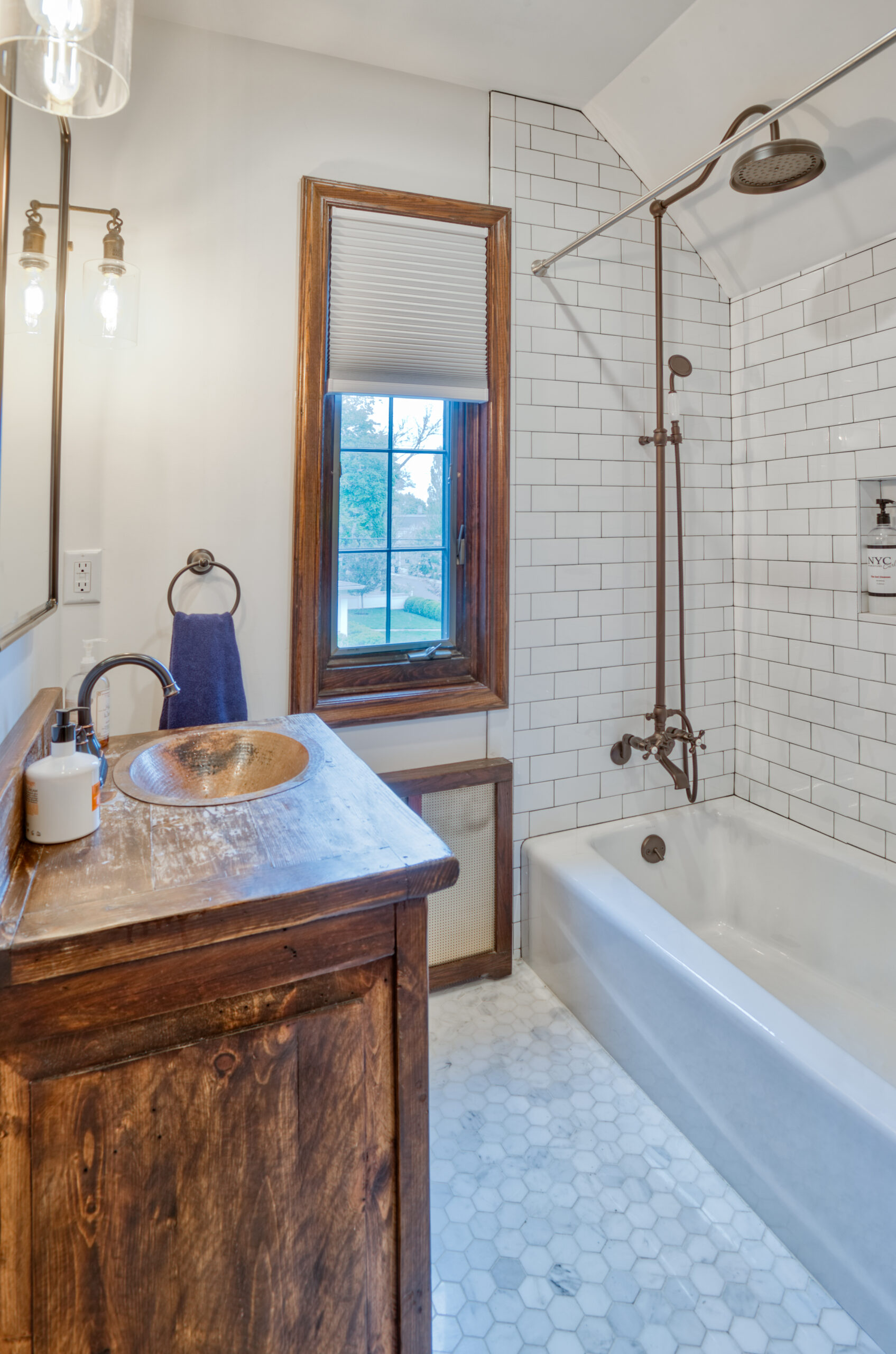
(Above) Sara and Mike’s classic bath remodel with a reclaimed-wood bathroom vanity, hammered copper bowl sink, and subway tile surround.

A few styling moves keep the vanity feeling intentional, not themed:

  • Pair with a classic top, like honed marble or a warm white quartz
  • Use a framed mirror or vintage-inspired sconce to support the period feel
  • Keep wall tile simple so the vanity reads as the focal point
  • Match hardware finish to nearby fixtures so the metals feel consistent

4. Warm metals overtake matte black hardware

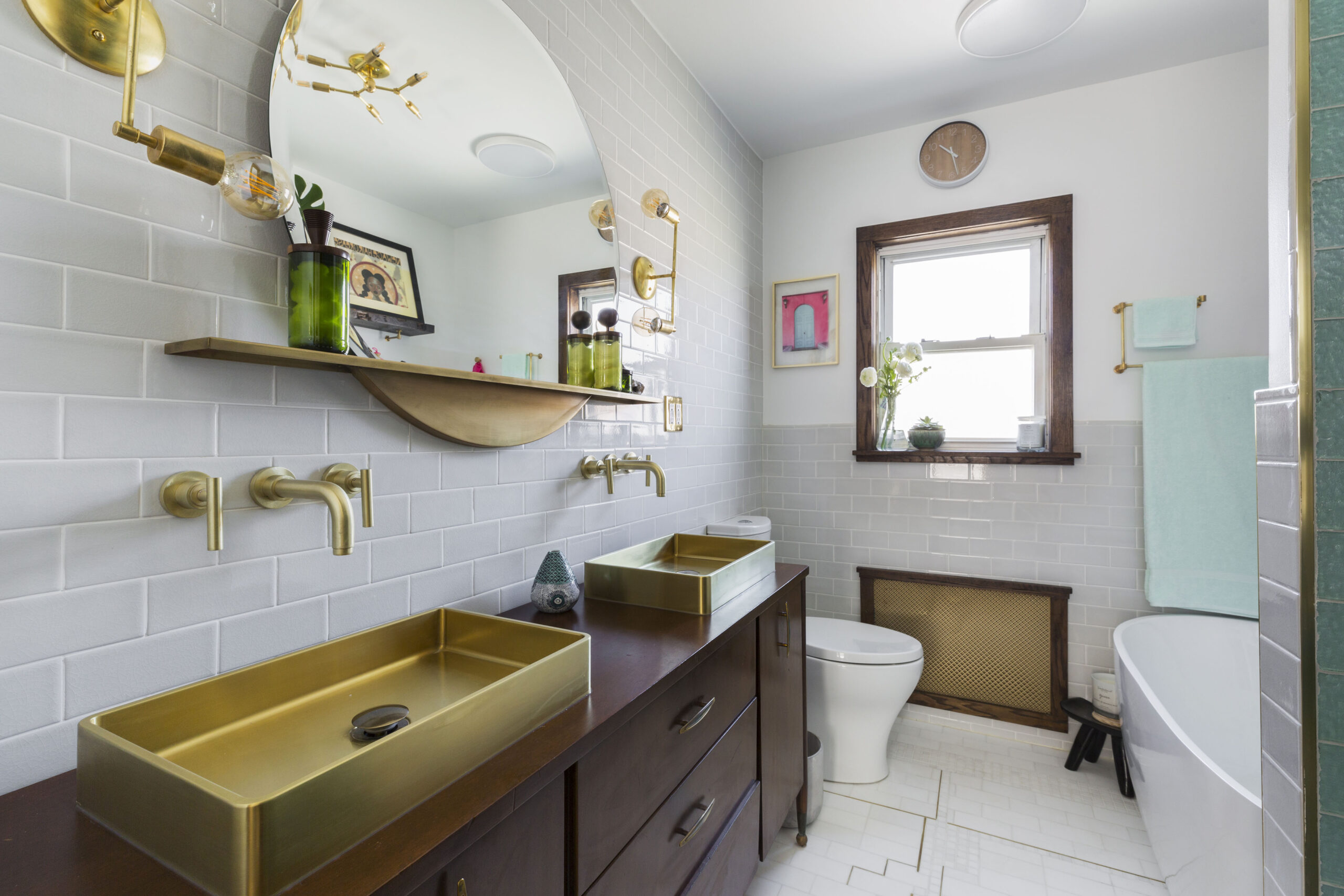
(Above) Allyson’s remodeled bath showing a dark wood bathroom vanity, twin brass trough sinks, wall faucets, and an arched mirror.

Warm metal finishes in a bathroom vanity bring back a softer shine, with brass, bronze, and champagne tones leading the shift away from stark matte black. These metals read welcoming against white tile and natural stone, and they add depth to wood vanities without feeling heavy. In a vanity zone, the change shows up in pulls, faucets, mirrors, and lighting, which can update the room even when the layout stays the same.

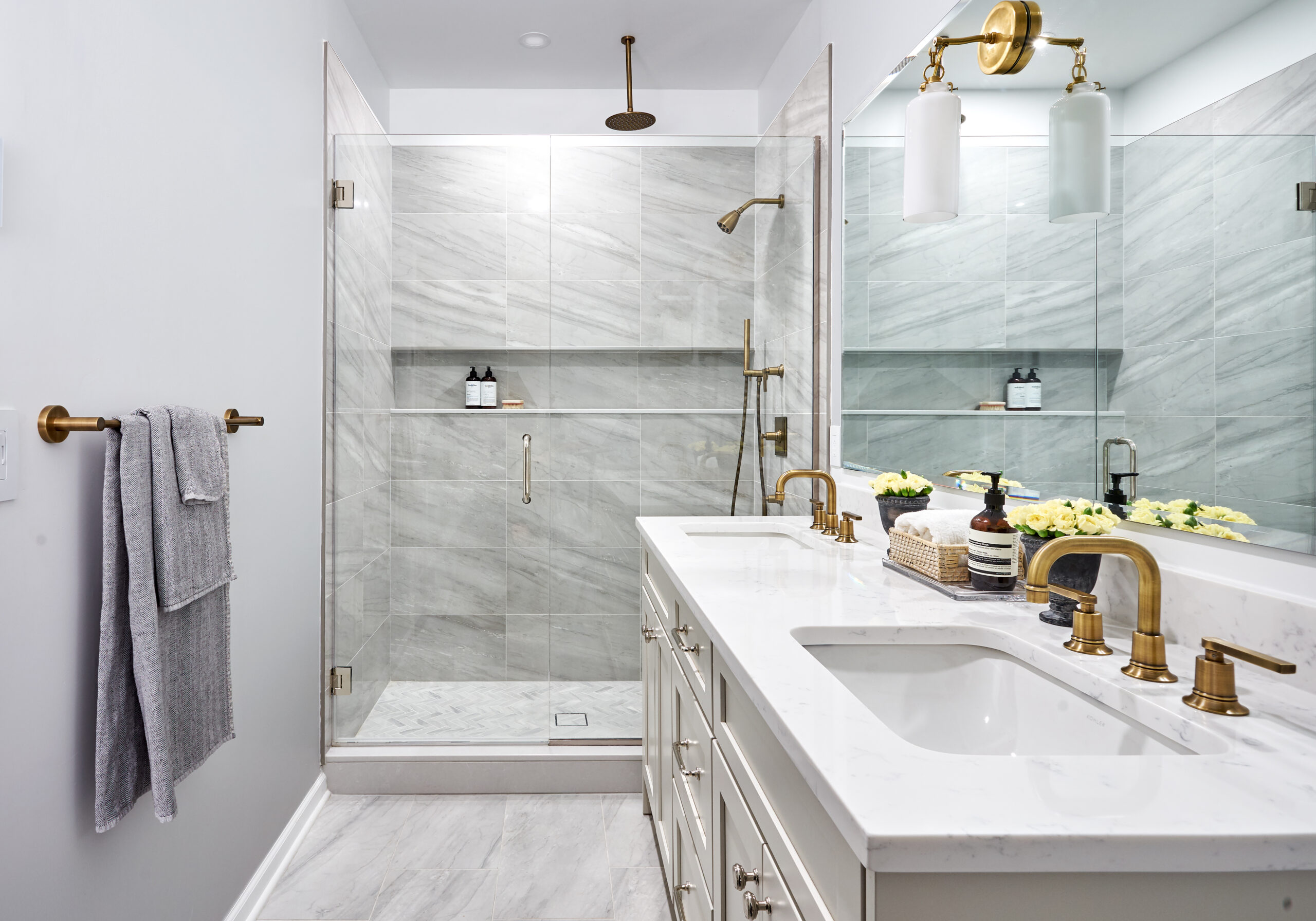
(Above) Leah and Brian’s renovated bath features a white bathroom vanity, quartz top, brass fixtures, and a glass shower in marble-look tile.

This trend works well for homeowners who want a bathroom that feels brighter and less graphic. Warm metals flatter earth-tone palettes and can make cool materials, like gray stone or crisp porcelain, feel more balanced. It is a strong move for smaller bathrooms, where a little glow helps the space feel less flat.

A few pairing choices keep warm metals looking elevated and not overly shiny:

  • Choose brushed or satin finishes to cut glare and fingerprints
  • Repeat the same metal in two or three touchpoints, like faucet, pulls, and sconce
  • Add warmth through white tile with cream undertones or beige grout
  • Pair with walnut, oak, or mushroom-toned vanities for a cohesive tone story

5. Spa-inspired vanities for a wellness retreat

(Above) Shana’s updated bath with a light oak bathroom vanity, double sinks, mirrors, and a glass shower with marble tile.

Spa-inspired vanity design favors clean surfaces, calm materials, and storage that keeps clutter out of sight. The look often includes wide drawers, integrated pulls, and a countertop that can handle daily products without feeling crowded. Soft lighting and a restrained palette help the vanity zone read like a retreat, not a utility station.

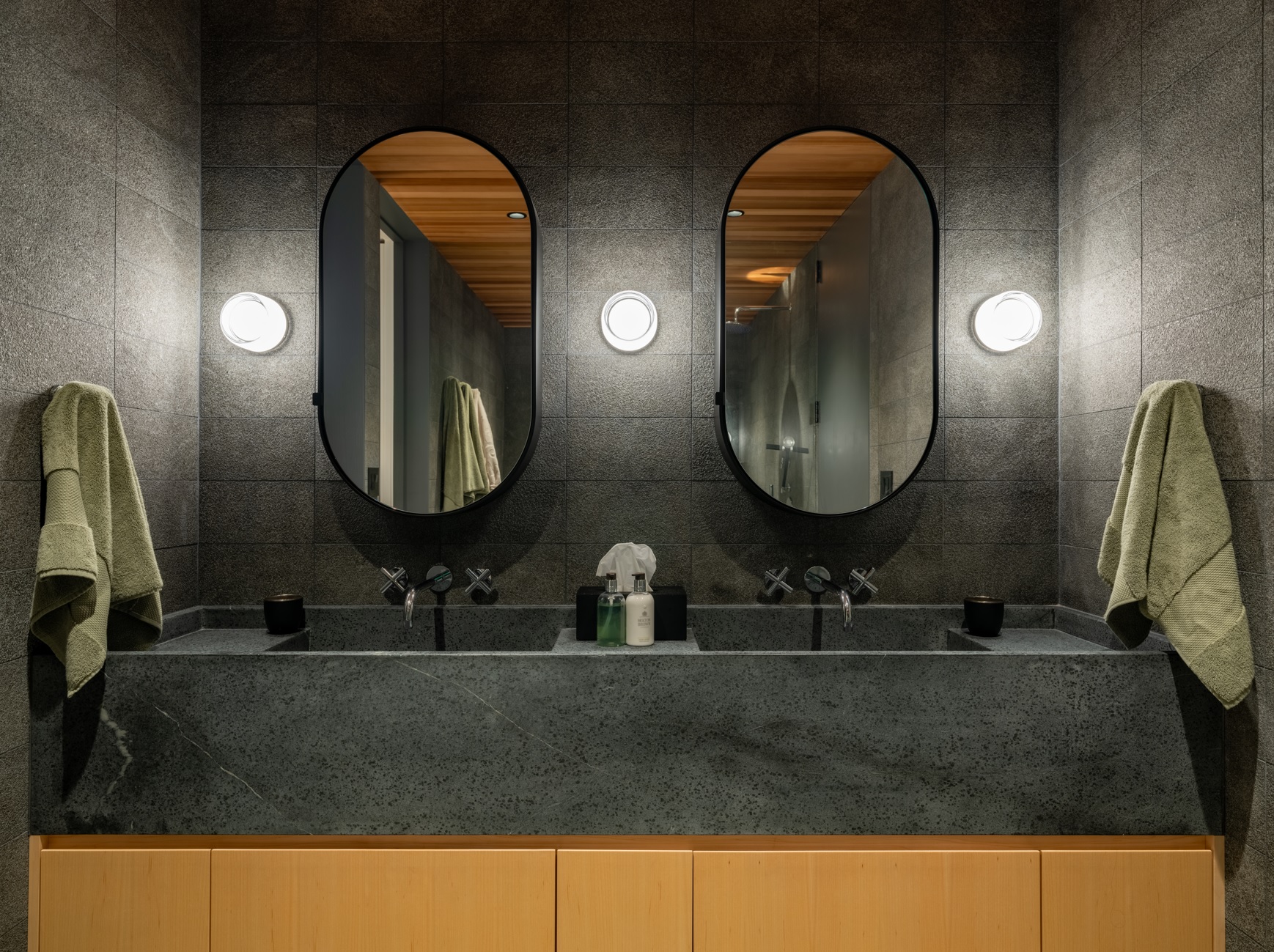
(Above) A family’s redesigned bath featuring a maple bathroom vanity, dark stone counter, twin oval mirrors, and wall-mounted faucets.

This direction fits homeowners who want a bathroom that feels restorative at the start and end of the day. Primary baths benefit most, yet a small bathroom can get the same effect when the vanity is scaled right, and the visual noise stays low. If your goal is a timeless update that reads quietly premium, this is a strong design lane.

These finishing choices help the vanity area feel serene and considered:

  • Use a low-contrast palette, like warm whites, sand, or pale stone
  • Select honed or matte surfaces to reduce glare and keep the mood soft
  • Add layered light with a dimmable sconce plus gentle overhead lighting
  • Keep countertops clear with drawer organizers and a mirrored cabinet for daily items

6. Smart technology integration in vanities

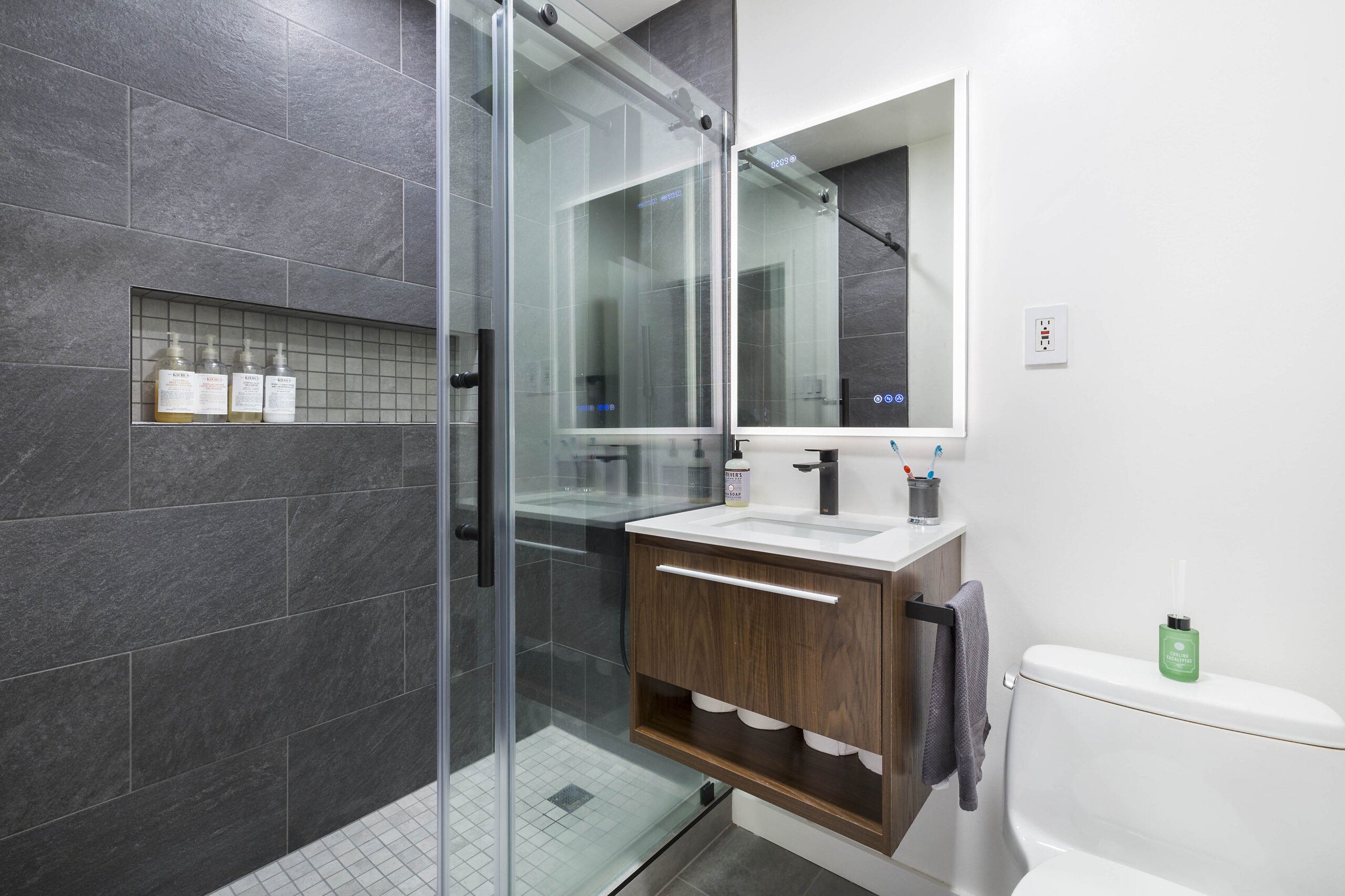
(Above) Dan and Emily’s refreshed bath featuring a floating bathroom vanity, backlit mirror, black faucet, and glass shower with dark tile.

Smart vanity features tuck modern convenience into the places you already use, from in-drawer outlets and USB ports to mirrors with integrated lighting and defoggers. Some setups include touchless faucets or discreet night lighting that turns on at a low level, which keeps the space functional without harsh glare. The goal is simple: fewer cords on the counter and a smoother routine.

This trend makes sense for households juggling multiple schedules, or for anyone who wants a cleaner-looking bathroom without sacrificing everyday tools. Small bathrooms gain a lot from hidden charging and better task lighting, since clutter shows up fast in tight quarters. It is a practical upgrade for aging-in-place plans, too, when hands-free or brighter mirror lighting supports comfort and visibility.

These details help smart features blend in so the vanity still looks design-forward:

  • Choose integrated power inside drawers or a mirrored cabinet, not a visible outlet strip
  • Use warm, adjustable LED lighting so the mirror flatters skin tones
  • Keep controls simple with one touch point, like a single switch or sensor
  • Plan device storage early so cords, chargers, and grooming tools stay out of sight

Bathroom vanity design trends 2026 snapshot

Recent industry data points to a quiet changing of the guard in bathroom vanity finishes. Wood-faced designs have now overtaken painted vanities in popularity, reflecting a greater embrace of natural texture and biophilic warmth in today’s baths. These findings set the stage for homeowners to consider more organic materials and wood grains when selecting bathroom vanity styles.

Homeowners are also personalizing their vanity upgrades for maximum function. A Houzz survey found 62% of renovating homeowners choose custom or semi-custom vanities, often adding soft-close drawers (81%), built-in electrical outlets (33%) and tailored organizers for better storage. Even in compact bathrooms, these integrated features help vanities deliver more convenience and efficiency in limited space.

Taken together, these findings point to a 2026 vanity that feels less like a standard cabinet and more like a tailored piece of the home. When warm wood finishes pair with made-for-you storage and built-in convenience, the bathroom gets easier to live in and better to look at for years.

Frequently asked questions

A bathroom vanity is a cabinet or furniture-style base that supports a sink and countertop, with storage below or nearby. It organizes daily items and anchors the bathroom’s layout and finish choices.

The main benefit of a bathroom vanity is built-in storage that keeps the sink area clear and the room looking orderly. It adds function and polish by giving toiletries, towels, and tools a dedicated home.

Yes, you can add a bathroom vanity in a small bath. A wall-mounted or narrow-depth bathroom vanity can add storage without crowding walk paths or making the room feel tighter.

The difference between a bathroom vanity and a sink is that the vanity is the cabinet or base, while the sink is the basin that connects to plumbing. A bathroom vanity can hold a sink or sit near one, yet a sink can be installed without a vanity in some layouts.

You may also like

Renovate with Sweeten!

sweeten-magic

We’ll match you with vetted general contractors and offer support until your project is done — at no cost to you!

Start your renovation

Customer review 5.0

sweeten-thumbsup

“I was able to source 4 contractors in a few days with Sweeten and was started on my project quickly.”

— Hagan R. from Atlanta, GA

Read more reviews —>
Start your renovation
no-cost-blue

Subscribe to our
renovation newsletter