Kitchen Peninsula Guide and Ideas for the Modern Kitchen

Kitchen layouts can fall apart fast when traffic, prep, and seating all compete for the same few feet. A kitchen peninsula fixes that squeeze by adding a connected work surface that brings order without shutting down the room.

This Sweeten guide will talk about its upsides, when it makes the most sense, and design ideas you can steal for your remodel.

Key points

  • A kitchen peninsula adds prep space and storage without needing a fully open footprint.
  • Built-in seating keeps guests close and gives you a casual spot for daily meals.
  • Good clearance around stools and appliance doors decides whether it feels easy or crowded.
  • Details like lighting, outlets, and end panels make a peninsula look finished.

What is a kitchen peninsula?

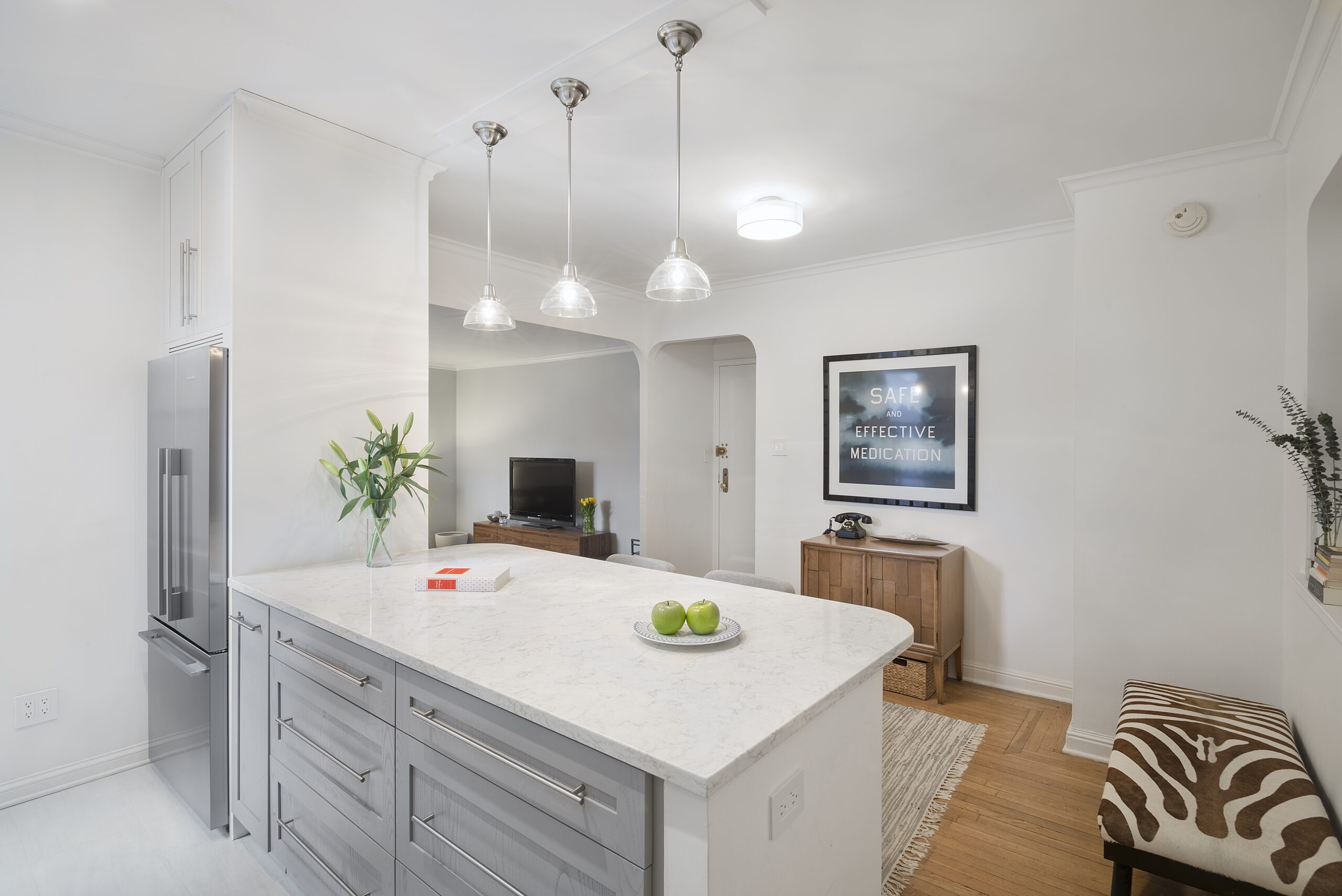
(Above) Heather’s kitchen with a white peninsula, gray drawers, wooden flooring, and bright lighting

A kitchen peninsula is a run of cabinetry and countertop that attaches to an existing wall or base cabinet line, then extends into the room to add usable surface area. It acts as a natural anchor for prep and serving, making it easier to use the kitchen to entertain guests without crowding the cook. Built on a fixed connection point, it brings the stability and storage of base cabinets, plus space for outlets, seating overhangs, or a defined work zone.

Compared with a kitchen island, a peninsula stays connected on one side, which can make it a better fit when floor space cannot support clear walkways around all four sides. That fixed edge can help organize zones, especially in an open-plan kitchen with a peninsula.

  • Peninsula: Attached on one end, blends prep space, storage, and seating
  • Island: Freestanding, needs clearance on all sides for smooth traffic
  • Breakfast bar: Seating-forward surface, often slimmer and less prep-driven

Common kitchen peninsula shapes include a straight section that extends from the end of a cabinet run. During a kitchen remodel, L-shaped or U-shaped layouts can wrap the kitchen and add more landing space. Corner returns and end panels help the form look finished from every angle and keep the layout feeling intentional.

Kitchen peninsula pros and cons

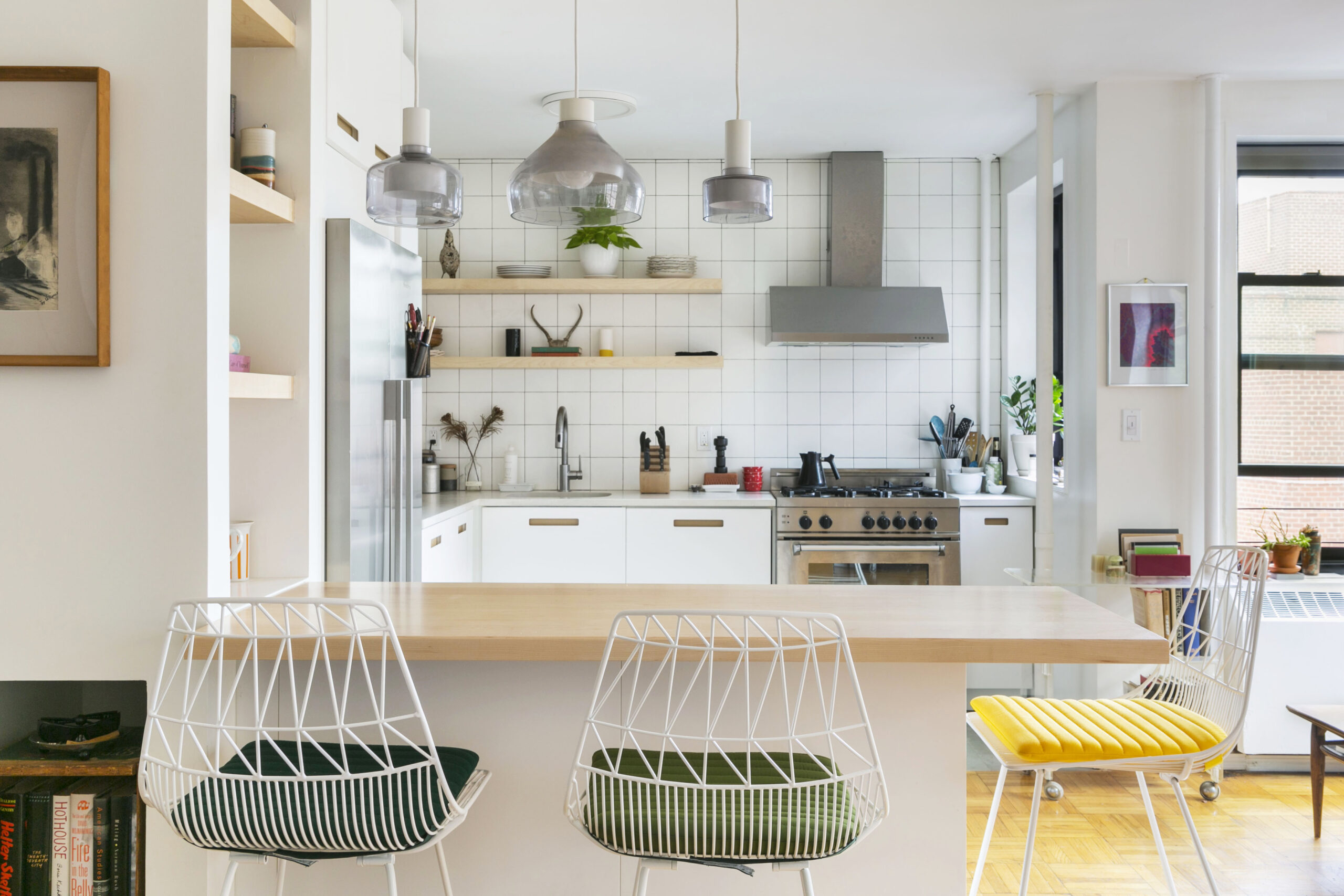
(Above) Melissa’s Brooklyn kitchen with a butcher block counter peninsula, white wall tile, and wooden flooring

Peninsulas can make a layout feel more usable without a full kitchen island footprint. Let’s take a closer look at the pros and cons of a kitchen peninsula to learn more about it:

Kitchen peninsula pros

  • Extra counter area for prep, serving, and homework
  • Built-in seating that keeps guests close yet out of the cook’s path
  • More base-cabinet storage for cookware, small appliances, and pantry items
  • Stronger zone definition in open plans, which helps the kitchen feel organized

Kitchen peninsula cons

  • Tighter traffic flow, with bottlenecks near stools, doorways, or appliance fronts
  • Less layout flexibility over time, since the attached run locks in the footprint
  • Awkward clearances in compact rooms, where corners and end seats can feel cramped

Planning to renovate? Get free cost estimates from our partner GCs!

Get matched with our vetted general contractors and receive at least 3 quotations for free! You can also find endless home renovation inspiration, detailed guides, and practical cost breakdowns from our blogs.

When to consider a kitchen peninsula

(Above) Dia and Alex’s kitchen with white Shaker cabinets, black seating, and wooden flooring

You should consider a kitchen peninsula when you want more workspace and seating, but your kitchen does not have enough open space for a standalone island. For homeowners planning a kitchen renovation, a peninsula can add function with fewer layout changes when it ties into existing cabinetry and utilities. It can bring order to an open room by creating a clear edge between cooking and relaxing zones.

Here are the use cases where a peninsula tends to work best:

Small kitchens that need more utility

Small kitchens often lack landing space near the sink, range, or fridge, and a peninsula can add that extra surface without taking over the room. Seating along the outer edge can replace a small table, which helps when square footage feels limited.

Clear walk paths still matter, so the best results come when stools and corners do not crowd appliance doors or main traffic lanes.

Open kitchens that need boundaries

Open plans can feel undefined, with cooking clutter visible from the living area, and a peninsula gives the kitchen a clean perimeter. That attached counter creates a natural spot for serving and casual conversation, which supports entertaining without pulling guests into the work zone.

A finished back panel, thoughtful lighting, and coordinated materials help it read like a designed feature rather than an afterthought.

Work triangle and workflow goals

When prep, cooking, and cleanup areas feel disconnected, a peninsula can tighten the workflow by adding a dedicated station where it counts. Placing it near the sink or fridge supports prep tasks, then keeps ingredients and tools within easy reach.

Planning for clearance at key pinch points keeps the flow smooth, so the layout supports real movement instead of forcing constant detours.

Kitchen peninsula designs to inspire your remodel

Design ideas make more sense when you can see how real homeowners used them to fix layout problems. The five remodels below show how one feature can add seating, storage, and definition while keeping the layout comfortable and open.

1. Adding a kitchen peninsula for family life

(Above) Sarah and Alok’s kitchen with a white peninsula, white cabinets, wooden flooring, and brick walls

Sarah and Alok updated their Tribeca kitchen during their Sweeten renovation, and the new peninsula became the piece that added function without changing what already worked in the layout. Their contractor paired the peninsula with simple IKEA cabinetry and ceiling-height storage, then added an overhang for stools.

The peninsula helped free up counter space and made the kitchen easier to use for everyday family life.

2. A peninsula that connects kitchen and living space

(Above) Fatima and Scott’s apartment kitchen with white countertop peninsula, gray cabinetry, and light wooden flooring

Fatima and Scott bought a Clinton Hill apartment with good bones, yet the kitchen felt dark, disconnected, and short on storage. During their home remodel, they reworked the layout and added a peninsula that connects the living area to the cook space, which made daily routines and hosting feel easier.

Renovate expertly with Sweeten

Sweeten brings homeowners an exceptional renovation experience by personally matching trusted general contractors to your project, while offering expert guidance and support—at no cost to you.

Start your renovation

Light gray cabinets, bright white quartz, and classic subway tile kept the update clean, and the peninsula added drawers on the kitchen side plus a wine fridge facing out.

3. A concrete peninsula with calm, quiet style

(Above) Mathew’s kitchen with gray peninsula, wooden cabinets, and hanging lights

Designer Matthew chose a peninsula as part of his Clinton Hill renovation to support a kitchen that felt light, peaceful, and pared back. He mixed wood and laminate cabinetry to keep the volumes readable, then used concrete for both the countertop and peninsula since it could be shaped to fit the space and age naturally.

With an expert contractor helping him stay within budget, the peninsula became a clean focal point that still left room for art and daily living.

4. A peninsula that fixed a broken floor plan

(Above) Tracey and Brian’s kitchen with peninsula, blue cabinets, and natural stone kitchen backsplash

Tracey and Brian lived for years with a kitchen that felt cramped and hard to move through, so function drove every decision in their Pelham Manor renovation. After posting on Sweeten, their plan focused on better flow and a stronger eat-in zone with storage and pantry space, which led to a reworked layout that finally felt usable.

Blue cabinetry, patterned floor tile, and a new peninsula helped the kitchen become a more comfortable place to gather, even for their teenagers.

5. Flipping the peninsula for better kitchen flow

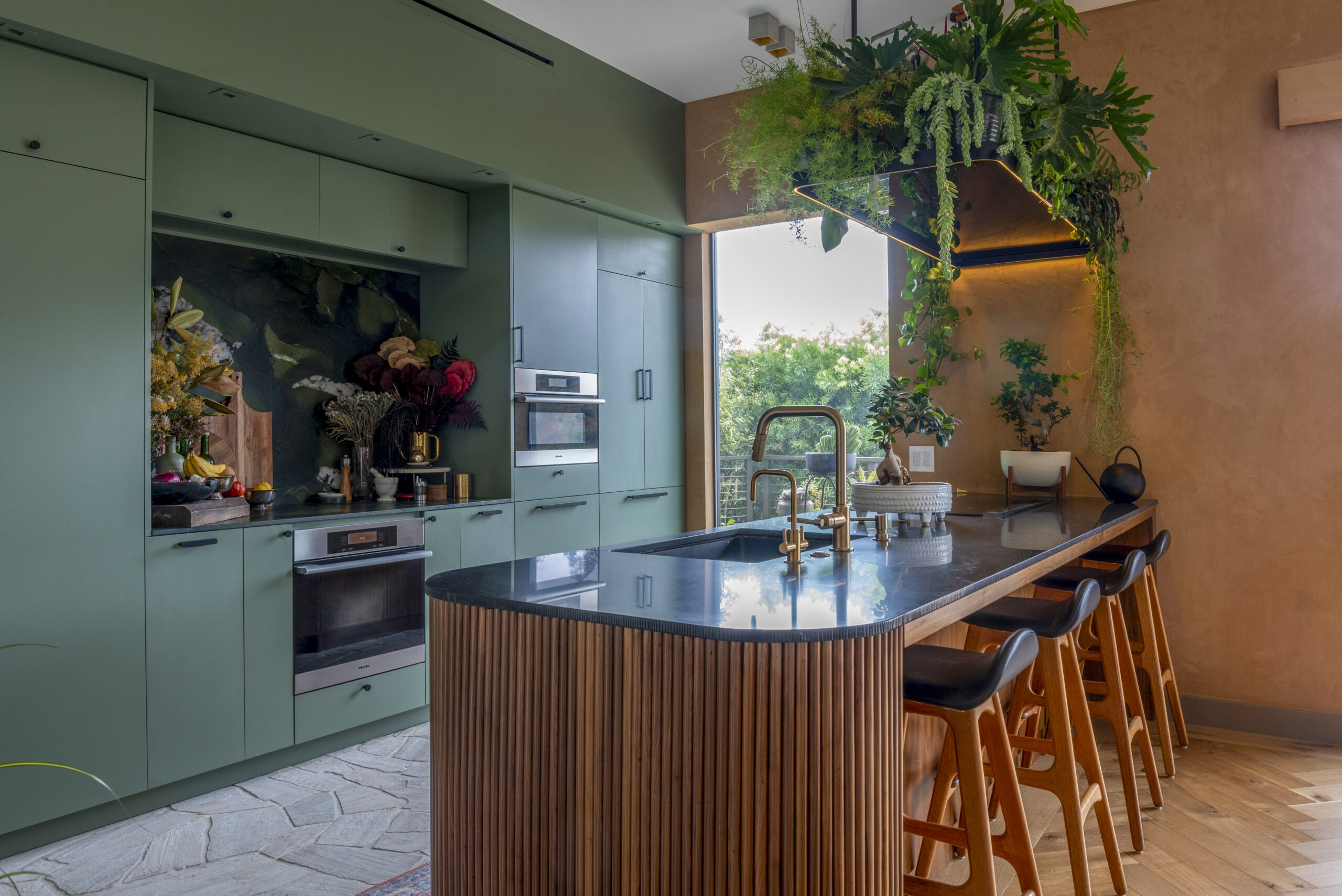
(Above) Barbie’s kitchen with green-colored cabinets, wood-stained peninsula, brass faucets, and hanging plants

Designer Barbie led her clients’ Laurel Canyon remodel with Sweeten as a resource for finding the right general contractor. The kitchen already had a peninsula, yet its placement forced entry at the far end, so Barbie flipped it to open up circulation and make the room feel easier to move through.

Old Hollywood and mid-century cues carried through the finishes, with details like LED-lit shelving above the cooktop and an etched edge on the peninsula countertop.

6. Adding privacy without closing the room off

(Above) Erica and Joshua’s kitchen featuring a wood-stained peninsula, white shaker cabinets, and wooden flooring

Erica and Joshua opened their Clinton Hill kitchen to the dining room, then added a peninsula to keep a visual divide. Joshua wanted an open plan, and Erica wanted privacy between rooms, so the layout met both goals.

Kitchen storage sat on both sides with drawers and an end cabinet, and seating for three paired with a gooseneck sconce for meals or laptop time.

7. Replacing an awkward island with a wide run

(Above) Meredith and Jason’s renovated kitchen with a white quartz peninsula, white cabinetry, and wooden flooring

Meredith and Jason replaced an awkward kitchen island in their Chelsea kitchen with a wide peninsula recommended by their general contractor. Meredith said she agreed after she saw the drawing.

Counter space doubled, the microwave moved out of sight, deep drawers held storage, and a white waterfall edge made a strong first impression at the front door.

8. Using butcher block for warmth and contrast

(Above) Sam and Sean’s remodeled kitchen featuring a peninsula with butcher block, gray cabinetry, and wooden flooring

Sam and Sean ruled out a large island in their Clinton Hill kitchen to keep the room feeling big. A small peninsula added work surfaces and storage and separated the main living area from the cook zone, with gray kitchen cabinets throughout.

Butcher block contrasted with white Caesarstone, and the three-sided build included drawers, seating for two, and end shelving for books.

9. Building an L-shape that fits real life

(Above) Emily and Trey’s kitchen showcasing a peninsula with wooden cabinetry, metal seats, and bright lighting

Emily and Trey opened their downtown Brooklyn kitchen by removing walls and loft storage, which made room for a wide L-shaped peninsula. A Carrara marble top and bar seating turned one side into a go-to spot for their two kids during cooking time.

The sink sat on the peninsula, facing the windows, and the Sweeten contractor built around a fixed intercom column as a crisp architectural detail.

10. Centering the cooking zone for a social feel

(Above) Henry’s renovated kitchen with a white peninsula, cabinets, and tiled kitchen backsplash design

Henry connected his West Village kitchen and living room by replacing a wall with a peninsula. The change extended an L-shape into a U-shape with more storage and prep room.

A centered range with a hood created a sociable cooking zone, and a front-loading washer and dryer fit under the counter.

How to properly plan for a kitchen peninsula

A peninsula tends to feel “right” or “in the way,” and that outcome gets decided long before installation day. Smart planning starts with how people move through the room, then shifts to the details that make the surface truly usable.

Before you price cabinets, mock up the footprint with painter’s tape and walk it like a normal day, stools included. Open appliance doors, pull out drawers, and pay attention to the spots where two people pass each other. Once the route between sink, range, and fridge feels clean, your contractor can confirm aisle widths and lock the dimensions.

With the layout settled, the rest becomes a matter of coordination so nothing gets missed in rough-in work. Use this list to keep decisions tidy, and so everyone stays on the same page:

  • Overall length, depth, and counter overhang
  • Seat count and spacing per stool
  • Drawer and cabinet plan, trash pull-out, end-panel finish
  • Outlet count and placement, plus circuit needs
  • Task lighting locations and switch placement
  • Sink and plumbing plan, if part of the design
  • Lead times for cabinets, counters, and fixtures

Ready to start your own renovation journey?

Post your project on Sweeten for free and make your dream kitchen a reality. Sweeten puts you in control of your renovation, from finding the perfect contractor and gathering design inspiration, to using cost guides to plan your budget wisely. Renovate expertly with Sweeten.

Frequently asked questions

A kitchen peninsula can be a better choice when your layout cannot support the clearance an island needs on all sides. A kitchen island tends to win when you have enough floor space for smooth circulation and want access from every direction.

One thing to consider first before installing a kitchen peninsula is clearance for traffic, seating, and appliance doors. Test it by pulling stools out and opening doors so you can catch crowded spots before anything gets built.

Yes, you can install a kitchen peninsula in a small kitchen when it adds surface and storage without restricting the main walk path. Keep the footprint tight and confirm you still have comfortable aisle space for daily movement.

You may also like

Renovate with Sweeten!

sweeten-magic

We’ll match you with vetted general contractors and offer support until your project is done — at no cost to you!

Start your renovation

Customer review 5.0

sweeten-thumbsup

“It was great to work with Sweeten. They provided excellent choices, and were honest with us when we asked questions. We recommend them for others like us with no previous experience.”

— Mary C. from Philadelphia, PA

Read more reviews —>
Start your renovation
no-cost-blue

Subscribe to our
renovation newsletter