Our Top 7 Custom Built-In Storage Ideas From Home Remodels

Running out of storage doesn’t always mean you need more square footage, and it definitely doesn’t mean every room needs another bulky cabinet. In these Sweeten renovations, homeowners found clever ways to tuck custom built-ins into overlooked spots, from kitchen peninsulas and fireplace walls to attic bathrooms, hallway shelves, and guest-room offices.

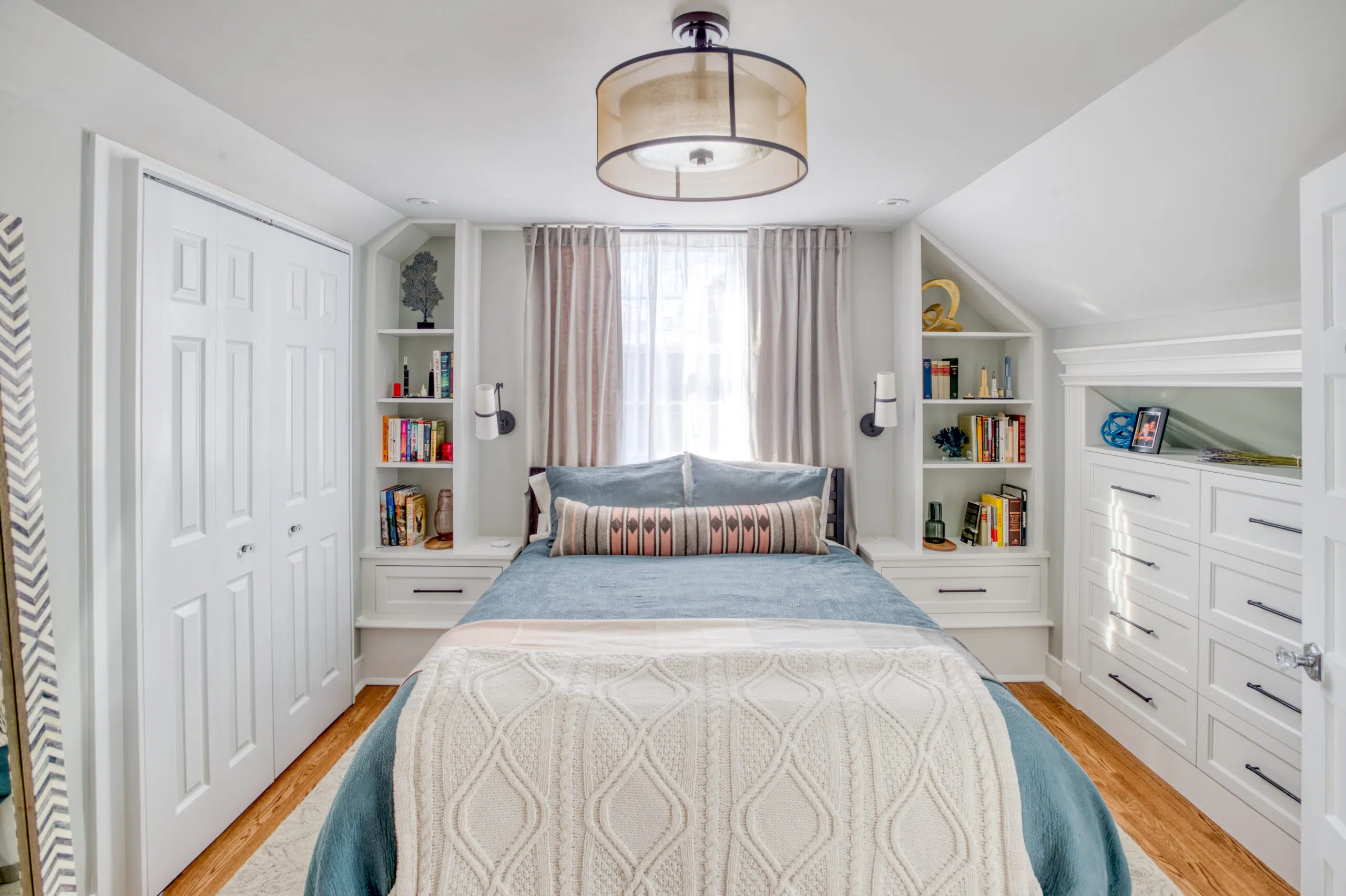
Pelham bedroom with custom built-ins framing the bed, open shelves, storage drawers, closet storage, and sloped-ceiling cabinetry after renovation.
(Above) Custom built-ins helped this Pelham attic bedroom feel finished, organized, and better suited to daily family life after the renovation.

Key takeaways for using custom built-ins for storage

  • Look for the spots standard furniture can’t handle well, like alcoves, tight corners, sloped ceilings, and narrow hallways. Those are often the places where a custom built-in makes the most sense.
  • Start with what you reach for every day. A kitchen may need pantry pull-outs and deep drawers, while a living room may need a mix of book storage, closed cabinets, and a place to hide media gear.
  • Use built-ins when one room has to do two jobs. A guest room can double as an office, a dining nook can hide drawers under the bench, and a bedroom closet wall can take the place of extra furniture.
  • Balance open and closed storage. Keep the pretty or often-used pieces easy to grab, then tuck the visual clutter behind cabinet doors.
  • Before thinking about adding square footage, look at the footprint you already have. Walls, niches, stair areas, and room transitions can often hold more than you’d expect.

1. Built-ins turn a Park Slope co-op into more rooms

  • Location: Park Slope, Brooklyn, New York
  • Goal: Rework a 700-square-foot prewar co-op so it could fit five rooms, a better kitchen, a more comfortable bathroom, and useful storage throughout.
  • Renovation scope: The team swapped the kitchen and a bedroom, opened the floor plan, added a peninsula and dining nook, built custom cabinets throughout the apartment, and created storage in the foyer, den, bedrooms, dining area, kitchen, and bathroom.
  • Result: The apartment kept its prewar character but gained a brighter layout, a larger-feeling kitchen, and built-in storage that helped each room feel more settled.

Laura’s Park Slope apartment had plenty of charm, but the original layout was working against her. A long hallway took up valuable square footage, the galley kitchen was hard for more than one person to use, and the home needed storage that felt planned instead of squeezed in later.

She posted the project on Sweeten and worked with a contractor who saw a better way to use the apartment’s angled wall. The team swapped rooms, opened the kitchen, added a dining nook with drawers under the bench, and lowered the foyer ceiling to create nearly 30 square feet of overhead storage.

The built-ins gave the small co-op a calmer sense of order. Cabinets around the dining nook, bedroom closets that double as nightstands, and den millwork sized for a future bed helped the apartment feel flexible without losing its warmth.

We can help plan your renovation

Find endless home renovation inspiration, detailed guides, and practical cost breakdowns from our blogs. You can also post your project on Sweeten today and get matched with our vetted general contractors and get estimates for free!

2. A Clinton Hill kitchen earns every inch of storage

  • Location: Clinton Hill, Brooklyn, New York
  • Goal: Open the kitchen to the living and dining areas while adding storage that could support serious cooking, hosting, and daily routines.
  • Renovation scope: The renovation removed a partition around the refrigerator, relocated plumbing, added a six-foot peninsula, installed custom kitchen storage, widened the hallway for a built-in bookshelf, merged bedroom closets, and updated lighting and electrical.
  • Result: The kitchen became the center of the apartment, with built-in shelves, deep drawers, pull-out storage, pantry features, and enough room for people to gather without crowding the cook.

Jessica’s Clinton Hill co-op had the square footage she and Jesse wanted, but the kitchen felt cut off from the rest of the home. Since they loved to cook and host, the old partition around the refrigerator made the layout feel more frustrating than useful.

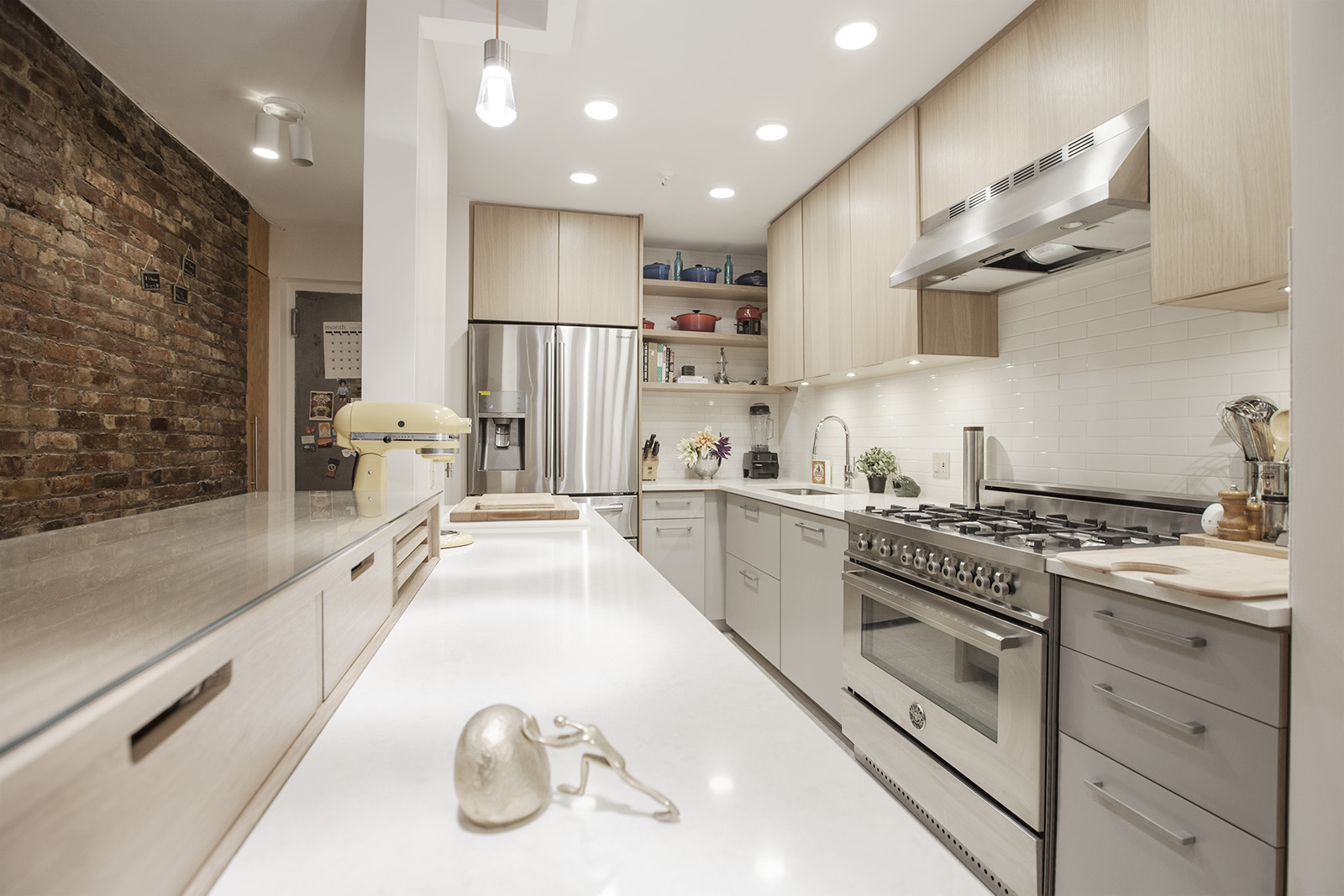
They posted the project on Sweeten, hired their Sweeten contractor, and later brought in Blumenthal Architecture and Interiors for design support. Together, the team opened the kitchen, added a six-foot peninsula with full-length drawers, built cookbook shelves into the end, and included pull-out pantry storage, a spice rack, toe-kick drawers, and a built-in garbage bin.

The storage did not stop at the kitchen. A long built-in hallway bookshelf and full-height bedroom closets gave the apartment a more connected, considered feel from room to room.

3. A slim storage wall links an Upper West Side home

  • Location: Upper West Side, Manhattan, New York
  • Goal: Make a 500-square-foot one-bedroom co-op comfortable for two people by adding storage without making the apartment feel boxed in.
  • Renovation scope: The team redesigned the kitchen, enlarged the bathroom, built a continuous custom storage wall, added open shelving and hidden bar storage in the living room, tucked in built-in hampers, and customized the walk-in closet.
  • Result: The apartment gained a cleaner layout, a more useful kitchen and bathroom, and a long run of storage that tied the rooms together visually.

Melissa had found the right Upper West Side apartment, but the one-bedroom co-op came with a tiny kitchen, a tight bathroom, and only one closet. Once her fiancé joined the plan, storage became one of the most important parts of making the apartment work for two people.

She turned to Sweeten to find an architect and contractor who could help use every inch with care. The solution was a custom storage wall that starts in the living room with open shelves, hidden bar storage, and a wine fridge, then continues through the kitchen, past built-in hampers, and into a bedroom closet tailored to the couple’s needs.

That long cabinet run did more than hide belongings. It gave the apartment a quiet visual line from the living room to the bedroom, so the storage felt like part of the architecture rather than an add-on.

4. Custom bookcases warm up a Fort Greene prewar

  • Location: Fort Greene, Brooklyn, New York
  • Goal: Refresh a 1,000-square-foot prewar co-op with a cleaner, warmer look while making the kitchen and living room feel more connected.
  • Renovation scope: The team stripped and refinished the floors, skim coated and repainted the walls, added custom bookcases around the fireplace, designed a new mantel, installed dark gray custom kitchen cabinets, and scaled a planned island down to a practical peninsula.
  • Result: The living room gained a stronger focal point, and the kitchen gained cabinet storage on both sides of the peninsula without closing off the room.

Cat loved the Fort Greene location and the prewar bones, but the apartment’s finishes felt worn and dated. The red brick fireplace, uneven walls, yellowy-beige paint, and cherry cabinets did not match the warmer modern home she and Jordan had in mind.

Renovate expertly with Sweeten

Sweeten brings homeowners an exceptional renovation experience by personally matching trusted general contractors to your project, while offering expert guidance and support—at no cost to you.

Start your renovation

They posted their renovation project on Sweeten and found a contractor who helped them sort through choices, limitations, and the surprises that came up during demolition. When the dividing wall could not come down as planned, the team adjusted the island into a peninsula with storage for cookware, kitchenware, trash, recycling, napkins, placemats, and cookbooks.

The custom bookcases changed the feel of the living room right away. Paired with the new mantel and the kitchen peninsula, the built-ins helped the two rooms feel related without making the prewar apartment feel too polished.

5. Attic built-ins finish a Pelham top floor

  • Location: Pelham in Westchester County, New York
  • Goal: Turn a quirky 700-square-foot attic level into a more comfortable family floor with a new primary bath, refreshed bedrooms, and more storage.
  • Renovation scope: The team added a primary bath, refreshed the bedrooms, reworked the floor plan with new doorways, installed new windows and floors, added custom built-ins in the bedroom and stairwell, and fit bathroom cabinetry around the attic’s sloped conditions.
  • Result: The third floor became a brighter, more useful family space with storage tucked into places that might otherwise have gone unused.

Kusum’s Pelham attic level held the family’s main bedrooms, but the converted third floor came with tight conditions, minimal storage, and only one bathroom for the upper unit. Angled ceilings and odd corners made the renovation feel more specific than a standard bedroom-and-bath update.

After hitting dead ends with local recommendations, she came to Sweeten and was matched with contractor and architect teams who could handle the larger plan. What began as a bath project grew into a broader attic remodel, with custom built-ins in the primary bedroom and stairwell, plus a custom medicine cabinet, sloped recessed cabinet, built-in wall cabinet, and other millwork.

The built-ins helped the attic feel less like leftover space and more like a finished family floor. Storage fit into the architecture instead of fighting it, which made the bedrooms, stairwell, and bathroom feel calmer and more complete.

6. A Tribeca office becomes a guest room with storage

  • Location: Tribeca, Manhattan, New York
  • Goal: Update a 1980s apartment with a more open layout, better flow, and a flexible office that could also work as a private guest room.
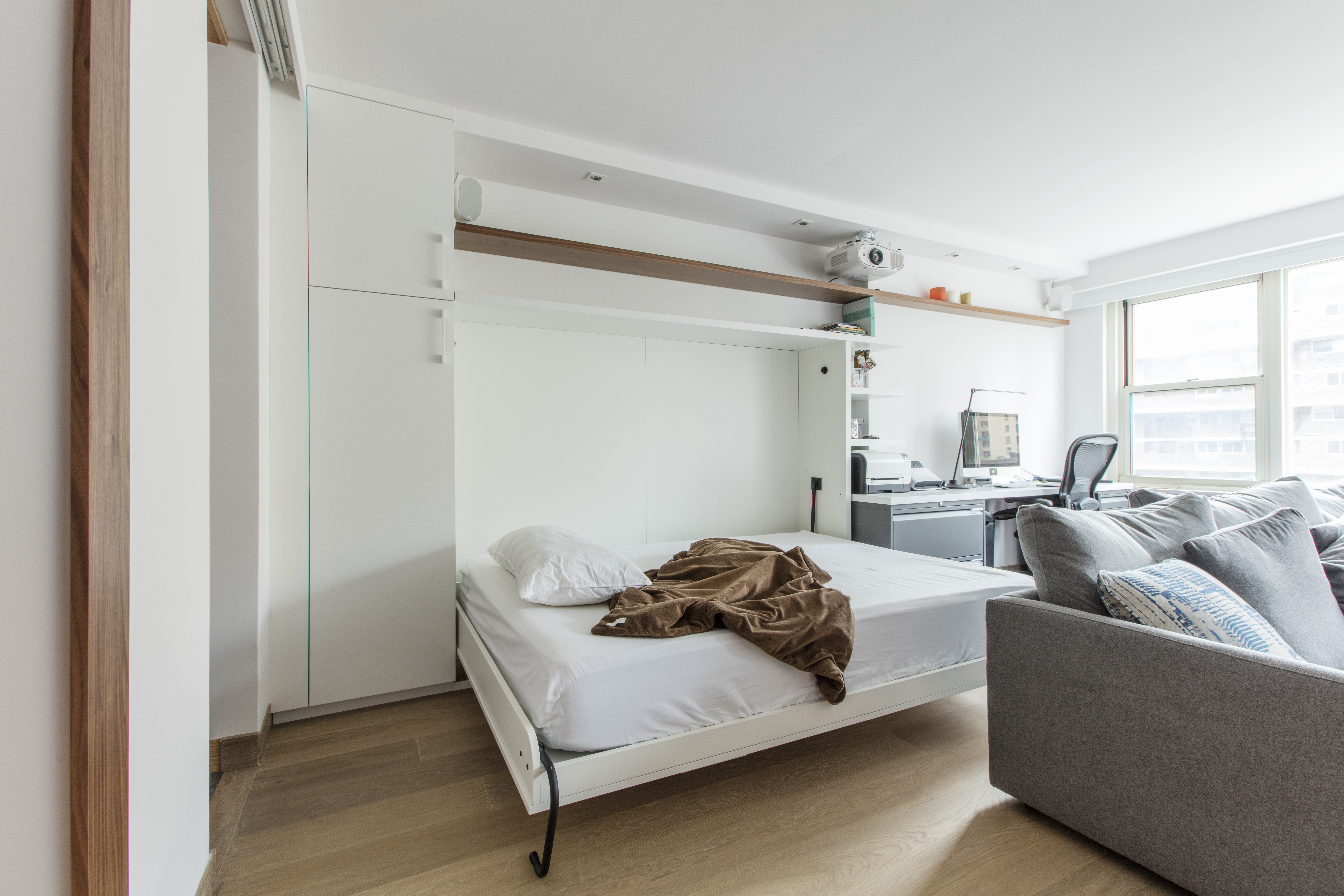
  • Renovation scope: The renovation opened the kitchen, removed a narrow entry wall, squared off an angled wall between the living room and primary bedroom, added oversized sliding panels between the office and living room, updated two bathrooms, and added storage-focused details throughout.
  • Result: The apartment gained a flexible office and guest suite, a brighter living area, a more useful bedroom wall, and custom storage that blended into the new layout.

Ana’s Tribeca apartment had the light, size, and location she and Leo wanted, but the interior was still in its original 1980s condition. The rooms felt choppy, and the office needed to work as both an everyday workspace and a private guest room when family or friends visited.

After a close call with a contractor who raised concerns, Ana posted the project on Sweeten and was matched with a team she trusted. Her contractor took on the oversized sliding panels, opened the kitchen, turned a leftover wall section into a bookshelf niche, helped shape a bar nook that could conceal a TV, and supported a long bedroom closet wall with a small custom vanity at the end.

The built-ins made the apartment’s flexibility feel natural. The office could open to the living room or close for guests, while the shelves, bar nook, kitchen cabinets, and bedroom storage helped the home feel clean, calm, and easier to live in.

7. Gray built-ins give a Central Park West home order

  • Location: Central Park West, Manhattan, New York
  • Goal: Restore a Classic 7 co-op and refresh it with better kitchen storage, more useful rooms, and a layout that gives the homeowners’ art room to breathe.
  • Renovation scope: The team restored floors, walls, and ceilings, updated the kitchen with custom gray cabinets, improved the pantry and laundry areas, refreshed the guest room and guest bath, converted a former bedroom into a study with a custom built-in wall unit, and replaced landmarked windows.
  • Result: The home came back with a calmer kitchen, more polished guest spaces, a study with open and closed storage, and a better backdrop for the homeowners’ art collection.

A longtime Central Park West homeowner had lived in the Classic 7 co-op for decades before a repair process opened the door to a larger restoration. Once the project grew, the apartment needed a thoughtful plan for the kitchen, pantry, guest spaces, study, and art-filled rooms.

The couple posted the project on Sweeten and found a contractor who could guide them through a complicated co-op renovation. In the kitchen, custom gray cabinets, tall storage, lower drawers, and a nearby pantry made daily use easier, while a former bedroom became a study with a custom wall unit designed by the homeowner and built with the contractor.

The built-ins brought order without flattening the home’s personality. Closed cabinet storage handled the practical side, while open shelving in the study gave books, art, and favorite objects a place to belong.

When custom built-ins are worth planning into a remodel

Custom built-ins make the most sense when your home has storage problems that standard cabinets, closets, or furniture can’t solve cleanly. They’re especially helpful in kitchens, bathrooms, living rooms, bedrooms, hallways, and flexible spaces where every inch has a job to do. 

Instead of adding more square footage, the right built-ins can help the space you already have feel more useful, calm, and personal.

When you’re ready to rethink your layout as part of a larger remodel, Sweeten can connect you with vetted general contractors who know how to turn those ideas into built-ins that feel considered, seamless, and right at home.

Ready to start your own renovation journey?

Post your project on Sweeten for free and make your dream home a reality. Sweeten puts you in control of your renovation, from finding the perfect contractor and gathering design inspiration, to using cost guides to plan your budget wisely. Renovate expertly with Sweeten.

Frequently asked questions

A custom built-in is a storage feature, cabinet, shelf, bench, closet, or wall unit designed to fit a specific space in your home. It can make awkward corners, empty walls, niches, and tight rooms more useful because it is planned around the room’s exact size and how you use it.

Custom built-ins are often worth it when standard furniture leaves gaps, blocks flow, or fails to hold what you use every day. They can make awkward areas more useful while giving the room a cleaner, more intentional look.

A few places you can install custom built-ins are in the kitchen and living room. They can also work well in bathrooms, bedrooms, hallways, offices, mudrooms, stair areas, and other spots where standard furniture does not fit cleanly.

You may also like

Renovate with Sweeten!

sweeten-magic

We’ll match you with vetted general contractors and offer support until your project is done — at no cost to you!

Start your renovation

Customer review 5.0

sweeten-thumbsup

“Start with Sweeten to help pick reputable contractors. They do the initial leg work for you. They are a real time saver.”

— Denise H. from Santa Clarita, CA

Read more reviews —>
Start your renovation
no-cost-blue

Subscribe to our
renovation newsletter