A Quick Guide To Choosing A Durable Utility Sink in 2026

When planning a laundry room, most of the thought goes into the washer and dryer. They do most of the hard work, right? And they are big purchase items. 

Nevertheless, there is one feature that, while it plays a supporting role, is indispensable: the utility room sink or laundry sink. Utility sinks are a common addition in many homes, often used as a dedicated spot for chores like pre-rinsing heavily stained clothes or washing dirty footwear.

Manufacturers are designing these basins specifically for the laundry room, offering many features with benefits.

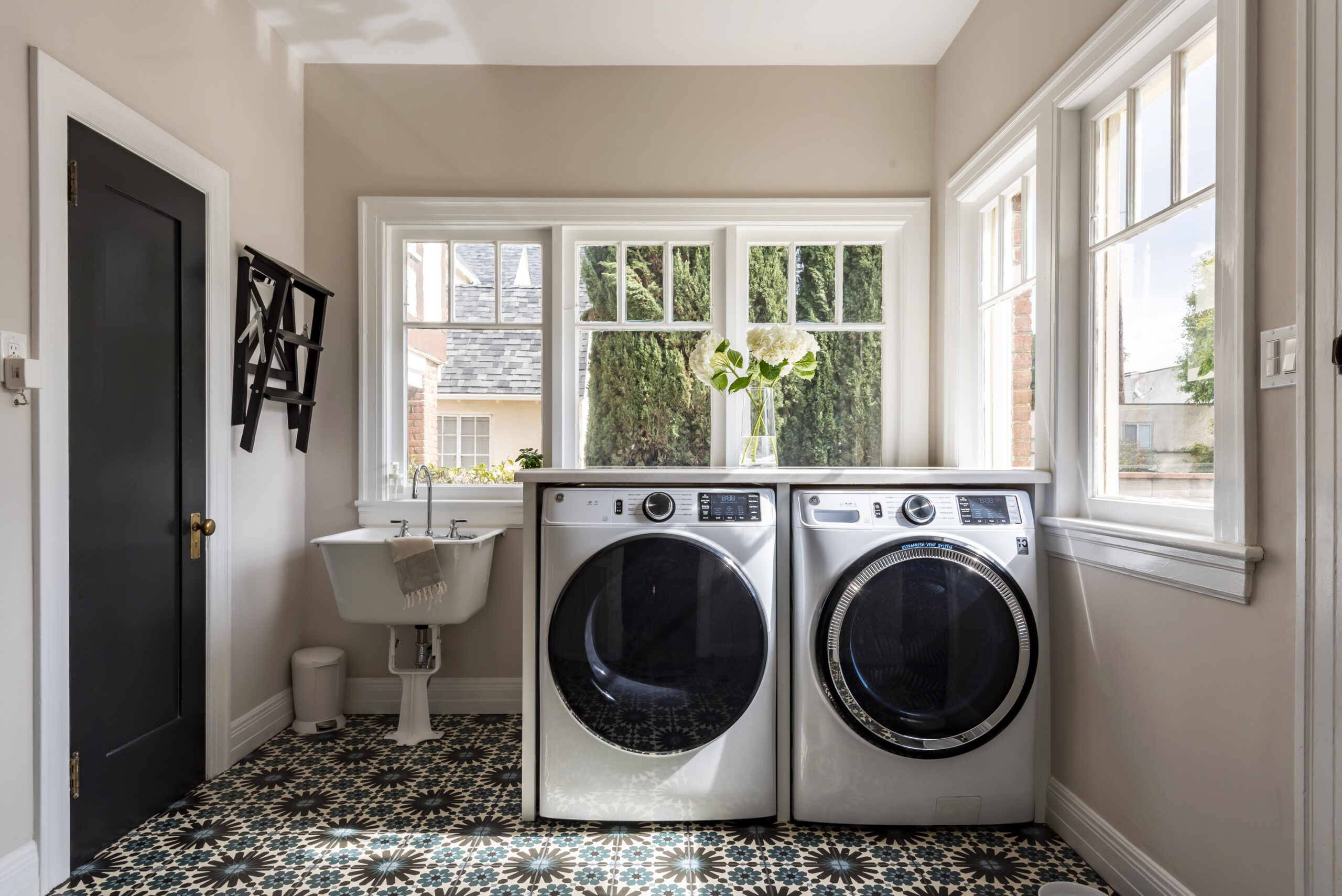
(Above) Leigh’s bathroom remodel in Los Angeles featuring side-by-side washing machines, patterned tile floor, and a classic utility sink.

What is a utility sink?

(Above) Chrissy’s renovated laundry room with washer-dryer, deep utility sink, and open shelving for items and laundry supplies.

A utility sink is a heavy-duty basin designed for messy rinse-and-scrub tasks you would rather not do in a kitchen or bathroom sink. It’s usually installed in a laundry room, garage, basement, or mudroom where quick cleanup matters. Because a utility sink adds plumbing, many parts in the United States base requirements on model codes like the International Plumbing Code (IPC), so it helps to check permits and local rules early in the planning.

What distinguishes a utility sink is its extra depth and practical shape. Many start around 10 inches deep and can reach 25 inches, which helps contain splashes when you are spraying, soaking, or scrubbing, especially compared with a typical bathroom sink that is much shallower. Utility sinks are often square or rectangular, so more of the basin is usable for real-life chores, from pre-treating laundry to rinsing muddy gear, washing paint tools, or bathing a pet. 

Not all utility sinks are the same, so start thinking about how you will use yours by choosing a style and material that can handle your needs.

6 common utility sink styles

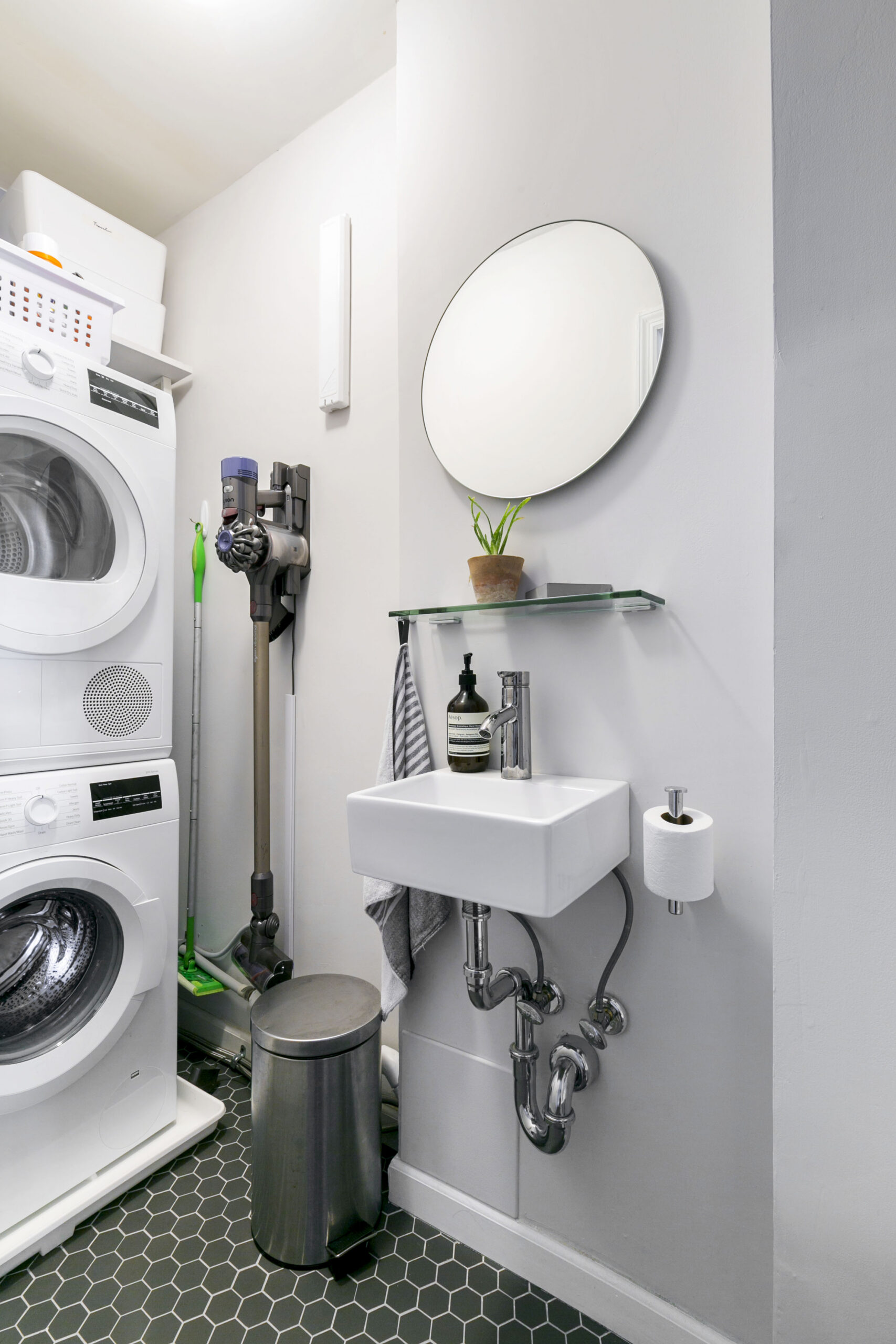
(Above) Lynn’s renovated laundry with stacked washer-dryer, compact laundry sink, and wall storage.

As with bathroom sinks, the laundry sink comes in a variety of styles for installation. What you choose from the list below depends on your personal needs and any extras you may like.

1. Wall-mount utility sink

A wall-mount utility sink is a good option if you want to keep the floor area clear, as there is no need for a structure, such as a cabinet or legs attached to the bowl, to hold up the sink. You’ll find vintage designs, like white enamel-covered cast iron, from manufacturers like American Standard. Cast iron is strong, and it won’t dent, and the enameled finish resists scratches and chipping. 

Kohler offers a double basin that almost looks like a trough. Elkay makes an institutional model out of stainless steel with a built-in drainboard.

2. Freestanding utility sink

As the name indicates, a freestanding utility sink stands on its own, supported by integrated or bolted-on legs or held in a washstand-style support of a stainless-steel frame with legs. You can find models with built-in drainboards as well. The advantage of this type of sink is its portability. 

You can move the entire unit wherever you want, even the garage, as long as you have a hookup to water. Like the wall mount style, the pipes are concealed, and you don’t have to replace a cabinet for support below.

3. Self-rimming or drop-in utility sink

Probably the simplest and thriftiest choice, a self-rimming or drop-in utility sink drops into a countertop, and the sink is complete once the plumbing and faucet are hooked up. There’s no seam around the sink’s perimeter to catch grime.

Because the rim sits on top of the counter, it can be a practical option when you want a straightforward install without getting too custom. It also pairs well with laminate or solid-surface counters since the cutout does most of the work, and the sink can be swapped later without rebuilding the whole setup.

4. Undermount utility sink

An undermount utility sink is a good choice when you want a seamless, smooth appearance for your countertop. The sink rests below the counter surface and almost disappears.

This style makes it easy to wipe water and lint straight into the basin, which is handy in a laundry zone. Just keep in mind that undermounts need a sturdy counter material and proper support, especially if you plan on filling the sink for soaking.

5. Apron-front utility sink

The apron-front utility sink was popularized in country-style or vintage-style kitchens, and the look carries over well to the laundry room. The apron front is nice for deflecting water splashes when you’re standing before the sink—much like an apron.

The exposed front can also feel more comfortable for longer tasks since you can stand closer without leaning over a counter edge. It’s a good fit when you want the sink to feel like a statement piece, but you will want to confirm cabinet sizing and support because apron-front models can be heavier.

6. Agitator utility sink

Some personal items may be too small for the delicate cycle of your washer or require just a quick swish with detergent. MTI makes a laundry sink with a micro-jet (like a whirlpool tub) that gently agitates the items for you.

This is a nice option if you often hand-wash small loads, spot-treat stains, or rinse out items you do not want bouncing around in the washer. Since an agitator utility sink is a specialty pick, it’s worth checking the power requirements, maintenance needs, and whether the added feature is something you will actually use week to week.

Utility sink materials for the laundry, garage, and basement

The material choice for a utility or laundry room sink comes down to how you plan to use it and how much wear it needs to withstand. Let’s take a look at the strengths of each option below.

Renovate expertly with Sweeten

Sweeten brings homeowners an exceptional renovation experience by personally matching trusted general contractors to your project, while offering expert guidance and support—at no cost to you.

Start your renovation

Material

Best used in these rooms

Stainless steel

Garage, basement

Polypropylene (plastic/resin)

Laundry room, garage

ABS plastic

Laundry room, mudroom

Enameled cast iron

Laundry room

Solid surface

Laundry room, basement

Stainless steel

A strong pick for a garage or basement workshop because it holds up well and resists corrosion, heat, and stains. It can be a clean-looking choice in a laundry room, too, but it may be louder in use and show water spots.

Polypropylene (plastic/resin)

Lightweight and budget-friendly, polypropylene is a go-to for laundry rooms and garages, especially when you want something that stands up to stains and common chemicals. It will not rust or dent, but it can warp or crack with extreme heat or heavy abuse.

ABS plastic

ABS works well in laundry rooms, mudrooms, and workshop-style utility areas, thanks to a deep tub that can handle buckets, mops, and cleanup gear. It is designed to resist issues like cracking and mildew, which makes it a solid “set it and forget it” option for busy homes.

Enameled cast iron

If you want a traditional look in a laundry room, enameled cast iron is a durable option that resists stains and scratches with regular use. It is also one of the heaviest materials, so it needs proper support, whether that is strong wall support or legs.

Solid surfacing

Solid surface can be a nice fit for a laundry room that you want to feel a little more finished, since it is often used in integrated countertop-and-sink setups. It is also repair-friendly in the sense that fine scratches and small surface cuts can be removed with standard repair methods.

Utility sink placement tip: Near the washer is best

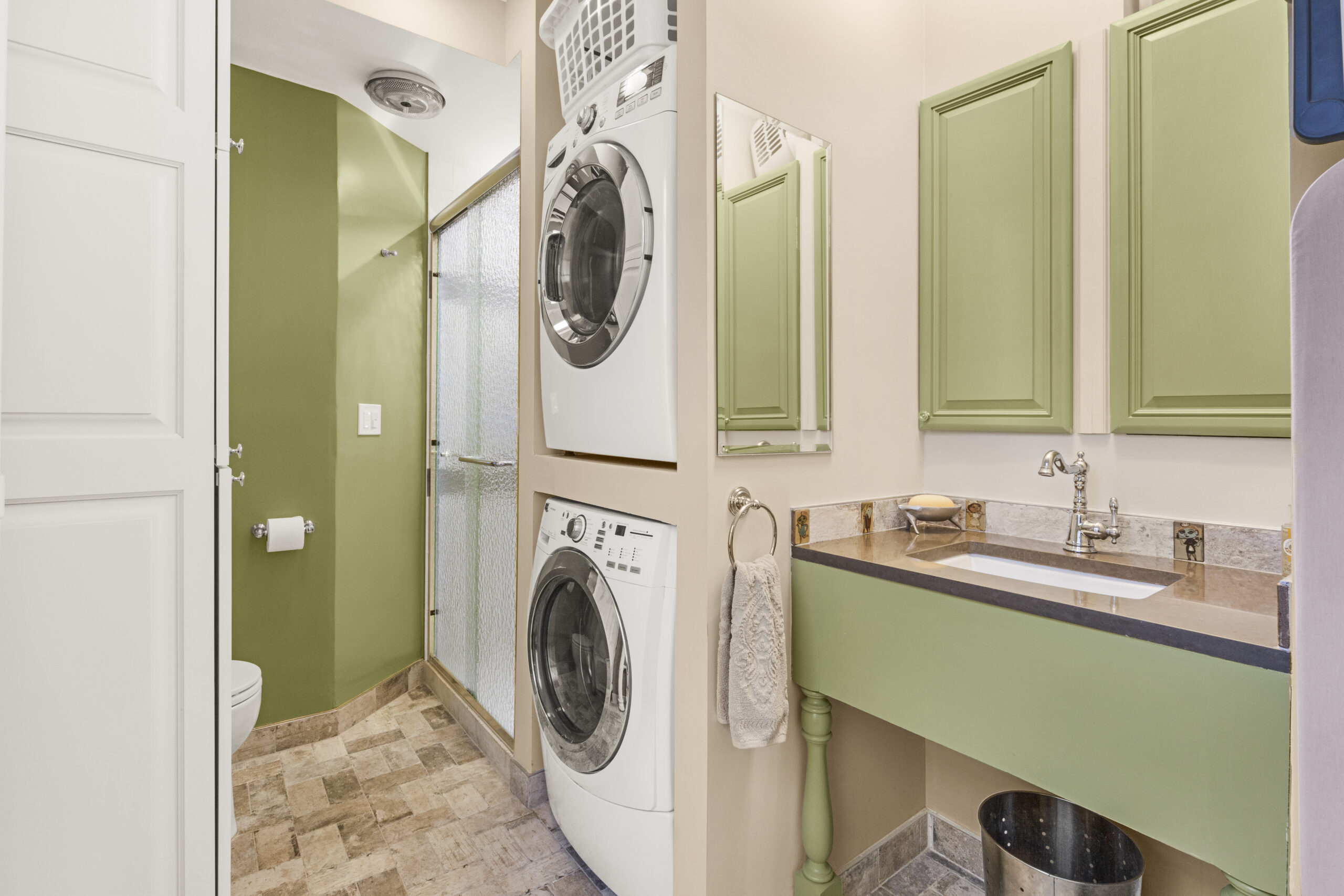
(Above) Elizabeth’s bathroom remodel featuring a stacked washer-dryer, green cabinetry, and a laundry room sink.

Placing the utility sink near the washer helps keep your “wet zone” in one spot and makes laundry tasks feel smoother. If you can, put it right next to the machine so water and drips stay contained.

Keeping the sink close also lets you share plumbing lines, which can simplify the setup. It is also easier to move soaked or pretreated items straight into the washer without carrying a dripping pile across the room.

One tradeoff is that your sink size may be limited by the space next to the washer. The good news is that many utility sinks are deep enough to soak bulky messes, from grass-stained uniforms to spill-prone table linens.

Adding a utility room sink to your home

A utility sink isn’t a must-have for every laundry room, but it can be a real quality-of-life upgrade if you deal with messy tasks at home. If you often soak stains, rinse muddy items, or want a dedicated spot for quick cleanup, it tends to earn its keep fast.

What makes it worth considering is how versatile it is beyond laundry. A utility sink can handle everything from washing paint tools and rinsing a mop to bathing a pet or cleaning up after garden work, all without turning your main bathroom sinks into a work zone.

Before you commit, think through your space and routine. Choose a sink depth that matches your typical tasks, place it near the washer when possible, and pick a material that fits how tough you plan to be on it.

Common uses for a utility sink include:

  • Pre-soaking and spot-treating laundry
  • Bathing pets or rinsing muddy paws
  • Cleaning paint brushes and DIY tools
  • Washing hands, shoes, and gear after yard or garage work
  • Rinsing a mop bucket or filling cleaning pails
  • Potting plants and handling cut flowers
  • Running water for crafts and messy projects

Planning to renovate? Get free cost estimates from our partner GCs!

Get matched with our vetted general contractors and receive at least 3 quotations for free! You can also find endless home renovation inspiration, detailed guides, and practical cost breakdowns from our blogs.

Frequently asked questions

Yes, a utility sink is the same as a laundry sink. The terms are often used interchangeably, especially when the sink is installed in a laundry room. A “utility sink” can also refer more broadly to the same deep basin used for messy cleanup in spaces like garages and basements.

No, a utility sink isn’t necessary in a laundry room, but it can make laundry and cleanup tasks much easier. It’s especially helpful if you often pre-soak items, hand-wash delicates, or rinse out messy spills without tracking the mess through the house.

A great material for a utility sink is stainless steel. This material is durable, resists stains and corrosion, and works well for heavy, everyday use.

The benefits of a utility sink are easier cleanup and more flexibility for messy tasks. It gives you a dedicated spot to soak, scrub, rinse, and wash items like paint tools, muddy shoes, and pet supplies without stressing your main sinks.

You may also like

Renovate with Sweeten!

sweeten-magic

We’ll match you with vetted general contractors and offer support until your project is done — at no cost to you!

Start your renovation

Customer review 5.0

sweeten-thumbsup

“Sweeten was really helpful — we wouldn't have found our contractor without them, and the bid-leveling call was absolutely essential for us.”

— Dara R. from New York, NY

Read more reviews —>
Start your renovation
no-cost-blue

Subscribe to our
renovation newsletter