How These Kitchens Use an Appliance Garage to Hide Clutter

Small appliances can crowd a kitchen fast, especially when the coffee maker, toaster, and blender all need a spot on the counter. Once those everyday items stay out all the time, even a well-planned kitchen can start to feel a little cluttered.

At Sweeten, we’ve seen homeowners solve this with built-in storage that keeps everyday appliances handy without leaving them out on display. If you’re already thinking about the cost of a gut renovation, details like appliance storage are worth planning early.

Let’s take a look at five appliance garage ideas that show how a well-planned setup can clear counters while keeping the essentials close by.

Key points

  • The best appliance garage designs are planned around daily use, with enough depth, nearby outlets, and a location that keeps appliances easy to reach.
  • Appliance garages give coffee makers, toasters, and other daily appliances a dedicated spot, which helps kitchen counters feel less crowded.
  • These home renovations show that appliance garages can take different forms, from side cabinets by the range to hallway storage, tall pantry units, and sink-side setups.

1. A side cabinet by the range

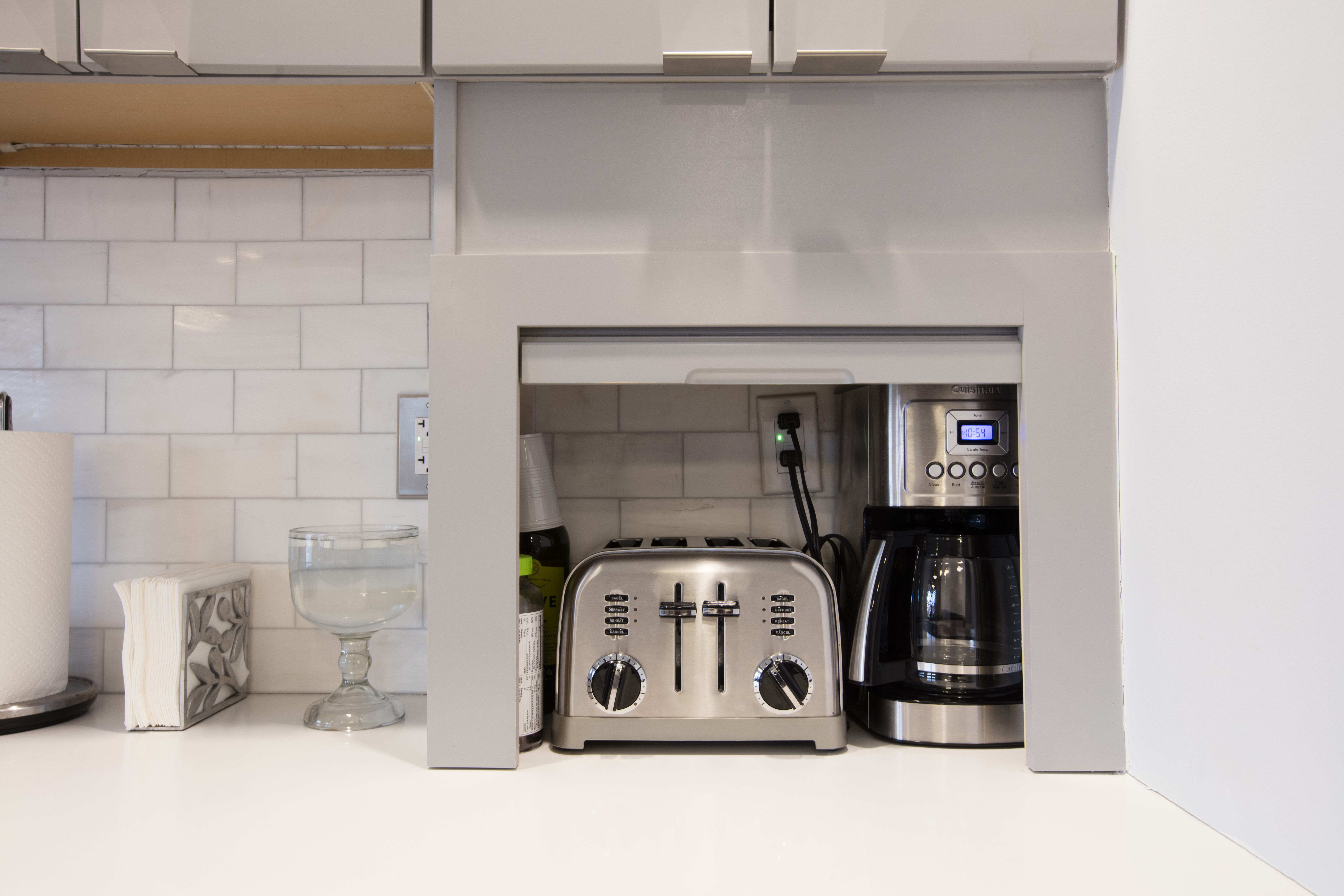
An appliance garage containing a toaster and coffee maker
(Above) Romuald’s appliance garage storing a toaster and coffee maker with white subway tile backsplash

This appliance garage sits right beside the range, so the toaster and coffeemaker stay close to the action without living out on the kitchen counter. It also includes built-in outlets, which help keep cords contained and make the whole spot easier to use day to day.

Romuald and his wife renovated their kitchen in East Elmhurst, New York, after years of wanting a more open, loft-like setup. As part of the redesign, they removed a dividing wall, added a large island, and used semi-custom cabinetry to fit in an appliance garage with integrated outlets. 

Romuald says the idea came from their Sweeten contractor, who suggested the storage unit while they were planning around new appliances and looking for ways to clear the counters.

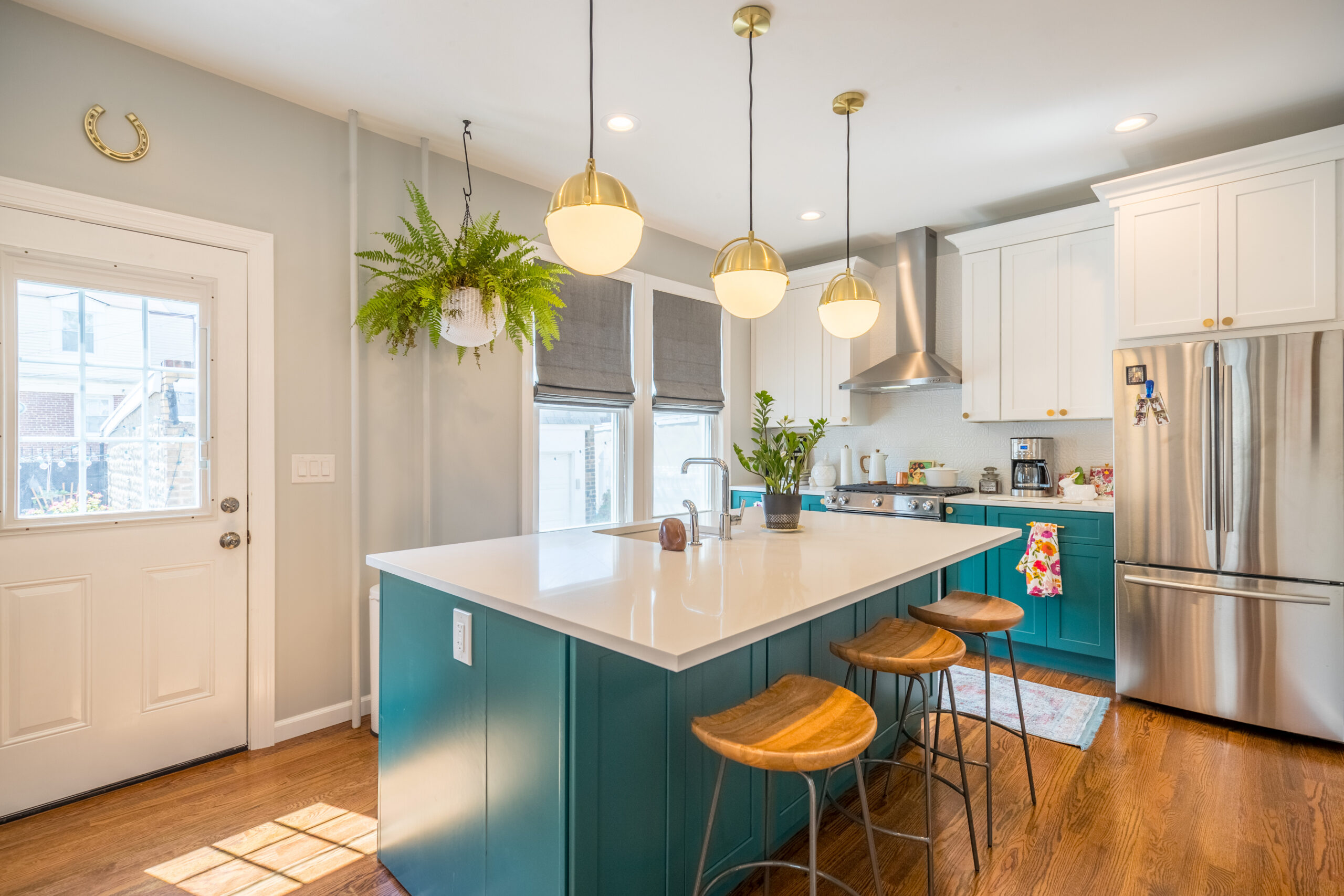
A new kitchen featuring gray cabinetry, a kitchen island with sink, and appliance garage next to the range
(Above) Romuald’s new kitchen featuring gray cabinetry, a kitchen island with sink, and appliance garage next to the range

If this setup feels like a fit, keep these details in mind:

  • Place it near the range or main prep area if those appliances get daily use.
  • Add outlets inside so small appliances can stay plugged in.
  • Check the interior depth against the appliances you actually own.

Planning to renovate? Get free cost estimates from our partner GCs!

Get matched with our vetted general contractors and receive at least 3 quotations for free! You can also find endless home renovation inspiration, detailed guides, and practical cost breakdowns from our blogs.

2. A hallway cabinet for hidden storage

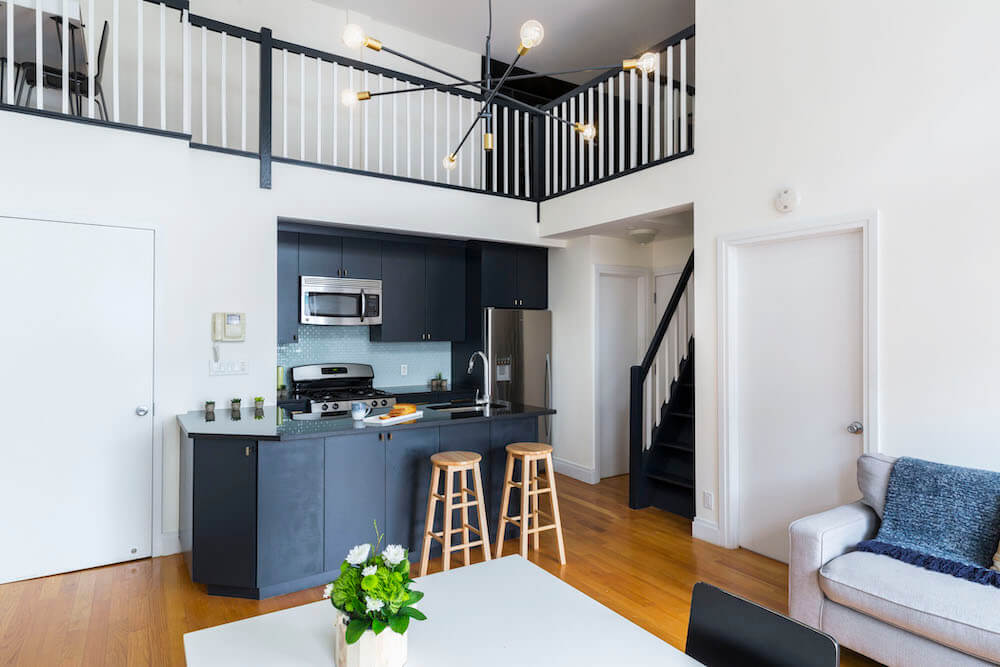
A remodeled kitchen with black cabinetry, an appliance garage inside the cabinets, and light wood flooring
(Above) Rachel’s remodeled kitchen with black cabinetry, an appliance garage inside the cabinets, and light wood flooring

This layout shifts the appliance garage out of the main kitchen run and into hallway cabinetry, which helps the cooking area stay tidier. When comparing kitchen renovation costs, it may also help to think about features like this that add both hidden storage and a serving zone.

Rachel and Marco remodeled their home in Greenwich Village, Manhattan, after deciding to renovate their duplex instead of moving. On the new top floor, they hid most of the appliances behind paneled cabinetry and built an appliance garage plus snack storage into hallway cabinets topped with marble. 

It came out of their bigger goal to make the apartment feel polished enough for dinner parties while still handling everyday family life, and Rachel says their general contractors helped them think creatively about where hidden storage could go.

Renovate expertly with Sweeten

Sweeten brings homeowners an exceptional renovation experience by personally matching trusted general contractors to your project, while offering expert guidance and support—at no cost to you.

Start your renovation

For a setup like this, these points are worth thinking through:

  • Give the cabinet a usable counter surface so it can act as a snack or beverage station.
  • Use cabinet fronts that match the surrounding millwork so they blend in.
  • Make sure door clearance works comfortably in a narrow passage.

3. A concealed cabinet in the millwork

A renovated kitchen with custom cabinetry that hides the appliance garage when not needed
(Above) Mathew’s renovated kitchen with custom cabinetry that hides the appliance garage when not needed

This appliance garage reads as part of the cabinetry instead of a separate add-on, which gives the kitchen a calmer, more built-in feel. It is a good approach when you want storage to disappear visually but still stay easy to reach.

Designer Matthew Stewart renovated his apartment in Clinton Hill, Brooklyn, updating the kitchen, bathrooms, and a multipurpose guest room. He said he had always liked appliance garages because his grandparents had one in their kitchen, and he designed the cabinetry and selected the finishes himself while his contractor connected him with the millworker. 

In this renovation, the appliance garage became part of a kitchen shaped by mixed materials, custom cabinetry, and a quieter overall look.

If you like this more integrated look, here are a few things to consider:

  • Decide on the door style early so it feels consistent with the rest of the cabinetry.
  • Measure for taller appliances before locking in the cabinet height.
  • Plan for power inside the cabinet if you want appliances ready to use.

4. A tall pantry with appliance storage

A remodeled kitchen featuring an appliance garage in a white cabinet pantry and wood flooring
(Above) Arnish’s remodeled kitchen featuring an appliance garage in a white cabinet pantry and wood flooring

This version combines pantry storage and an appliance garage in one tall cabinet, which is helpful when a kitchen needs one zone to do a lot. It keeps dry goods, countertop appliances, and bulkier equipment together instead of spreading them across different parts of the room.

Arnish, who renovated his kitchen with Brenden in Downtown Brooklyn, New York City, wanted a space that felt more organized and better suited to cooking and entertaining. Since the old cabinets were not deep enough for all of his equipment, gadgets, and dry goods, he planned for a pantry, an appliance garage, a pull-out spice rack, hidden trash and recycling, and a larger sink as part of the redesign. 

His contractor then carried out that vision in a cleaner, brighter kitchen with smudge-proof cabinets and touch-latch fronts.

Going this route? These details can make a difference:

  • Reserve one clear zone for daily appliances so the cabinet does not become a catchall.
  • Pair appliance storage with pantry shelves when floor space is limited.
  • Use lower drawers for heavier equipment and awkward attachments.

5. Garages on both sides of the sink

A renovated kitchen with gray cabinetry, matte black sink, and white countertops
(Above) Andrew’s renovated kitchen with gray cabinetry, matte black sink, and white countertops

This layout places an appliance garage on each side of the sink, which keeps gadgetry nearby without taking over the main counter run. It’s especially useful in a busy family kitchen because the storage is split into two zones, rather than being crowded into one.

Andrew and Germàn renovated their home in Miami’s Upper Eastside neighborhood, keeping the kitchen in the same footprint but opening a wall to create an eight-foot pass-through breakfast bar. Working with designer Nancy Beckham, they rethought the room’s flow and added custom cabinetry with pull-outs, including appliance garages on both sides of the sink. 

This kind of move in a home renovation can lead to a more connected kitchen while still hiding the everyday gadgetry that used to compete for counter space.

If you are considering a two-sided setup, start with these ideas:

  • Decide which appliances belong on each side before planning outlets.
  • Leave enough landing space around the sink so cleanup still feels easy.
  • Use matching cabinet fronts so both garages blend into the overall design.

Ready to renovate? Start here for free!

Here you can learn more about our services and locations. Alternatively, browse more home renovation inspirations, processes, and cost guides.

Frequently asked questions

An appliance garage is a built-in cabinet or enclosed storage spot designed to hold small kitchen appliances like a toaster, coffee maker, or blender when they are not in use. It helps keep those everyday items close at hand while clearing visual clutter from the countertop.

Yes, an appliance garage is worth it if you use small appliances often and want a cleaner-looking kitchen. It gives those items a dedicated place to live, which can make the counter feel less crowded without putting daily essentials out of reach.

One area you can place an appliance garage is along the countertop near your main prep area or coffee station, where those appliances are most likely to be used. That placement keeps the setup convenient and helps the storage feel like part of your regular kitchen routine instead of an awkward add-on.

You may also like

Renovate with Sweeten!

sweeten-magic

We’ll match you with vetted general contractors and offer support until your project is done — at no cost to you!

Start your renovation

Customer review 5.0

sweeten-thumbsup

“Sweeten made choosing a trusted contractor feel easy and less daunting. I also appreciated the support when I had questions or concerns.”

— Julia M. from Somerset, NJ

Read more reviews —>
Start your renovation
no-cost-blue

Subscribe to our
renovation newsletter