6 Fireplace Tile Ideas That Show What Works in a Remodel

Choosing tile for a fireplace can get complicated quickly. Beyond color and pattern, homeowners have to think about tile size, placement, the existing mantel or hearth, and how the fireplace fits the room and the rest of the home.

The following fireplace tile ideas show how homeowners who worked with Sweeten handled those choices during their renovations.

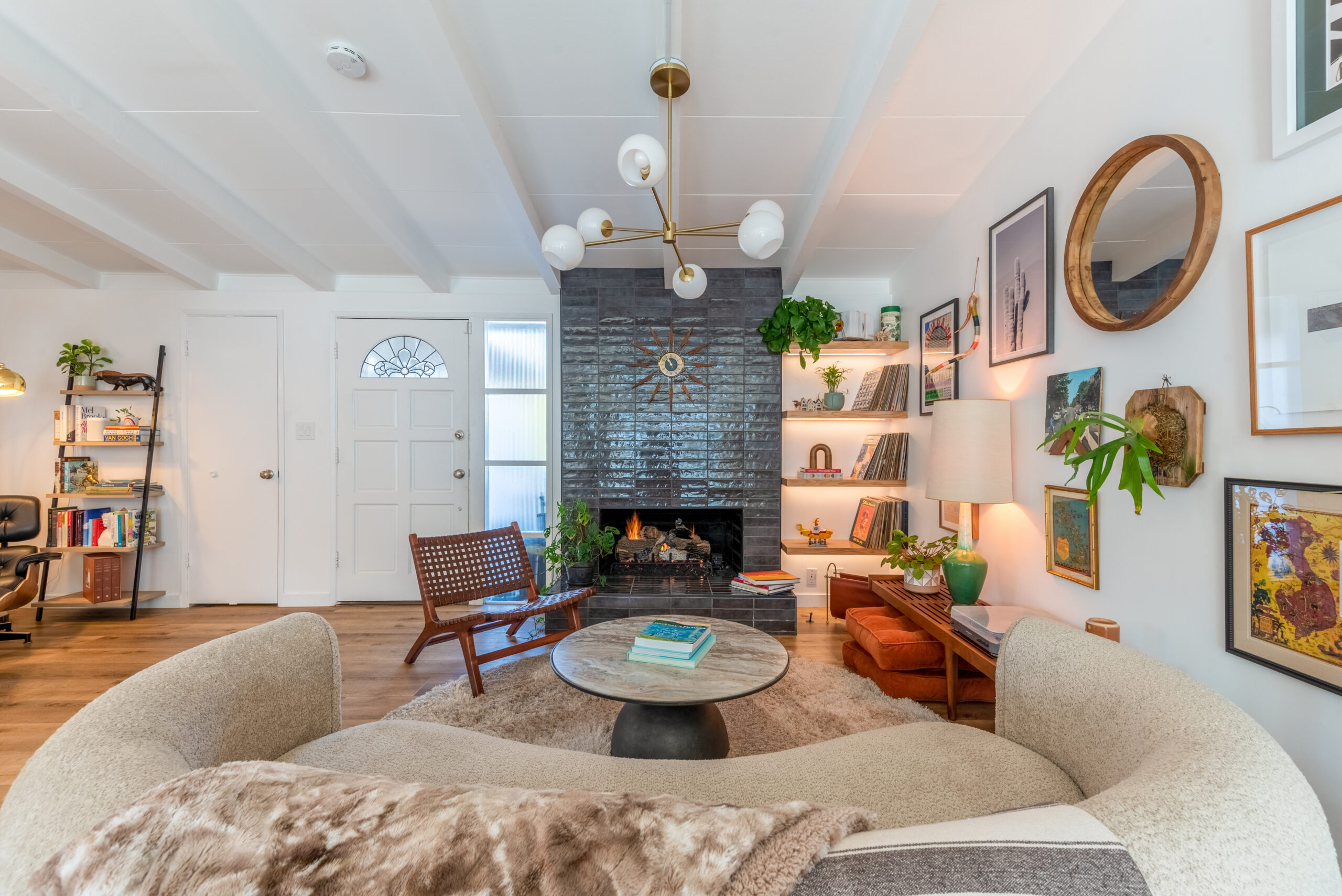
Culver City living room with elongated gray-green porcelain fireplace tile, open shelving, wood floors, curved seating, and a brass ceiling light.
(Above) The fireplace tile used in this living room remodel in Culver City makes the fireplace a stronger focal point while helping the open space feel more cohesive and connected.

Key takeaways

  • Fireplace tile can stay close to the firebox or extend to the ceiling, depending on how prominent you want the fireplace to feel.
  • Shape, scale, glaze, and layout can add texture even when the tile itself has little or no pattern.
  • Existing mantels, woodwork, and other original details can sometimes remain while the surrounding tile gets an update.
  • Planning fireplace finishes alongside flooring, built-ins, and other renovation work can help the finished room feel more connected.

1. Take fireplace tile to the ceiling for more height

Jan Eliasberg’s 22-foot-long Upper West Side living room called for a focal point with enough presence to suit the scale of the space. As part of the apartment remodel, she added a fireplace where there hadn’t been one before.

Jan chose Rookwood Pottery’s etched Jazz tile in a watery blue-green Wasser glaze. Rather than stopping the tile around the firebox, the installation extends from the floor to the ceiling. The height gives the fireplace a stronger architectural presence while the glazed tile adds color, pattern, and texture.

When a fireplace is being added during a larger remodel, planning its size and finish along with the surrounding walls and room layout can help it feel like part of the overall design.

Planning to renovate? Get free cost estimates from our partner GCs!

Get matched with our vetted general contractors and receive at least 3 quotations for free! You can also find endless home renovation inspiration, detailed guides, and practical cost breakdowns from our blogs.

2. Use glossy subway tile to refresh an old fireplace

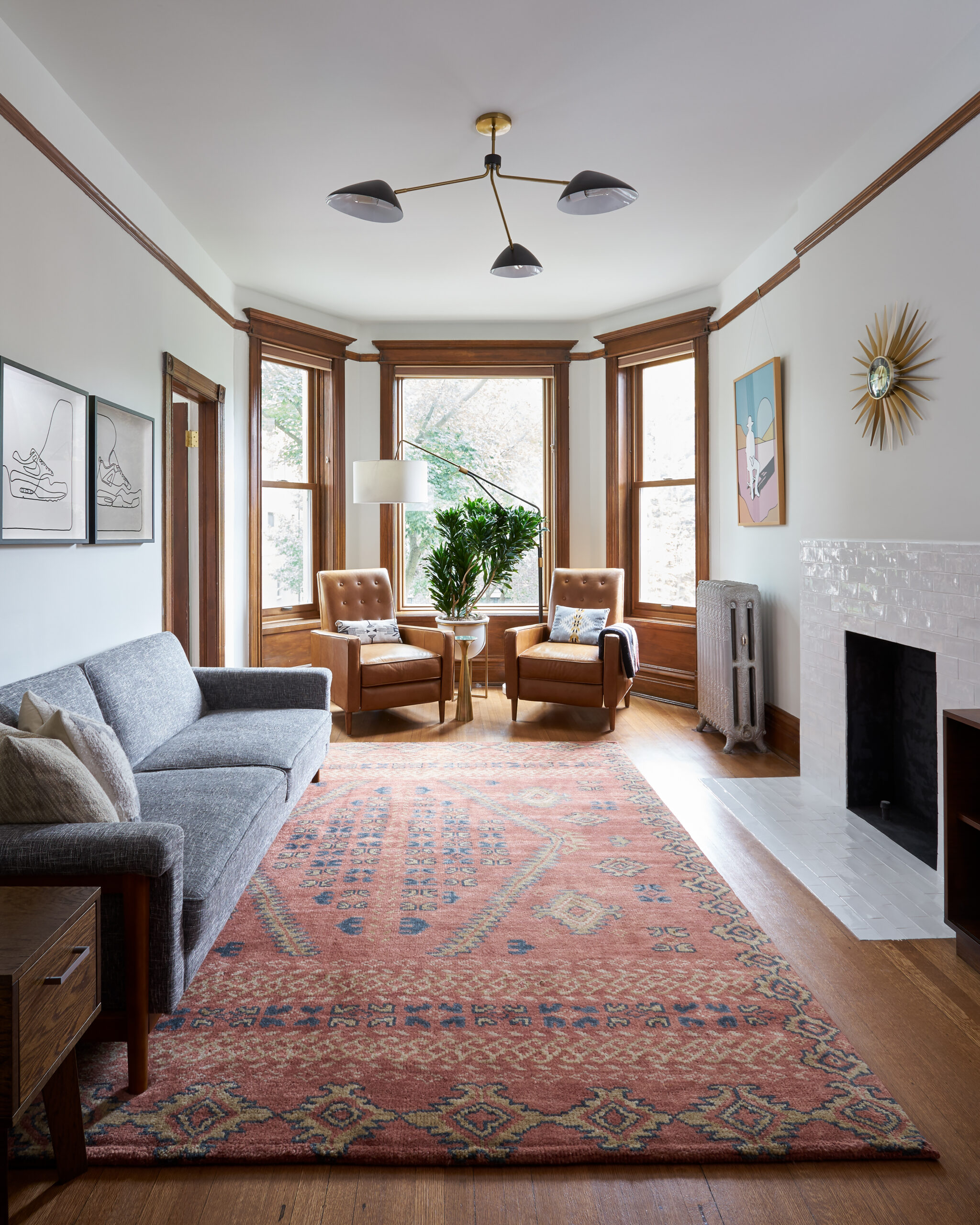
In a Chicago fixer-upper condo, an original fireplace remained in the living room, but drywall surrounded the firebox. The homeowners wanted the fireplace to feel more finished and better suited to the updated room.

Instead of replacing the fireplace, they removed the drywall around it and installed glossy white subway tile. The straightforward material choice became one of the more accessible fireplace surround ideas in this roundup.

The glossy finish reflects light, while the white tile gives the fireplace a cleaner look without adding a busy pattern.

3. Repeat patterned tile on the fireplace to connect rooms

Cat’s Fort Greene co-op had worn finishes, yellow-beige walls, and a bright red brick non-functioning fireplace before the renovation. With the kitchen opening directly into the living room, the two spaces also needed a stronger visual connection.

A mix of black, white, and gray Moroccan cement tiles was selected for the kitchen floor. The same tile configuration was then repeated in front of the fireplace to create a patterned hearth. Using the tile in both places helps connect the kitchen and living room without making the finishes identical throughout.

Renovate expertly with Sweeten

Sweeten brings homeowners an exceptional renovation experience by personally matching trusted general contractors to your project, while offering expert guidance and support—at no cost to you.

Start your renovation

When flooring, a fireplace, and built-ins are all part of the renovation, coordinating those details with a contractor can also help the materials and transitions work together from one space to the next.

4. Use elongated tile for texture without heavy pattern

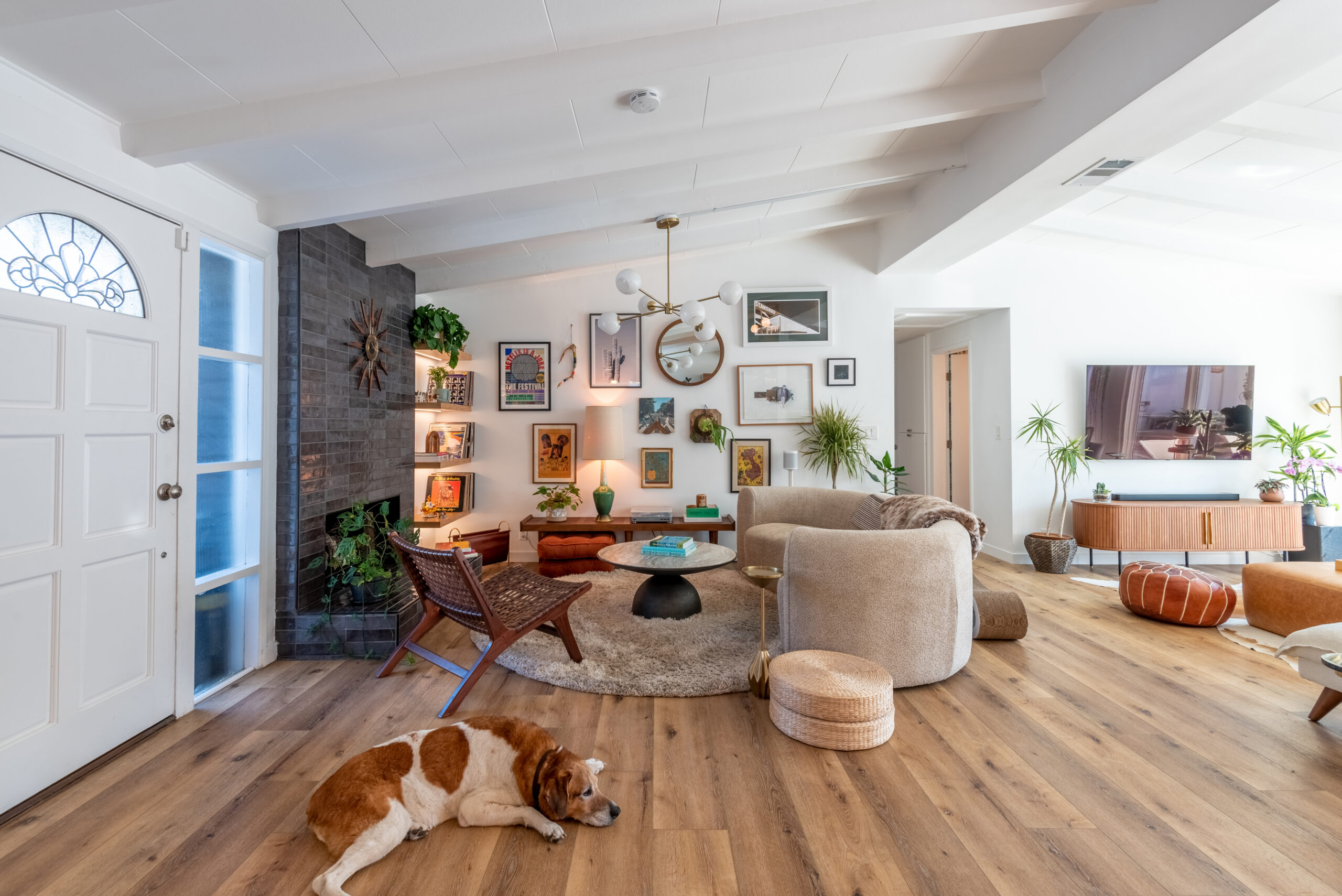
Liz wanted her 1952 Culver City home to feel more open while keeping the mix of California modern, eclectic, and 1970s influences that shaped the renovation. Opening up the kitchen, dining area, living room, and entry made the fireplace more visible within the shared space.

For the fireplace wall, she selected Tribeca Basalt porcelain tile in an elongated gray-green format. The long, narrow pieces create texture through their proportions and subtle variation rather than through a strong printed pattern.

The darker fireplace wall provides contrast against the lighter room and sits comfortably alongside the open shelving and other finishes. Because the fireplace is visible across the newly opened living spaces, its tile becomes part of a larger material palette rather than an isolated accent.

5. Refresh traditional details with small mosaic tile

Marie Clare wanted to update her Park Slope home while keeping details that suited its traditional character. The fireplace was one area where selective changes could make it feel fresher without removing the entire mantel and surrounding woodwork.

Her contractor stripped and painted the woodwork, removed two wooden columns that had supported the mantel, and refaced the existing tiled area with Ruscello mosaic tile. The smaller tile format introduced a new surface while much of the fireplace’s original composition remained.

The finished fireplace feels simpler and more updated while still fitting an older home. For similar fireplace surrounds, an experienced contractor can help determine which existing details can stay and how new tile can be incorporated into the surrounding renovation work.

6. Use patterned cement tile to make the fireplace stand out

Alex wanted his 1979 East Hampton home to feel lighter, more open, and better suited to family life. The larger renovation removed walls and used continuous hardwood flooring to help the first floor feel more connected.

At the fireplace, patterned Realta II cement tile from Cement Tile Shop was used around the mantel area. The repeating motif introduces more detail without relying on a dark surround or a large change in material.

Against the lighter finishes in the living room, the tile gives the fireplace more definition while still fitting with the rest of the space.

What to consider before choosing fireplace tile

Here are the main considerations before choosing a tile set for your fireplace:

  • Decide how much of the fireplace you want to tile: Tile can stay around the firebox, cover the hearth, extend across the fireplace face, or continue to the ceiling.
  • Consider tile size and proportion: Small mosaics can add detail around traditional features, while elongated or larger formats can create a more continuous surface.
  • Think about pattern versus texture: Patterned cement tile can become a decorative focal point, while an elongated shape or varied glaze can add interest in a quieter way.
  • Look at the existing room: The mantel, built-ins, flooring, wall color, and nearby finishes can help determine if the fireplace tile should contrast with the room or repeat something already there.
  • Plan it with the rest of the renovation: If you’re also changing flooring, built-ins, walls, lighting, or the room layout, discussing the fireplace early with your contractor can help coordinate materials, dimensions, and installation.
  • Confirm the tile is appropriate for the location: Your contractor can help verify that the tile, substrate, setting materials, and installation method are suitable for the specific fireplace and the area being tiled.

If the fireplace is one part of a larger home renovation, Sweeten can connect you with a vetted general contractor who can look at the project as a whole, from the fireplace and surrounding millwork to flooring, walls, and adjoining rooms.

Ready to renovate? Start here for free!

Here you can learn more about our services and locations. Alternatively, browse more home renovation inspirations, processes, and cost guides.

Frequently asked questions

The best tile for a fireplace will depend on where the tile will be installed and the look you want. Ceramic, porcelain, mosaic, and cement tile can all be used in fireplace projects, but your contractor should confirm that the specific tile and installation materials are appropriate for the application.

Yes, fireplace tile can extend to the ceiling when the wall and installation are designed for it. A full-height installation can make the fireplace more prominent and draw the eye upward, as seen in Jan’s Upper West Side renovation.

There isn’t one size that works for every fireplace. Small mosaics can bring detail to a traditional surround, while elongated or larger tiles can create cleaner lines across a broader fireplace wall.

Many renovators start with the details they want to keep, such as an existing mantel, woodwork, flooring, or built-ins. From there, they choose a tile that works with those features and work with their contractor to determine how the new finish can be integrated without removing the original details they want to preserve.

You may also like

Renovate with Sweeten!

sweeten-magic

We’ll match you with vetted general contractors and offer support until your project is done — at no cost to you!

Start your renovation

Customer review 5.0

sweeten-thumbsup

“I really liked how Sweeten made the process of vetting licensed contractors easy for me. I felt confident knowing that I wasn't hiring a GC with forged credentials or wasnt qualified.”

— Jennifer M. from Jersey City, NJ

Read more reviews —>
Start your renovation
no-cost-blue

Subscribe to our
renovation newsletter