A Quick Guide on Calacatta Marble and Its Cost
Homeowners dreaming of a luxury kitchen or bathroom often get drawn to Calacatta marble. Its bold veining and classic style can lift the look of almost any space. Yet using this rare Italian natural stone in a renovation often comes with a major price tag.
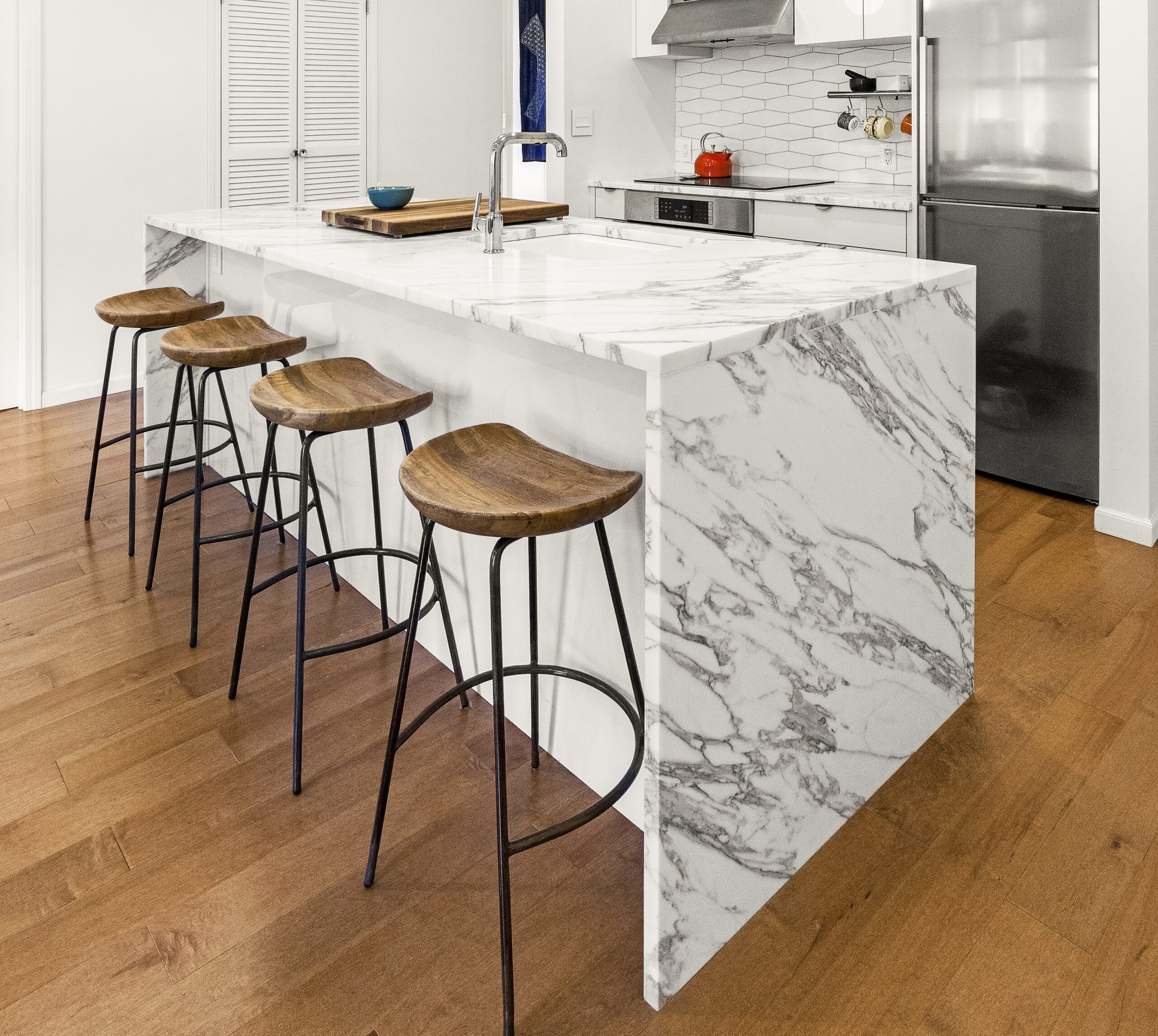
(Above) Amy and Nick’s kitchen renovation showcasing a Calacatta marble kitchen island with seating
The rarity of Calacatta marble

(Above) Rebecca’s renovated kitchen in a Manhattan apartment featuring a Calacatta marble kitchen island, white cabinetry, and bright lighting
Calacatta marble costs more in part because it is hard to get. Only a few quarries in Italy produce this sought-after stone. Supply is limited, and the quarrying process takes time and a lot of hands-on work. Low supply and strong demand push the price up.
A single slab of Calacatta marble can cost more than $10,000. Some varieties can run over $400 per square foot. That is more than four times the price of high-end Carrara marble, even though both come from the same mountain range.
Unique characteristics of Calacatta marble
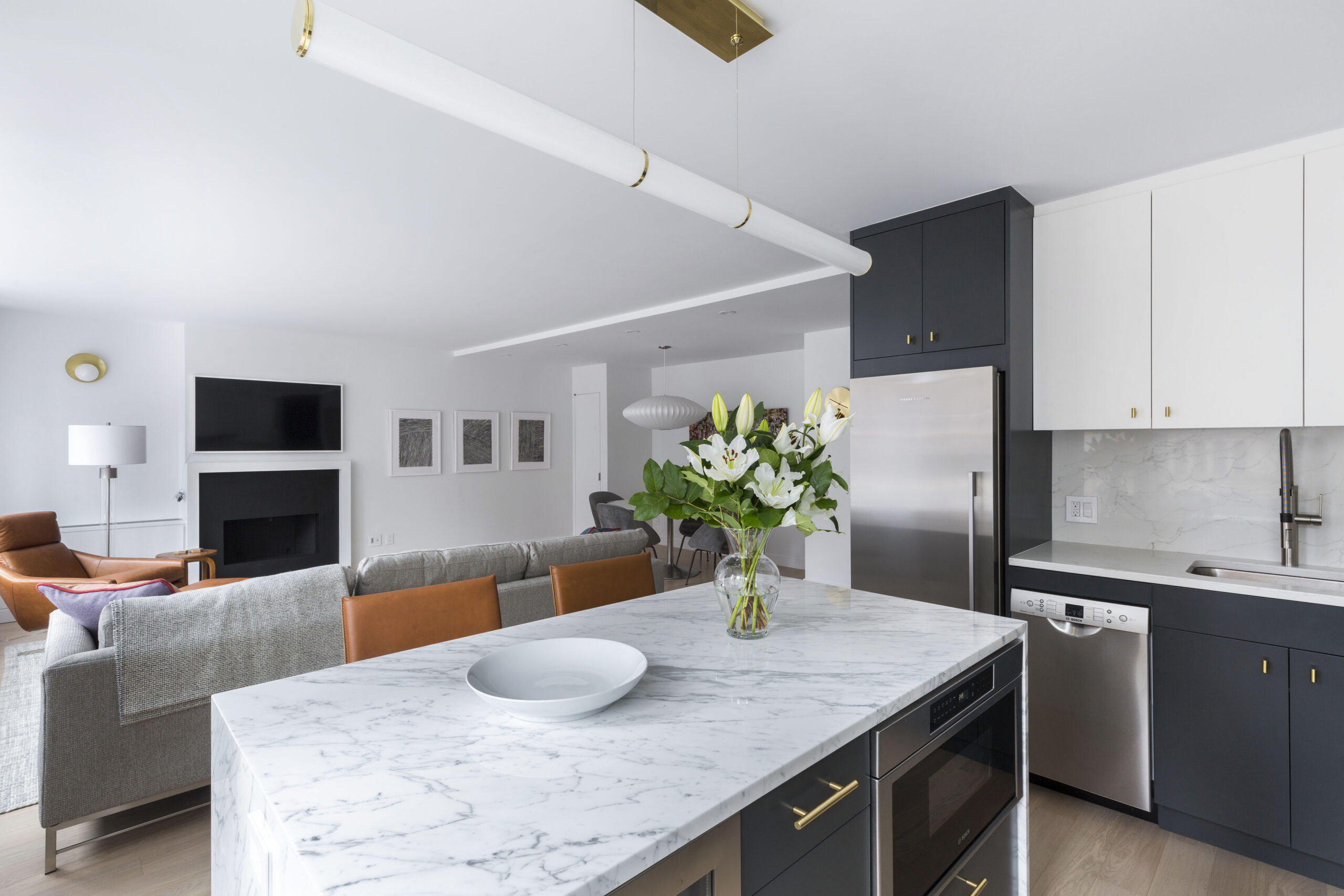
(Above) John’s remodeled kitchen in Manhattan showcasing a Calacatta marble kitchen island with a built-in microwave oven
Here are the factors contributing to the high cost of Calacatta marble:
1. Extraction and processing
Calacatta marble comes only from the Apuan Alps near Carrara, Italy. Quarry crews have pulled it from these mountains for more than 2,000 years, which shows its lasting appeal. Getting the stone out remains tough. The job takes trained hands and strong knowledge of how the material will split.
Miners gain skill over many seasons. They work across steep slopes and tight paths. Teams check each section for cracks, weak spots, and stains that can reduce strength. Those flaws shape the plan for removal. They limit the size of each block and the number of pieces crews can take out safely.
Raw blocks then go to shops that turn them into the slabs used in homes. Craftspeople cut the stone to size and thickness, then grind and polish each face. Final sanding and edge work deliver the smooth surface and clean look buyers expect from Calacatta marble.
2. Supply and demand
“Our customers choose Calacatta since it signals luxury,” says Memo Idris of Franchi Umberto Marmi in an interview with Insider. “It’s a premium stone that brings timeless elegance and classic style.” That range of looks helps it pair well with almost any interior design approach.
White marbles, including Calacatta, stay in high demand for their clean, pure look. With fewer natural flaws than darker marbles, they often need less upkeep and can be less likely to show wear or damage. Sweeten brings homeowners an exceptional renovation experience by personally matching trusted general contractors to your project, while offering expert guidance and support—at no cost to you. Renovate expertly with Sweeten
Calacatta holds a clear edge even among white marbles, and many buyers rank it above Carrara. Its veining has sharp definition and lively movement, and the vein pattern tends to look more open and less crowded across the surface.
That trait supports more design options, so it can work indoors or outside on select surfaces. Calacatta can read softer than other premium marbles, including Statuario, since its contrast tends to feel more gentle.
Statuario has a milky base with deeper gray veining, and it can show bigger swings in tone from slab to slab. Those shifts can feel too bold for some design tastes and some spaces.
3. Material variations and quality
The quality and look of Calacatta marble can vary a lot from slab to slab. Pieces with bolder, more dramatic veining, steady color, and fewer natural flaws usually sell for higher prices.
“Bookmatching” is a method where slabs get cut and set so the veining mirrors across a seam. It can produce a striking, high-end effect. It can raise the price, since it requires careful slab selection, precise layout planning, and close matching during fabrication.
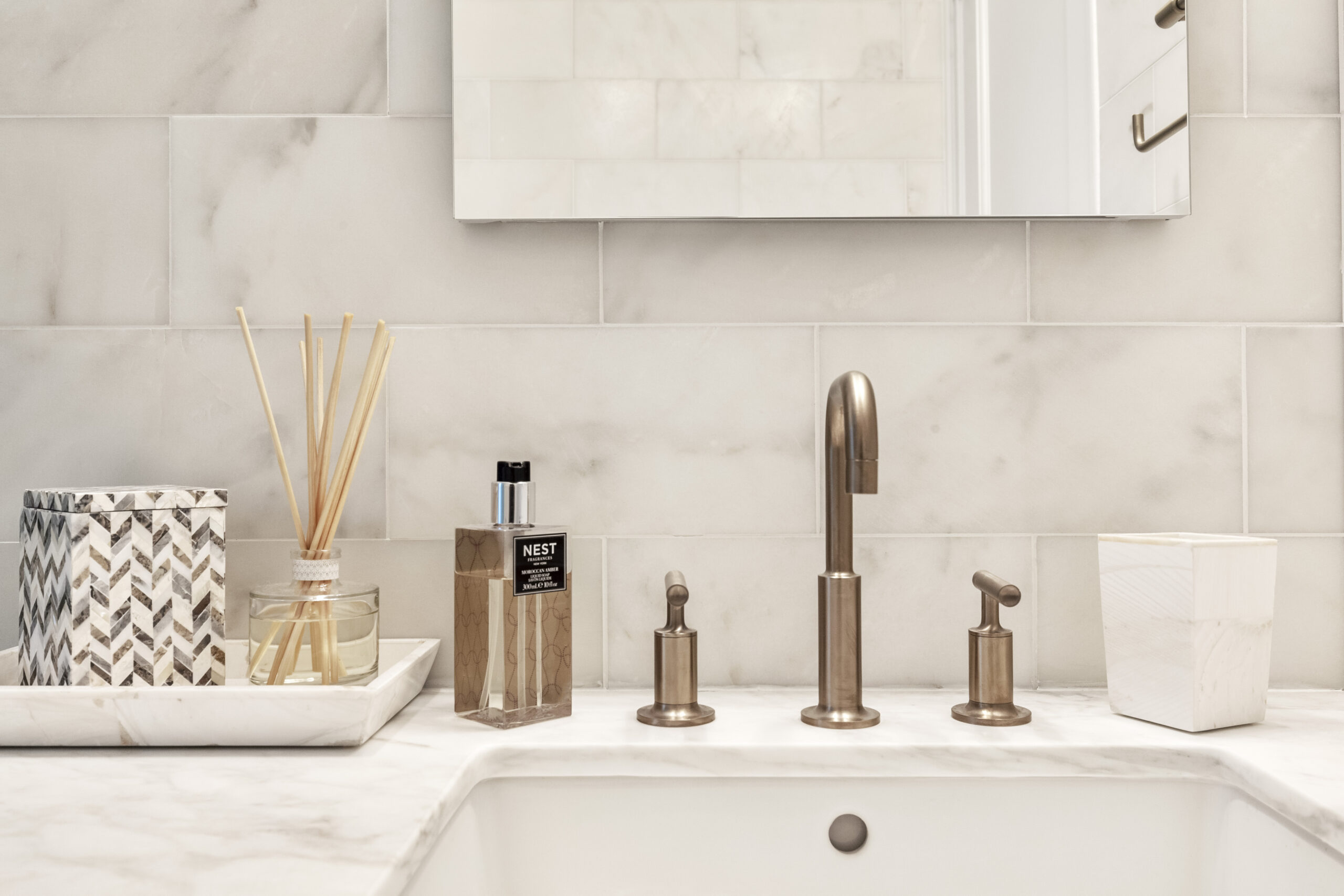
(Above) Tina’s renovated bathroom with Calacatta marble subway tile and vanity countertop
Calacatta marble comes with a steep price. For the stone alone, averages run $300 to $400 per square foot. Costs swing by slab, with stronger veining, cleaner white color, and fewer flaws pushing totals up. Calacatta Gold, prized for distinctive golden veining, is rarer and often priced higher.
Standard Calacatta slabs can top $10,000, depending on size and pattern. A single slab of Calacatta Gold can top $29,000.
Exact pricing often stays private in the stone trade. Retailers confirm demand for Calacatta, and its rare grades, keeps running ahead of supply from the quarries.
Material is only one line item in the budget. Fabrication, installation, and labor add major costs, and those charges can shift the final project total.
Additional Factors Contributing to High Cost
Several other factors contribute to the high cost of Calacatta marble:
- Quality and Consistency: The quality and consistency of the marble can vary significantly between slabs. Slabs with more prominent and evenly distributed veining, fewer natural imperfections, and a consistent white background are generally more expensive.
- Bookmatching: A technique where slabs are cut and installed to mirror each other, bookmatching can create stunning visual effects, but also increases the cost due to the careful selection and matching process.
- Thickness: Thicker slabs of Calacatta marble are more expensive than thinner slabs. Thicker slabs are more durable and can be used for various applications, including countertops, backsplashes, and flooring.
- Edge Profiles: The type of edge profile chosen for the slabs can also impact the overall cost. More intricate and detailed edge profiles require additional labor and time, which can increase the price.
- Installation: The installation process for Calacatta marble requires skilled professionals who can handle the delicate material and ensure proper installation to avoid damage or cracking.
By comparing these options, homeowners can gain a better understanding of the value proposition of Calacatta marble and determine if it aligns with their budget and priorities.
Comparing Calacatta marble to alternatives
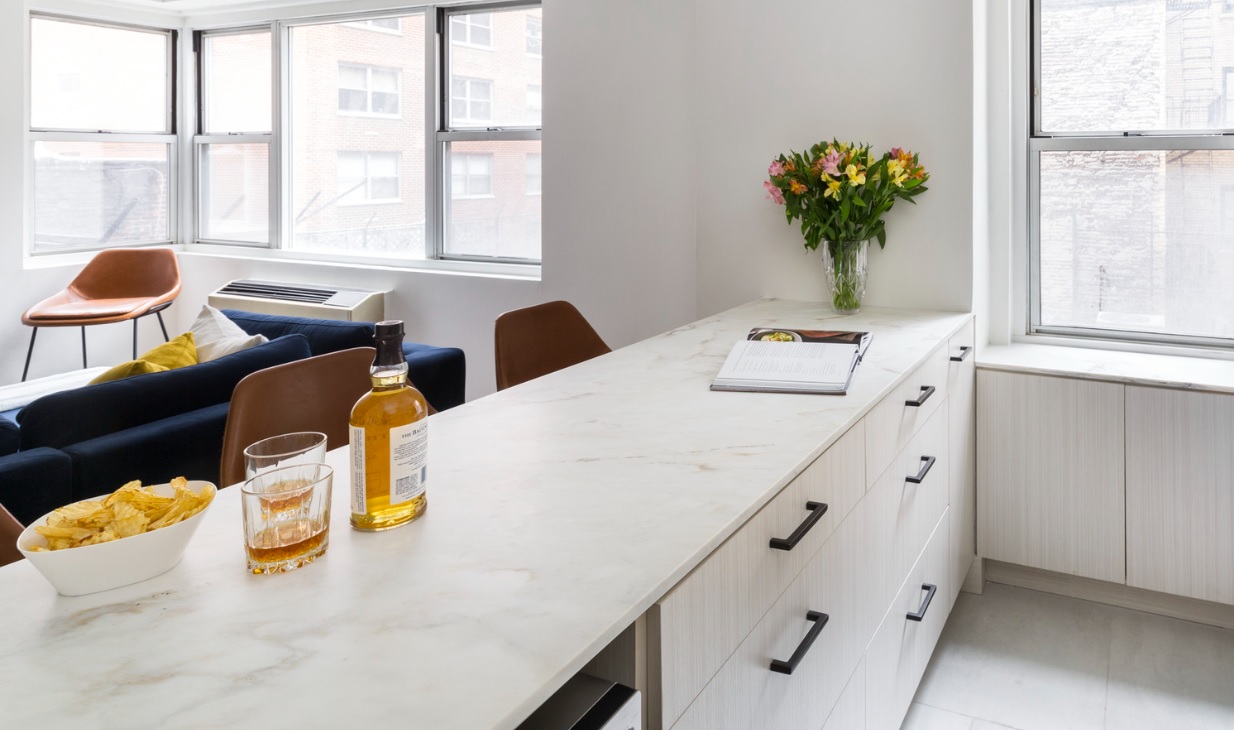
(Above) Dan’s renovated kitchen with a Calacatta marble countertop, white walls, and light wooden drawers
While Calacatta marble offers unparalleled beauty and elegance, it’s essential to consider alternative kitchen countertop materials.
- Quartz: Engineered quartz is a durable and stain-resistant option that often mimics the look of marble, including Calacatta. It’s generally more affordable than natural marble.
- Granite: Granite is another popular choice known for its durability and wide range of colors and patterns. It can be a more budget-friendly alternative to Calacatta marble.
- Quartzite: Quartzite is a natural stone that resembles marble but is significantly harder and more durable. It can offer a luxurious look while providing greater resistance to scratches and stains.
At Sweeten, we’re experts at all things general contractors. Here’s how Sweeten works: We pre-screen them for our network, carefully select the best ones for your remodeling project, and work closely with hundreds of general contractors every day.
Choosing Calacatta marble is a major financial commitment. Yet for homeowners who value classic style and lasting elegance, and who accept the premium price for standout quality and one-of-a-kind beauty, the cost can feel worth it over the long run.
- Consider your budget: Determine a realistic budget for your renovation project and factor in the potential costs associated with Calacatta marble.
- Evaluate your lifestyle: Consider how you will use your kitchen or bathroom. If you use the kitchen to entertain guests or have young children, a more durable and stain-resistant material might be a better choice.
- Prioritize your design aesthetic: If your primary goal is to create a luxurious and sophisticated look, Calacatta marble can be an excellent choice.
- Consider long-term value: Calacatta marble is a timeless material that can add significant value to your home. However, it’s important to weigh this potential long-term value against the initial investment.
For homeowners who desire the look of Calacatta marble but prefer a more budget-friendly option, there are alternatives to consider:
- Marble lookalikes: Explore engineered quartz or porcelain slabs that closely mimic the appearance of Calacatta marble.
- Marble accents: Incorporate smaller elements of Calacatta marble, such as a backsplash or a small countertop area, to achieve a touch of luxury without breaking the bank.
Calacatta marble is in high demand and comes at a high price. Limited supply, one-of-a-kind veining, and the hands-on work required for quarrying and fabrication all contribute to higher costs. By weighing your budget, daily habits, and design goals, you can decide if Calacatta marble fits your home renovation project.
Remember to explore alternative materials and consider creative ways to incorporate the beauty of Calacatta marble into your design while staying within your budget.
Ready to renovate? Start the journey here for free!
Here you can learn more about our services and locations. Alternatively, browse more home renovation inspirations, processes, and cost guides.